• HOME
  • NEWS
  • EXPLORE
    • CAREER
      • Companies
      • Jobs
    • EVENTS
    • iGEM
      • News
      • Team
    • PHOTOS
    • VIDEO
    • WIKI
  • BLOG
  • COMMUNITY
    • FACEBOOK
    • INSTAGRAM
    • TWITTER
Monday, August 31, 2026
BIOENGINEER.ORG
No Result
View All Result
  • Login
  • HOME
  • NEWS
  • EXPLORE
    • CAREER
      • Companies
      • Jobs
        • Lecturer
        • PhD Studentship
        • Postdoc
        • Research Assistant
    • EVENTS
    • iGEM
      • News
      • Team
    • PHOTOS
    • VIDEO
    • WIKI
  • BLOG
  • COMMUNITY
    • FACEBOOK
    • INSTAGRAM
    • TWITTER
  • HOME
  • NEWS
  • EXPLORE
    • CAREER
      • Companies
      • Jobs
        • Lecturer
        • PhD Studentship
        • Postdoc
        • Research Assistant
    • EVENTS
    • iGEM
      • News
      • Team
    • PHOTOS
    • VIDEO
    • WIKI
  • BLOG
  • COMMUNITY
    • FACEBOOK
    • INSTAGRAM
    • TWITTER
No Result
View All Result
Bioengineer.org
No Result
View All Result
Home NEWS Science News Biology

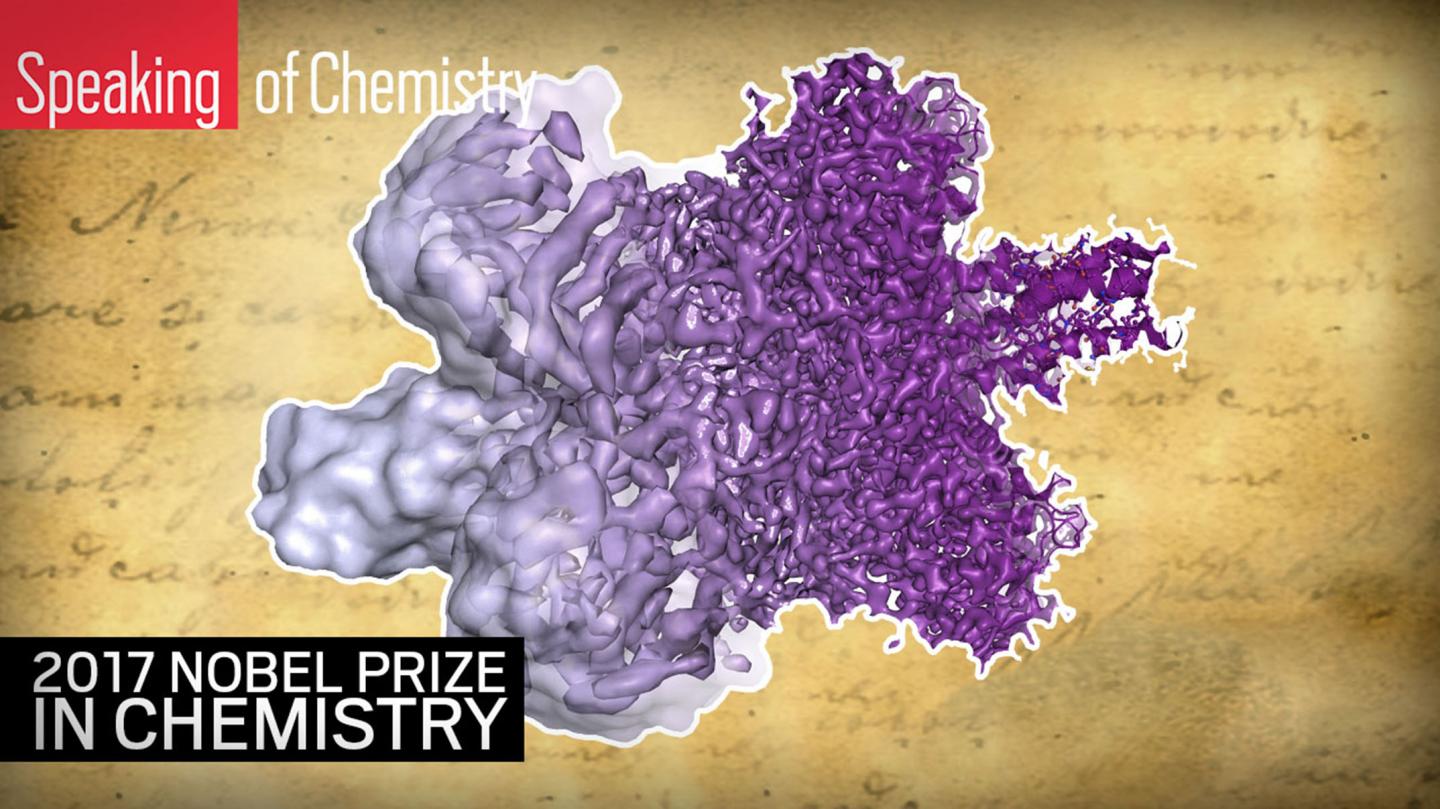
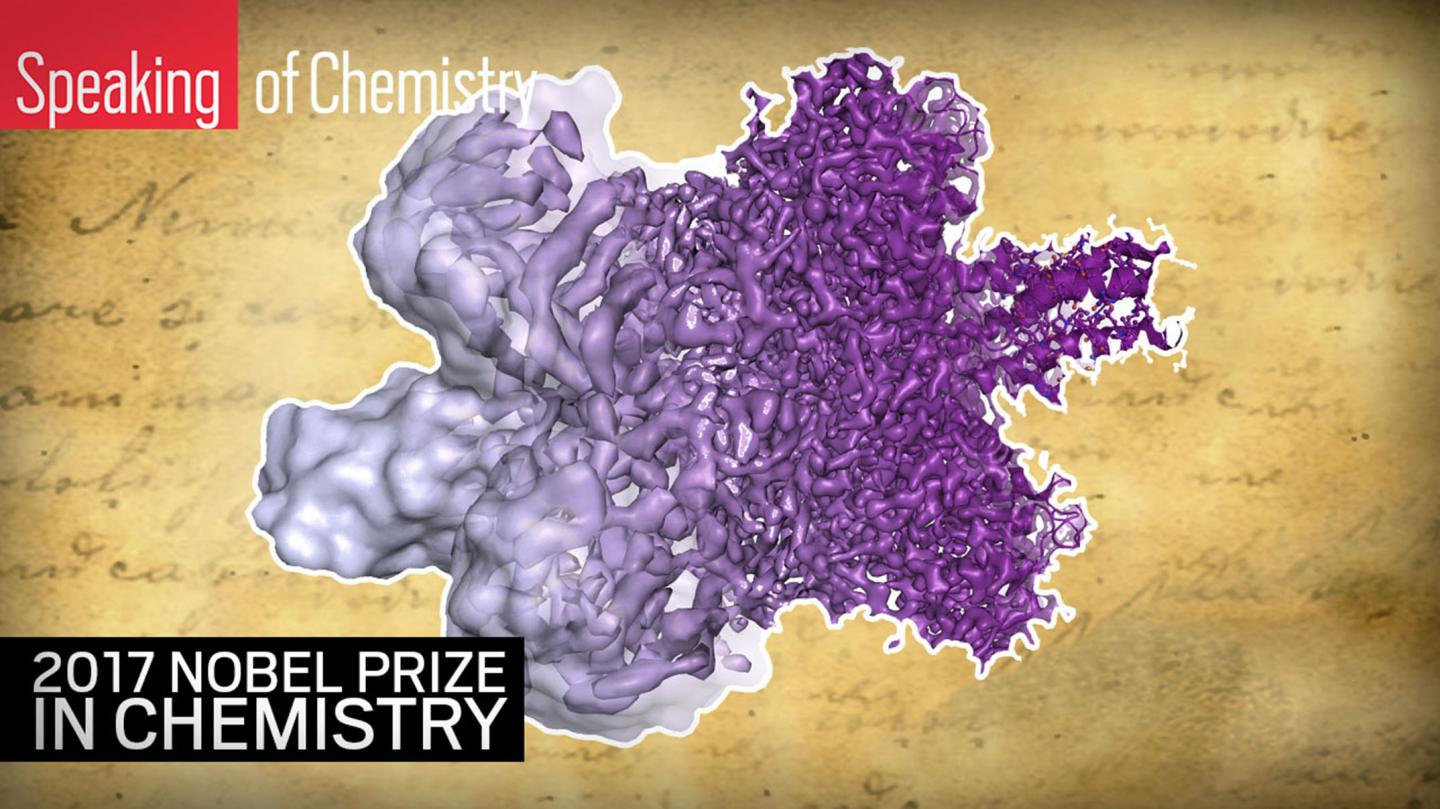
The 2017 Nobel Prize in Chemistry: Cryo-electron microscopy explained (video)

Bioengineer by Bioengineer
October 5, 2017
in Biology
Reading Time: 1 min read
0
Share on FacebookShare on TwitterShare on LinkedinShare on RedditShare on Telegram
IMAGE

Credit: The American Chemical Society

WASHINGTON, Oct. 5, 2017 — Jacques Dubochet, Joachim Frank and Richard Henderson have claimed this year's Nobel Prize in Chemistry. The trio earned the prize for their work on cryo-electron microscopy, which is an imaging technique that lets researchers see proteins and other large biomolecules with atomic precision. Learn more about this discovery and its impact in this video from Speaking of Chemistry: https://youtu.be/026rzTXb1zw.

###

Speaking of Chemistry is a production of Chemical & Engineering News, a weekly newsmagazine of the American Chemical Society. It's the series that keeps you up to date with the important and fascinating chemistry shaping the world around you. Subscribe to the series at http://www.youtube.com/cenonline, and follow us on Twitter @CENMag.

The American Chemical Society, the world's largest scientific society, is a not-for-profit organization chartered by the U.S. Congress. ACS is a global leader in providing access to chemistry-related information and research through its multiple databases, peer-reviewed journals and scientific conferences. ACS does not conduct research, but publishes and publicizes peer-reviewed scientific studies. Its main offices are in Washington, D.C., and Columbus, Ohio.

To automatically receive press releases from the American Chemical Society, contact [email protected].

Follow us: Twitter Facebook

Media Contact

Katie Cottingham
[email protected]
301-775-8455
@ACSpressroom

http://www.acs.org

Share12Tweet8Share2ShareShareShare2

Related Posts

Study links hypoxia pathway dysregulation to glioblastoma treatment resistance in women

Study links hypoxia pathway dysregulation to glioblastoma treatment resistance in women

August 30, 2026
How captivity experiences shape Picasso triggerfish behavior and cognition

How captivity experiences shape Picasso triggerfish behavior and cognition

August 30, 2026

Fertility benefits may explain why harmful disease genes persist in humans

August 30, 2026

New atlas reveals mesenchymal diversity in human gut and organoids

August 30, 2026
Please login to join discussion

POPULAR NEWS

  • New α-pyrone derivative from fungus Acremonium persicinum inhibits α-glucosidase

    29 shares
    Share 12 Tweet 7
  • Pesticide etoxazole causes dose-dependent nerve, inflammation, and DNA damage in female rats

    29 shares
    Share 12 Tweet 7
  • Study links hypoxia pathway dysregulation to glioblastoma treatment resistance in women

    29 shares
    Share 12 Tweet 7
  • New Inventory Maps How Autistic Adults Cope with Workplace Stress

    29 shares
    Share 12 Tweet 7

About

We bring you the latest biotechnology news from best research centers and universities around the world. Check our website.

Follow us

Recent News

New α-pyrone derivative from fungus Acremonium persicinum inhibits α-glucosidase

Pesticide etoxazole causes dose-dependent nerve, inflammation, and DNA damage in female rats

Study links hypoxia pathway dysregulation to glioblastoma treatment resistance in women

Subscribe to Blog via Email

Enter your email address to subscribe to this blog and receive notifications of new posts by email.

Join 85 other subscribers
  • Contact Us

Bioengineer.org © Copyright 2023 All Rights Reserved.

Welcome Back!

Login to your account below

Forgotten Password?

Retrieve your password

Please enter your username or email address to reset your password.

Log In
No Result
View All Result
  • Homepages
    • Home Page 1
    • Home Page 2
  • News
  • National
  • Business
  • Health
  • Lifestyle
  • Science

Bioengineer.org © Copyright 2023 All Rights Reserved.