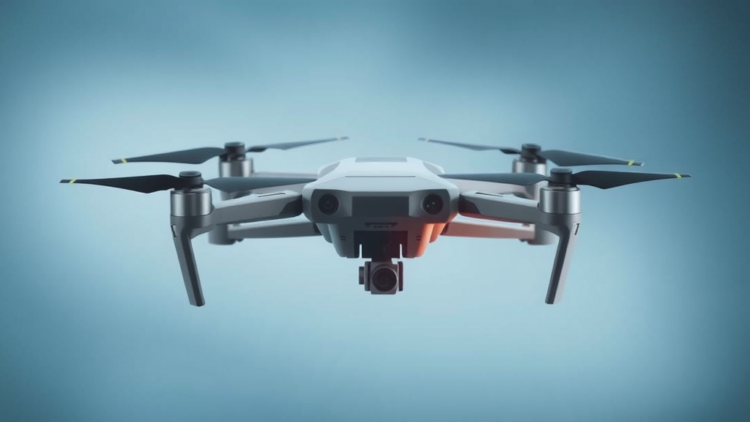
Drones are quickly becoming the flying workhorses of the wireless world. They relay video from disaster zones, ferry inspection data along power lines, act as airborne base stations for crowded events, and increasingly sense their surroundings while they communicate. Yet every one of those missions depends on a deceptively fragile act: pulling clean data out of a radio signal that has been scrambled by motion, reflections, interference, and the sheer unpredictability of the electromagnetic environment at altitude. A new study published in Mobile Networks and Applications proposes a mathematically ambitious receiver design, called KRF-DUNet, that aims to make that act dramatically more dependable for unmanned aerial vehicles using OFDM transmission.
The research, led by Guangzhen Si of Zhejiang University of Technology together with colleagues at Hangzhou Dianzi University, tackles a problem that has quietly constrained drone communications for years. Orthogonal frequency division multiplexing, or OFDM, is the modulation scheme underpinning modern Wi-Fi and cellular systems because it divides a wide channel into many narrow subcarriers that resist multipath fading. But OFDM receivers traditionally rely on pilot signals, known reference symbols embedded in the transmission, to estimate how the channel has distorted the data. In a dynamic aerial environment, pilots are a scarce resource. Every pilot symbol spent on channel estimation is a symbol not carrying useful payload, and when the channel changes rapidly, the estimates go stale almost as soon as they are formed.
The situation is compounded by what the authors describe as multidimensional channel coupling. A drone receiver with multiple antennas receives signals that vary simultaneously across three dimensions: frequency, in the form of the OFDM subcarriers; time, in the sequence of transmitted symbols; and space, in the signals arriving at each antenna element. Conventional receivers often process these dimensions separately or with simplified assumptions, discarding the correlations that link them. When the aircraft banks, accelerates, or flies through a canyon of reflections, those discarded correlations are precisely the information a receiver needs to reconstruct the transmitted symbols accurately.
KRF-DUNet’s central move is to treat the received signal as a single mathematical object rather than a stack of separate vectors. The team models the incoming signal as a third-order tensor whose three axes correspond to the subcarrier, symbol, and antenna dimensions. Tensors, the higher-dimensional generalizations of matrices, have a long pedigree in signal processing because they can capture multilinear structure that flat matrices cannot. In this framework, the channel’s frequency-domain behavior and its spatial behavior are represented as separate factor matrices, and the Khatri-Rao product, a column-wise multiplication operation, is used to preserve the coupling between those frequency and spatial factors. In practical terms, the model explicitly encodes the fact that how the channel distorts each subcarrier is not independent of how it distorts the signals at each antenna, and that this relationship follows a structured, learnable pattern.
Recovering symbols from this tensor model is framed as a regularized tensor recovery problem, a class of optimization tasks that is powerful on paper but often slow or unstable when solved with iterative numerical algorithms. Here the study borrows a technique that has been gaining momentum across signal processing and machine learning: algorithm unrolling, sometimes called deep unfolding. Instead of running an iterative solver for many unbounded iterations, unrolling converts a fixed, finite number of iterations into the layers of a neural-network-like computational structure. Each layer performs one step of the optimization, and parameters that would traditionally be hand-tuned, such as regularization weights and step sizes, become trainable. The result, as the method’s name suggests, is a deep unrolling network, or DUNet, built directly on the Khatri-Rao factorization structure, hence KRF-DUNet.
This architecture gives the receiver the best of both worlds. Because each layer corresponds to a concrete step of a principled tensor recovery algorithm, the network remains interpretable in a way that conventional black-box deep learning detectors are not; an engineer can trace how the estimate evolves layer by layer. At the same time, the learned parameters adapt to the statistics of real channel conditions, something classical algorithms with fixed parameters struggle to do. The finite depth also makes computational cost predictable, a critical consideration for airborne platforms where processing power, energy, and latency budgets are all tight.
One further innovation addresses the pilot bottleneck directly. The researchers introduce what they call pilot constrained symbol projection, a mechanism that uses the known pilot symbols as anchors during the recovery process. Because the receiver knows exactly what the pilot symbols should look like, it can project its intermediate symbol estimates onto constraints defined by those pilots, pulling the solution toward consistency with the ground truth embedded in the transmission. This semi-blind strategy, which exploits both the known pilots and the unknown data symbols’ structure, improves the stability of the recovery, particularly when pilots are few and the channel is strongly correlated across dimensions.
To find out whether the theory translates into performance, the team ran simulation experiments benchmarking KRF-DUNet against a roster of established receivers. The comparison set included zero-forcing (ZF) and minimum mean square error (MMSE) receivers, the classical linear workhorses of multi-antenna detection, as well as alternating least squares (ALS) methods, which solve tensor factorization problems by iteratively updating one factor at a time. Two refined variants, SVD-ALS and DU-ALS, which incorporate singular value decomposition and unrolling ideas respectively, rounded out the field. The evaluation varied the number of pilots, the rank of the tensor model, and the degree of channel correlation, sweeping through the conditions most likely to break a receiver in practice.
Across those conditions, KRF-DUNet achieved a lower bit error rate and a lower symbol normalized mean square error than its competitors, meaning it recovered both the raw data bits and the underlying channel symbols more faithfully. Just as importantly for real deployment, the study reports that the method maintains a favorable balance between recovery reliability and computational complexity. It does not win accuracy by brute-force computation; the tensorized, unrolled structure keeps the workload contained while the Khatri-Rao modeling and pilot constraints do the heavy lifting on accuracy. For a drone that must simultaneously fly, sense, and communicate on a limited battery, that trade-off is not a nicety but a requirement.
The broader vision behind the work is what the authors call embodied spectrum intelligence: the idea that a UAV should not merely pass through the radio spectrum but actively understand and adapt to it, with its physical mobility, its antenna array, and its learning algorithms working as one integrated system. By fusing tensor algebra, which captures the physics of multidimensional channels, with deep unrolling, which captures adaptability, KRF-DUNet offers a template for receivers that stay reliable as the environment around them churns. As drone swarms take on larger roles in logistics, public safety, and integrated sensing-and-communication networks of the 5G-and-beyond era, receivers of this kind could determine whether the sky’s airwaves remain orderly or dissolve into interference. The study was supported by the Zhejiang Provincial Postdoctoral Research Excellence Funding Program and the National Natural Science Foundation of China, and the authors report no competing interests.
Subject of Research: Tensor-based semi-blind signal recovery for UAV OFDM communication receivers
Article Title: KRF-DUNet: A Reliability-Enhanced Tensorized Semi-Blind Communication Receiver for UAV Embodied Spectrum Intelligence
Article References: Si, G., Wang, M., Pan, L., Chen, Z., Xuan, Q., & Yu, S. (2026). KRF-DUNet: A Reliability-Enhanced Tensorized Semi-Blind Communication Receiver for UAV Embodied Spectrum Intelligence. Mobile Networks and Applications. https://doi.org/10.1007/s11036-026-02547-z
Image Credits: AI Generated
DOI: 10.1007/s11036-026-02547-z
Keywords: UAV communication, OFDM, tensor decomposition, semi-blind receiver, Khatri-Rao product, algorithm unrolling, deep learning, channel estimation, MIMO, signal processing, embodied spectrum intelligence, wireless networks
Cite Scienmag News
APA MLA Chicago
Blake Davidson. (September 23, 2026). Tensor-Powered Receiver Promises More Reliable Drone Communications in Chaotic Airwaves. Scienmag. https://scienmag.com/tensor-powered-receiver-promises-more-reliable-drone-communications-in-chaotic-airwaves/
Blake Davidson. “Tensor-Powered Receiver Promises More Reliable Drone Communications in Chaotic Airwaves.” Scienmag, 23 September 2026, https://scienmag.com/tensor-powered-receiver-promises-more-reliable-drone-communications-in-chaotic-airwaves/. Accessed 23 September 2026.
Blake Davidson. “Tensor-Powered Receiver Promises More Reliable Drone Communications in Chaotic Airwaves.” Scienmag. September 23, 2026. https://scienmag.com/tensor-powered-receiver-promises-more-reliable-drone-communications-in-chaotic-airwaves/
Copy citation Download RIS
Tags: advanced receiver design for aerial communicationsalgorithm unrollingchannel estimationchaos-resistant drone data transmissiondeep learningdeep learning models for wireless signal enhancementdrone communication reliabilityelectromagnetic interference in drone signalsembodied spectrum intelligenceKhatri-Rao productmachine learning in wireless communicationMIMOmultipath fading mitigation in dronesnext-generation drone communication technologiesOFDMOFDM transmission in UAVsreal-time signal decoding for unmanned aircraftresilient wireless drone networkssemi-blind receiverSignal Processingtensor decompositiontensor-based signal processingUAV communicationwireless networks