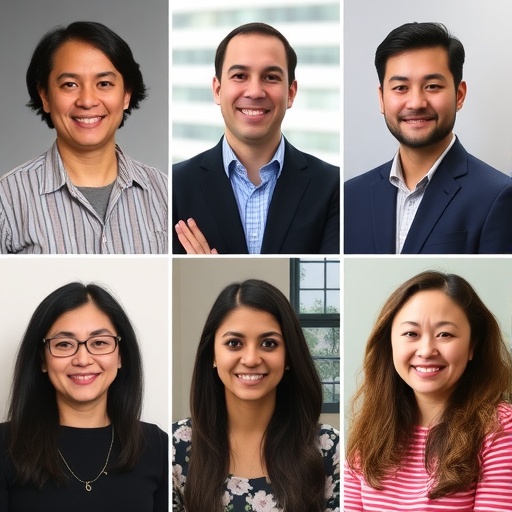
In a significant stride toward advancing neuroscience research, the New York Academy of Sciences, in collaboration with the Leon Levy Foundation, has unveiled the 2026 cohort of Leon Levy Scholars in Neuroscience. This prestigious program, established in 2009, has supported over 190 early-career neuroscientists, providing them with a robust platform to pursue innovative and transformative research within New York City’s vibrant scientific ecosystem.
The Leon Levy Scholars initiative is designed to identify and empower top-tier postdoctoral researchers who exhibit exceptional promise in neuroscience. Each year, up to ten scholars are selected from a competitive, citywide application process. These scholars receive three years of funding and support, which allows them to delve deeply into their specific research questions while progressing toward independent investigative careers. This investment is particularly critical at a time when federal funding is increasingly scarce and competitive, underscoring the importance of private foundations like Leon Levy in sustaining cutting-edge scientific discovery.
Nicholas B. Dirks, President and CEO of the New York Academy of Sciences, emphasized the heightened urgency of bolstering early-career scientists in the current research climate. He highlighted New York City’s unique status as a global neuroscience hub and lauded the Leon Levy Foundation’s pivotal role in nurturing talent that will drive future breakthroughs. By catalyzing novel discoveries across neurological functions and disorders, the program enriches both scientific understanding and the potential for clinical translation.
Beyond monetary support, the Leon Levy Scholars program offers a comprehensive suite of professional development opportunities tailored to enhance scientific acumen and leadership skills. Scholars participate in annual meetings to present their work, receive mentorship from senior neuroscientists acclaimed in their fields, and engage in workshops focused on grant writing, communication strategies, and management. These elements are integral for fostering a collaborative and cross-disciplinary research culture that accelerates both individual and collective progress.
Moreover, the program fosters dynamic networking among cohorts and alumni, catalyzing resource sharing, collaboration, and integrative projects spanning multiple institutions. This community-building aspect amplifies the impact of the scholars’ research by facilitating a citywide neuroscience network poised to tackle complex questions in brain science from various perspectives—from molecular signaling pathways to systems-level neural circuit function.
The 2026 group of Leon Levy Scholars exemplifies a diverse range of pioneering research topics that cover fundamental and translational neuroscience domains. Among them is Joey Charbonneau from New York University’s Center for Neural Science, who investigates how expectation biases in the primate frontal cortex modulate motivated behaviors. This research elucidates neural mechanisms underlying decision-making processes, with potential implications for understanding disorders characterized by altered motivation such as addiction or depression.
Zhangying (Jennie) Chen of the Icahn School of Medicine at Mount Sinai is exploring the gene NOTCH3’s role in immune-vascular aging and neurodegeneration, using CADASIL as a disease model. Her work underscores the intersection of genetics, vascular biology, and neurodegeneration, offering insights that could inform targeted therapies for small vessel diseases that are major contributors to stroke and cognitive decline.
Emmet Huang-Hobbs at Memorial Sloan Kettering Cancer Center takes an innovative approach to oncology and neuroscience, studying how prostate tumors exploit neuronal signaling to transition to neuroendocrine states. This research bridges cancer biology and neural signaling, providing potential avenues for novel treatments addressing tumor plasticity and resistance mechanisms.
Takayoshi Kuwabara from NYU Grossman School of Medicine investigates the neural circuitry controlling aggression and fear, two fundamental behaviors with profound clinical relevance. His mechanistic studies of these circuits promise to illuminate how dysregulation of fear responses contributes to anxiety disorders and aggression-related pathologies.
Nathan Nakatsuka, also at NYU Grossman School of Medicine, employs single-cell genomics to pinpoint cellular and regional brain changes during oxycodone intake escalation. This cutting-edge genomic approach enables dissection of addiction’s neurobiological substrates with unprecedented resolution, paving the way for precision interventions for opioid use disorder.
Hamilton Oh, affiliated with the Icahn School of Medicine at Mount Sinai, focuses on how circulating proteins impact the brain’s response to chronic stress. Deciphering these molecular mediators is crucial for unveiling biological pathways that underlie stress-related neuropsychiatric conditions.
Margaret Schroeder of The Rockefeller University explores molecular mechanisms governing astrocyte-neuron plasticity, a dynamic process fundamental to brain adaptability and implicated in numerous neurological disorders. Her research advances our grasp of cellular interactions that maintain neural health or drive disease.
Rimjhim Tomar, also from the Icahn School of Medicine, develops computational models to dissect chemical messenger roles in cerebral cortex learning through recurrent networks. This innovative fusion of neuroscience and computational science aims to unravel complex information processing in the brain, with potential to inform artificial intelligence systems.
Mackenna Wollet at NYU Grossman investigates the mechanisms of rapid synaptic plasticity within the auditory cortex, integral for sound perception and learning. Her work sheds light on how sensory information is encoded and modulated, providing insights relevant to hearing impairments and neuroplasticity.
Finally, Yosif (Joe) Zaki of New York University maps the spatiotemporal architecture of sleep across the mouse brain, focusing on how experience and neuronal activity during wakefulness modify this structure. Understanding sleep’s neural dynamics is crucial, given its essential role in cognitive function, memory consolidation, and overall brain health.
The Leon Levy Foundation’s commitment to advancing humanistic values through grantmaking is reflected in this program’s dedication to enriching cultural life and expanding knowledge across diverse scientific fields. The foundation’s focus on New York City dialectically grounds these researchers in a thriving community equipped to push the boundaries of neuroscience.
Since its founding in 1817, the New York Academy of Sciences has maintained a steadfast commitment to leveraging science for societal benefit. With a membership spanning thousands worldwide, the Academy fosters multidisciplinary learning, supports early-career professionals, and champions innovative research aimed at solving complex global challenges, particularly in STEM disciplines.
The Leon Levy Scholars in Neuroscience encapsulate this vision, driving forward the frontiers of brain science through both rigorous investigation and an integrative, community-oriented approach. Their work stands to significantly impact our understanding of neural mechanisms, inform therapeutic developments, and inspire future generations of investigators in the dynamic field of neuroscience.
Subject of Research: Neuroscience, neural circuit mechanisms, molecular and cellular neuroscience, neurodegeneration, neuroplasticity, addiction biology, brain mapping, computational neuroscience
Article Title: New York Academy of Sciences and Leon Levy Foundation Announce 2026 Cohort of Pioneering Neuroscience Scholars
News Publication Date: April 16, 2026
Web References:
– www.leonlevyfoundation.org
– www.nyas.org
Image Credits: The Leon Levy Foundation
Keywords: neuroscience, neurodegeneration, neural circuits, addiction, neuroplasticity, brain mapping, single-cell genomics, computational neuroscience, neuroimaging, early-career researchers, postdoctoral fellowship, scientific mentorship
Tags: advancing neuroscience careers 2026competitive neuroscience scholar selectioncutting-edge neuroscience discoveriesearly-career neuroscience fundingLeon Levy Scholars neuroscience programneuroscience postdoc career developmentNew York Academy of Sciences neuroscienceNew York City neuroscience researchnurturing neuroscience talent NYCpostdoctoral neuroscience research supportprivate foundation funding neurosciencetransformative neuroscience research initiatives