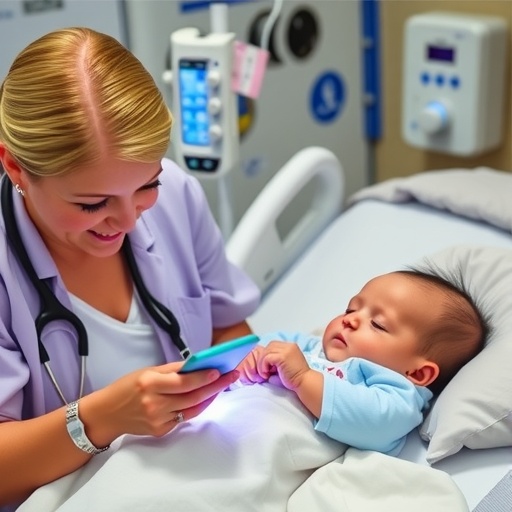
In the delicate world of neonatal medicine, the journey of care does not end at discharge from the neonatal intensive care unit (NICU). For premature infants, whose health and developmental trajectories are often precarious, the continuum of care extends far beyond the hospital walls. These infants face heightened risks of lasting clinical and developmental challenges compared to their term peers. Despite the critical need for sustained multidisciplinary follow-up, the landscape of post-NICU care remains fragmented, marred by disparities in access due to socioeconomic status and geographical barriers. This fragmentation leads to unnecessary healthcare utilization and spiraling costs, underscoring an urgent imperfection in the system. However, as we venture deeper into the digital age, promising technological innovations are poised to revolutionize the manner in which follow-up care is conceptualized and delivered.
Recent advancements in artificial intelligence, digital health platforms, and connected medical devices have unleashed a wave of potential opportunities to reimagine post-NICU support. These technologies promise to enhance family education, streamline discharge planning, facilitate coordinated care, enable remote patient monitoring, and refine neurodevelopmental surveillance. By leveraging data-driven tools and real-time connectivity, healthcare providers can achieve a more nuanced understanding of each infant’s evolving health status in the comfort of their home environment. This paradigm shift is truly transformative, turning the once episodic and clinic-bound follow-up visits into a seamless, continuous, and highly personalized care experience.
Family education, a cornerstone of successful post-NICU outcomes, stands to gain immensely through technology-enabled interventions. Digital platforms can offer adaptive learning modules tailored to the developmental stage and medical complexity of the infant, guiding caregivers through milestones, warning signs, and intervention strategies. Importantly, these systems can also foster bidirectional communication between families and clinicians, ensuring concerns are promptly addressed and unnecessary emergency visits are minimized. Such empowerment of caregivers not only mitigates anxiety but also promotes adherence to care plans, thus enhancing long-term outcomes.
Discharge planning, traditionally reliant on in-person coordination and paper-based instructions, is rapidly evolving under the influence of integrated care pathways facilitated by technology. Leveraging artificial intelligence algorithms that synthesize patient data, risk factors, and social determinants of health can optimize discharge timing and ensure that individualized follow-up plans are both appropriate and accessible. This technology-driven approach minimizes hospital readmissions and ensures early identification of complications, which is crucial in this vulnerable population.
One of the most pivotal transformations comes from the realm of care coordination. The multidisciplinary teams responsible for the complex needs of NICU graduates often operate in silos, which can hinder effective communication and continuity. Digital health ecosystems provide shared electronic health records infused with decision support tools, enabling clinicians across specialties to harmonize their efforts. This integration enhances clinical decision-making, reduces duplicative testing, and expedites referrals to subspecialists or early intervention services.
Remote patient monitoring constitutes a dramatic leap forward in post-discharge care, harnessing wearable devices and biosensors to collect physiological data continuously and non-invasively. Vital parameters such as oxygen saturation, heart rate variability, and respiratory patterns can be transmitted securely to healthcare teams, alerting them to early signs of deterioration or developmental delays. Such near real-time surveillance not only enables preemptive medical interventions but also reduces the burden on families by obviating frequent hospital visits.
In addition to physical health metrics, neurodevelopmental surveillance enabled by cutting-edge technology offers promising avenues for early detection of cognitive or motor delays. Telehealth platforms equipped with video analytics and machine learning can assess an infant’s interactions, movements, and behavioral milestones remotely. These assessments facilitate timely referrals to therapeutic services, which are critically important in altering developmental trajectories favorably.
Even as the potential of technology in NICU follow-up care glistens, the successful deployment of these innovations hinges on several operational prerequisites. Foremost among these is the commitment to family-centered design principles, ensuring that tools are intuitive, culturally sensitive, and adaptable to diverse socio-economic contexts. Technologies must be co-created with families and clinicians alike, recognizing the unique challenges and preferences they embody.
Another fundamental consideration is the alignment of payment models with the adoption of technology-enabled follow-up care. Traditional fee-for-service reimbursement structures may undervalue or altogether exclude emerging digital interventions. Consequently, there is an urgent need for payers and policymakers to craft sustainable financial frameworks that incentivize integrated, technology-enhanced care models, thereby ensuring equitable access and long-term viability.
The equitable implementation of technological solutions in NICU follow-up care also demands addressing systemic inequities. Rural populations and socioeconomically disadvantaged families frequently encounter barriers such as limited broadband access, low digital literacy, and fragmented insurance coverage. Targeted efforts to bridge these divides—including infrastructure investments, education initiatives, and policy reforms—are essential to prevent technology from inadvertently exacerbating disparities.
Moreover, data privacy and security remain paramount concerns in deploying connected devices and digital platforms for infant care. Robust encryption, compliance with healthcare regulations, and transparent communication with families about data use policies are critical to maintaining trust and safeguarding sensitive health information in this vulnerable population.
Interoperability between diverse health technology systems reflects yet another pivotal challenge. The seamless flow of information across electronic health records, remote monitoring devices, and telehealth platforms must be standardized to prevent data silos and operational inefficiencies. Collaboration among technology developers, healthcare providers, and regulatory bodies is imperative to establish universal protocols and accelerate adoption.
As the field advances, integration of artificial intelligence in predictive analytics is poised to break new ground. By analyzing vast datasets encompassing clinical history, genetic information, environmental exposures, and social determinants, AI algorithms can identify infants at highest risk for adverse outcomes. This stratification supports tailored intervention strategies, optimizing resource allocation and maximizing benefit.
The incorporation of technology into NICU follow-up is not merely a clinical or operational enhancement; it represents a profound cultural shift in neonatal care. Moving from episodic, institution-centric models to continuous, patient- and family-centered paradigms transforms the narrative around prematurity and its sequelae. It offers families hope, agency, and support that extend into the crucial years of early development.
In conclusion, the horizon of NICU follow-up care is illuminated by the convergence of technological innovation, interdisciplinary collaboration, and a steadfast commitment to equity. Although challenges remain in implementation, payment reform, and ensuring inclusivity, the promise of technology-enabled follow-up is undeniable. By harnessing these digital tools thoughtfully and compassionately, the neonatal community can usher in an era of optimized outcomes, reduced healthcare disparities, and empowered families whose smallest members have the strongest chance to thrive.
Subject of Research: Technology-enabled post-neonatal intensive care unit (NICU) follow-up care for premature infants, focusing on medical and developmental surveillance.
Article Title: The future of follow-up: technology-enabled medical and developmental follow-up care for NICU graduates.
Article References:
Brewster, R.C., Fuerch, J.H. & Litt, J.S. The future of follow-up: technology-enabled medical and developmental follow-up care for NICU graduates.
J Perinatol (2026). https://doi.org/10.1038/s41372-026-02688-9
DOI: 20 April 2026
Tags: artificial intelligence in infant health monitoringcoordinated care models for premature infantsdata-driven neonatal health managementdigital health platforms in neonatal caredigital innovations in pediatric healthcarefamily education in post-NICU carehealthcare disparities in neonatal follow-upmultidisciplinary care for premature infantsneurodevelopmental surveillance technologypost-NICU care challengesremote patient monitoring for NICU graduatestech-driven neonatal follow-up care