• HOME
  • NEWS
  • EXPLORE
    • CAREER
      • Companies
      • Jobs
    • EVENTS
    • iGEM
      • News
      • Team
    • PHOTOS
    • VIDEO
    • WIKI
  • BLOG
  • COMMUNITY
    • FACEBOOK
    • INSTAGRAM
    • TWITTER
Monday, October 5, 2026
BIOENGINEER.ORG
No Result
View All Result
  • Login
  • HOME
  • NEWS
  • EXPLORE
    • CAREER
      • Companies
      • Jobs
        • Lecturer
        • PhD Studentship
        • Postdoc
        • Research Assistant
    • EVENTS
    • iGEM
      • News
      • Team
    • PHOTOS
    • VIDEO
    • WIKI
  • BLOG
  • COMMUNITY
    • FACEBOOK
    • INSTAGRAM
    • TWITTER
  • HOME
  • NEWS
  • EXPLORE
    • CAREER
      • Companies
      • Jobs
        • Lecturer
        • PhD Studentship
        • Postdoc
        • Research Assistant
    • EVENTS
    • iGEM
      • News
      • Team
    • PHOTOS
    • VIDEO
    • WIKI
  • BLOG
  • COMMUNITY
    • FACEBOOK
    • INSTAGRAM
    • TWITTER
No Result
View All Result
Bioengineer.org
No Result
View All Result
Home NEWS Science News Chemistry

Taking out the trash is essential for brain health

Bioengineer by Bioengineer
November 19, 2020
in Chemistry
Reading Time: 3 mins read
0
IMAGE
Share on FacebookShare on TwitterShare on LinkedinShare on RedditShare on Telegram

IMAGE

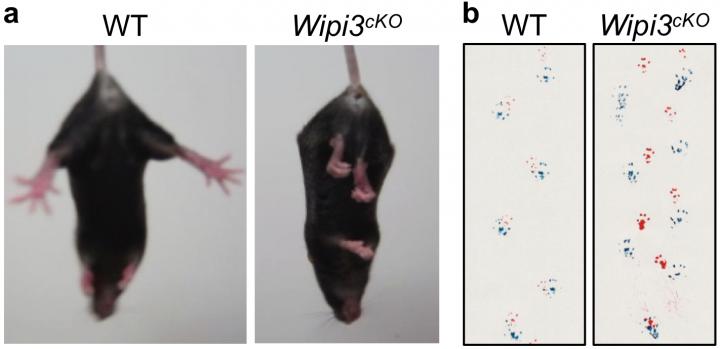
Credit: Department of Pathological Cell Biology,TMDU

A research team at Tokyo Medical and Dental University (TMDU) find that Wipi3, a protein involved in cellular waste disposal, is crucial for neuronal health

Tokyo, Japan – A little mess never killed anyone, right? Wrong. Researchers at Tokyo Medical and Dental University (TMDU) have recently shown that a build-up of cellular “trash” in the brain can actually cause neurodegeneration, and even death.

Reporting their findings in Nature Communications, the researchers describe how defects in a cellular waste disposal mechanism, called “alternative autophagy”, can lead to a lethal build-up of iron and protein in brain cells.

“Cells are constantly clearing out dysfunctional or unnecessary components, which are then degraded and recycled,” explains study lead author Hirofumi Yamaguchi. “Autophagy is the process whereby unwanted cellular components and proteins are contained within a spherical doubled-membraned vesicle called an autophagosome, which fuses with an enzyme-filled lysosome to form an autolysosome. The waste material is then broken down and reused by the cell.”

This common form of autophagy, called “canonical autophagy”, is well characterized and involves a suite of autophagy-related proteins, such as Atg5 and Atg7. More recently though, several Atg5-independent alternative autophagy pathways have also been described, the biological roles of which remain unclear.

After identifying alternative autophagy-related proteins in yeast, the team at TMDU focused on a mammalian ortholog called “Wipi3”, which had previously been implicated in canonical autophagy. “When we deleted Wipi3 in a mouse cell line and induced alternative autophagy, we no longer observed the formation of double-membraned autophagosomes or single-membraned autolysosomes, confirming that Wipi3 is essential for alternative autophagy,” says Yamaguchi.

Mice containing a brain-specific deletion of Wipi3 demonstrated growth and motor defects most commonly seen in patients with neurodegeneration, with the researchers also noting an accumulation of iron and the iron-metabolizing protein ceruloplasmin in the brain cells of affected mice.

“Iron deposition has been flagged as a possible trigger in various neurodegenerative disorders, and is usually associated with the abnormal accumulation of iron-binding proteins,” explains study senior author Shigeomi Shimizu. “Our findings are strong evidence that alternative autophagy, and Wipi3 specifically, may be essential for preventing this toxic build-up of iron.”

Interestingly, although Wipi3-deficient and Atg7 (canonical autophagy)-deficient mice showed similar motor defects, they exhibited very different sub-cellular changes, suggesting that alternative autophagy and canonical autophagy act independently to protect neurons. Supporting this, deletion of both Wipi3 and Atg7 in mice was almost always fatal.

The researchers are hopeful that this research could lead to the development of neuroprotective drugs. Preliminary tests indicate that over-expression of Dram1, another alternative autophagy-associated protein, can reverse the effects of Wipi3 deletion, and may form the basis of future therapies for various neurodegenerative diseases. The article, “Wipi3 is essential for alternative autophagy and its loss causes neurodegeneration,” was published in Nature Communications (DOI: 10.1038/s41467-020-18892-w).

###

Media Contact
Shigeomi SHIMIZU
[email protected]

Original Source

http://www.tmd.ac.jp/english/press-release/20201021-1/index.html

Related Journal Article

http://dx.doi.org/10.1038/s41467-020-18892-w

Tags: BiochemistryBiologyCell BiologyMolecular Biologyneurobiology
Share12Tweet8Share2ShareShareShare2

Related Posts

Pineapple Core Extract and Aloe Vera Gel Team Up to Keep Fresh-Cut Mangoes Golden

Pineapple Core Extract and Aloe Vera Gel Team Up to Keep Fresh-Cut Mangoes Golden

October 5, 2026
Mulberry Compounds Outdock a Clinical Cancer Drug in CDK1 Simulation Study

Mulberry Compounds Outdock a Clinical Cancer Drug in CDK1 Simulation Study

October 5, 2026

Nanoclay-Boosted Polymer Additive Slashes Waxy Crude Oil Pour Points by 30 Degrees

October 5, 2026

Amino Acid Nanoparticles Turn Indigo Dye Into Biocompatible Memory Devices

October 5, 2026
Please login to join discussion

POPULAR NEWS

  • Alloys That Shrink Their Own Grains: New PIX Mechanism Refines Metals With Heat Alone

    Alloys That Shrink Their Own Grains: New PIX Mechanism Refines Metals With Heat Alone

    29 shares
    Share 12 Tweet 7
  • Endurance Exercise Reshapes the Liver in Males and Females Through Distinct Molecular Routes

    29 shares
    Share 12 Tweet 7
  • Single Transcription Factor PU.1 Rapidly Converts Fibroblasts into Macrophage-Lineage Cells

    29 shares
    Share 12 Tweet 7
  • New Scale Measures How Ready Nurse Educators Really Are for the AI Era

    29 shares
    Share 12 Tweet 7

About

We bring you the latest biotechnology news from best research centers and universities around the world. Check our website.

Follow us

Recent News

Alloys That Shrink Their Own Grains: New PIX Mechanism Refines Metals With Heat Alone

Endurance Exercise Reshapes the Liver in Males and Females Through Distinct Molecular Routes

Single Transcription Factor PU.1 Rapidly Converts Fibroblasts into Macrophage-Lineage Cells

Subscribe to Blog via Email

Success! An email was just sent to confirm your subscription. Please find the email now and click 'Confirm' to start subscribing.

Join 85 other subscribers
  • Contact Us

Bioengineer.org © Copyright 2023 All Rights Reserved.

Welcome Back!

Login to your account below

Forgotten Password?

Retrieve your password

Please enter your username or email address to reset your password.

Log In
No Result
View All Result
  • Homepages
    • Home Page 1
    • Home Page 2
  • News
  • National
  • Business
  • Health
  • Lifestyle
  • Science

Bioengineer.org © Copyright 2023 All Rights Reserved.