A voucher-linked DNA barcode study of non-volant terrestrial mammals in Taiwan generated 157 new mitochondrial cytochrome c oxidase subunit I (COI) sequences representing 48 recognized species across seven orders, 16 families and 37 genera. The sequences are available in the Barcode of Life Data System (BOLD), where they increase representation of the sampled taxa from 33 of 48, or 68.75%, to all 48 taxa.
Fifteen of the sampled taxa, or 31.25%, had no COI barcode record in BOLD before the project. The study therefore filled reference gaps for a broad set of Taiwanese mammals, although several species remain represented by few individuals. The library covers mammals from the main island and selected offshore localities, including Kinmen for the Eurasian otter. Bats were excluded because the authors considered the available tissue samples insufficient for the island’s bat diversity.
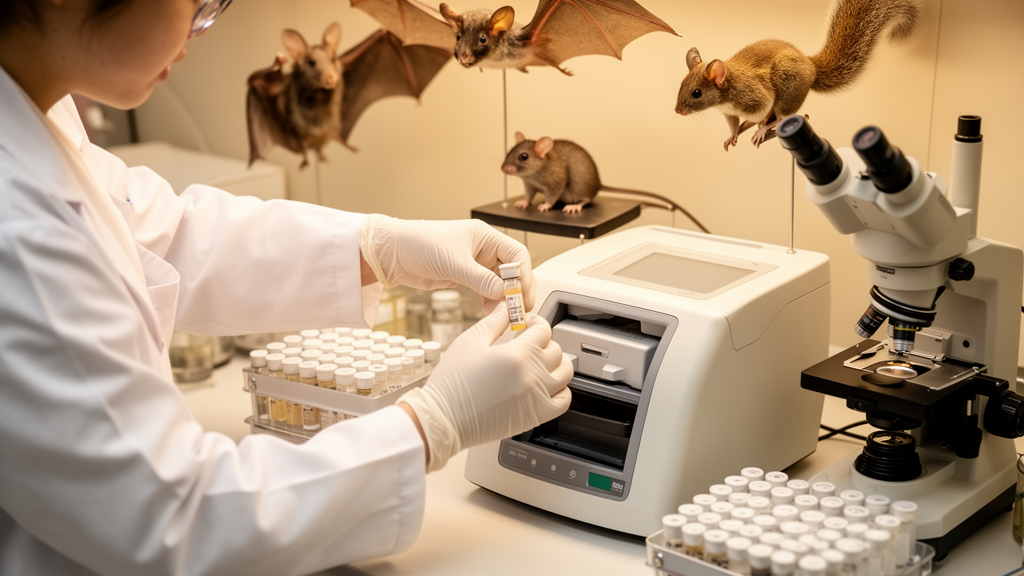
The study combined 129 tissue samples from vouchered specimens at the National Museum of Natural Science (NMNS) with 28 genetic tissue samples from rescued animals archived in the Taipei Zoo Cryobank. Expert curation confirmed the specimens’ taxonomic status using the current nomenclature for Taiwanese mammals. The NMNS is Taiwan’s largest natural history repository and holds more than one million specimens across several plant and animal groups. Many of those holdings have precise collection dates and locality information, while the study’s mammalian samples were linked to catalogue numbers, collection localities and identification records.
Genomic DNA was extracted with a DNeasy Tissue Kit. Seven PCR primer pairs were used to amplify the COI region, and products were verified by agarose-gel electrophoresis, purified and bidirectionally sequenced by Sanger sequencing. The resulting sequences ranged from 581 to 724 base pairs and averaged 682 base pairs. No primer pair was universally successful across the mammals examined. LepF1/R1 amplified the largest number of samples, 49 from 16 species, while FishF2/R2 covered the greatest number of species, 41 samples from 20 species. FishF1/R1 amplified 37 samples from 16 species. Together, the three pairs amplified 127 of 157 samples, or 80.89%, representing 42 species.
To assess whether the results were robust to broader sampling, the researchers combined the new sequences with 75 public Taiwanese COI sequences from GenBank. The resulting 232-sequence dataset was trimmed to a shared 527-base-pair alignment and analyzed with distance comparisons and a Kimura 2-parameter neighbor-joining tree. Most newly generated sequences clustered with conspecific public sequences or with other newly generated conspecific sequences, generally supporting species-level identification by COI for the sampled mammals. Public sequences were available for 35 of the 48 taxa, so the expanded comparison remained uneven across the species represented.
In both the original and expanded datasets, 45 of the 48 taxa had positive barcode gaps, meaning their nearest-neighbor distances exceeded their maximum intraspecific distances. Three exceptions were the moles Mogera insularis and M. kanoana and the giant flying squirrel Petaurista grandis. For M. insularis, maximum intraspecific K2P distance was 20.89% in the original dataset and 20.94% in the expanded dataset, compared with a 7.26% nearest-neighbor distance to M. kanoana. P. grandis had a maximum intraspecific distance of 20.19% and a 7.52% nearest-neighbor distance to Petaurista lena. The authors said these patterns could reflect numts, taxonomic complexity, geographic structure, primer-related differences or limited sampling and should not be treated as evidence of species synonymy.
Screening identified six newly generated sequences from five taxa containing stop codons in the standardized alignment: one each from M. insularis, M. kanoana, Viverricula indica and Belomys pearsonii kaleensis, and two from P. grandis. Three newly generated Rattus tanezumi sequences were also flagged as putative numts based on revised tree placement and full-length inspection, despite lacking stop codons in the trimmed alignment. For M. insularis sample T0019115, two primer pairs produced markedly different sequences from the same DNA extract. The longer, higher-quality FishF2/R2 product was deposited in BOLD, but the shorter LepF1/R1 fragment was more similar to other M. insularis samples, showing that primer choice can affect which COI-like sequence is recovered. The study used translation checks, chromatogram and full-length inspection, primer history, tree placement, distance context and comparisons with public sequences to identify suspicious records.
In BOLD, the 157 sequences formed 55 operational taxonomic units; 145 were assigned to 49 Barcode Index Numbers, including 43 concordant BINs and five singleton BINs, while 12 were unassigned and one BIN was discordant. These clustering results were treated as screening information rather than direct taxonomic evidence. The library also detected a source-label inconsistency among four Formosan black bear samples: one captive bear labeled as the Taiwanese subspecies differed markedly from the other three and was identified as an Asian black bear that did not originate from Taiwan. The study also measured greater than 3% COI divergence between Taiwanese ferret-badgers and populations in mainland China and Vietnam, a result consistent with—but not sufficient on its own to establish—treating Taiwan’s population as a distinct species.
The resulting resource is a curated, voucher-linked baseline for molecular identification of Taiwan’s non-volant terrestrial mammals, with public access through BOLD and explicit flags for uncertain records. Its main limitations are uneven within-species sampling, the concentration of anomalous sequences in a small number of taxa and the need for independent confirmation before flagged records are treated as validated mitochondrial COI references. The study supports use of the library for taxonomic verification, conservation research, wildlife monitoring and forensic applications, while the authors caution that further geographic sampling and multi-evidence sequence checks are needed to improve estimates of intraspecific variation and resolve the flagged lineages.
Subject of Research: Construction and evaluation of a COI DNA barcode reference library for Taiwan’s non-volant terrestrial mammals
Article Title: Construction of a COI DNA barcode reference library for non-volant terrestrial mammals of Taiwan, with notes on the effects of nuclear mitochondrial pseudogenes (numts) on molecular identification
Article References: Chen, Y.-J., Chiang, Y.-L., Chi, M.-J., Chang, S.-W., & Jang-Liaw, N.-H. (2026). Construction of a COI DNA barcode reference library for non-volant terrestrial mammals of Taiwan, with notes on the effects of nuclear mitochondrial pseudogenes (numts) on molecular identification. ZooKeys, 1293, 45-77. https://doi.org/10.3897/zookeys.1293.190114
Image Credits: AI Generated
DOI: 10.3897/zookeys.1293.190114
Keywords: DNA barcoding, COI reference library, Taiwan mammals, nuclear mitochondrial pseudogenes, BOLD, voucher specimens, species identification, barcode gap analysis, wildlife forensics, Construction, barcode, reference
News Source: Juliet Wilcox. (October 20, 2026). Taiwan study develops COI barcode reference library for 48 non-volant terrestrial mammal taxa. Scienmag.