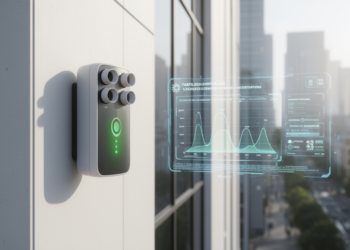
Improving IoT-Based Air Quality Monitoring Systems through Evidence-Based Validation
A critical review identifies significant reliability challenges and future developmental requirements for Internet of Things-based air quality monitoring systems.
A critical review identifies significant reliability challenges and future developmental requirements for Internet of Things-based air quality monitoring systems.
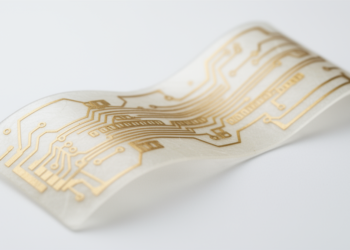
Researchers are developing sustainable, flexible electronic devices using natural biopolymers like chitosan, cellulose, starch, silk fibroin, and gelatin as eco-friendly ...

Tohoku University researchers have introduced an interfacial intelligence framework combining polymer physics, machine learning, and experiments to design and predict ...
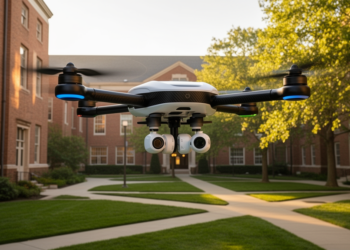
A new UAV-based IoT platform successfully maps micro-gradients in air quality, capturing spatial variations in ozone and nitrogen dioxide that ...

By employing Response Surface Methodology (RSM) with an I-optimal design, the team quantified the complex interplay between geometric parameters and ...

Researchers developed core–shell conductive elastomeric fibers that enhance elasticity and durability in fabric-based wearable strain sensors.

Two commercially available aldehyde probes detect hydrazine in water at detection limits of 12 and 36 nanomolar through a condensation-driven ...
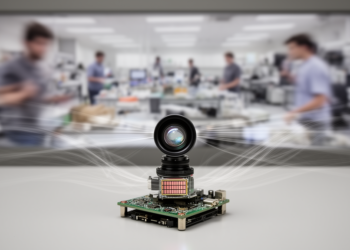
A 34 × 34 augmented vision sensor reduced perception-generated data by more than 96% while maintaining information entropy of 7.08 ...

Researchers have built a large-scale iontronic skin with more than 10,000 sensing units and a neural-hierarchical processing architecture that lets ...

Binghamton University researchers have developed a printable wallpaper containing moist-electric generators that harvest indoor humidity to produce electricity for low-power ...