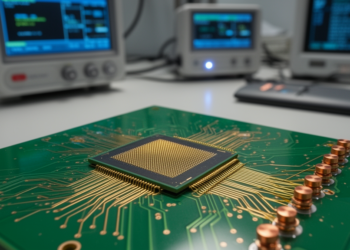
Adaptive Decision Tree Rectifier Boosts Energy Harvesting Efficiency By 17.5 Percent
Researchers have developed an adaptive radio frequency rectifier utilizing decision tree impedance tuning that delivers a 17.5 percent improvement in ...
Researchers have developed an adaptive radio frequency rectifier utilizing decision tree impedance tuning that delivers a 17.5 percent improvement in ...
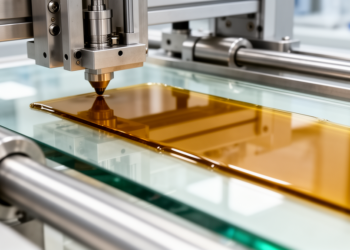
A synergistic additive strategy using formamidinium thiocyanate and rubidium thiocyanate enables scalable slot-die coating of durable, high-efficiency methylammonium-free perovskite solar ...
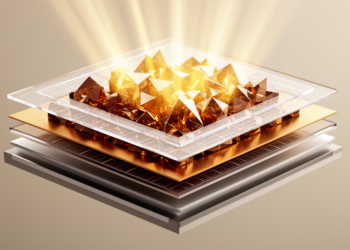
A theoretical study using SCAPS-1D modeling shows that lead-free Cs2CuSbBr6 solar cells can reach 28.18% efficiency when defect densities and ...
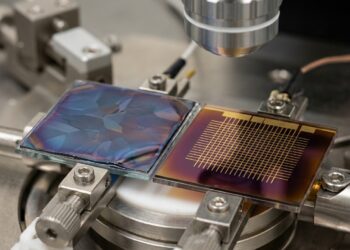
A drift–diffusion modeling study finds that trap-assisted SRH recombination mainly cuts the short-circuit current of organic solar cells while mostly ...
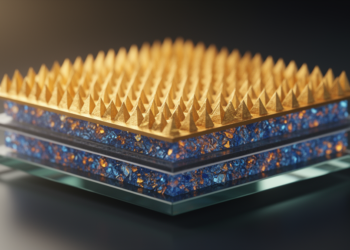
A simulation study finds that pairing serrated textures at the front interface and back electrode of all-perovskite tandem solar cells ...

A computational study designed three P3CPenT-based donor–acceptor molecules whose calculated energy gaps, visible-light absorption and theoretical efficiency descriptors outperform the ...

A PRISMA-guided review of 105 studies argues that moisture-driven degradation, not efficiency, is the key barrier facing perovskite solar cells ...
A precursor linkage strategy using acetate anions enabled single-phase Cu(In,Ga)Se2 films and solar cells with 18.53% champion efficiency.
An AI-guided framework identified a readily synthesizable self-assembled monolayer that delivers 27.2% efficiency and retains over 95% of initial efficiency ...
Researchers at Chiba University identified a thermodynamic boundary for photocurrent generation in organic solar cells and found that more rigid ...
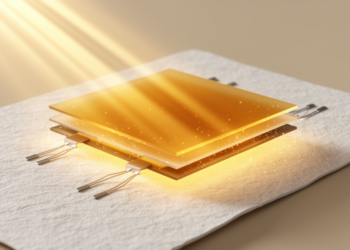
A simulation-only study predicts a lead-free, tin-free bilayer solar cell using Cs₂TiI₆ and La₂NiMnO₆ absorbers could reach 28.5% efficiency.
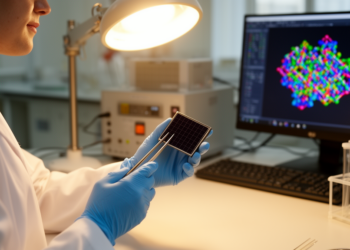
A research team used SCAPS-1D simulation to optimize a lead-free CsSnI3 perovskite solar cell and then fabricated it, lifting the ...
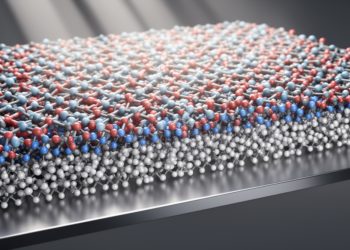
A methanol-assisted deposition process controlled cathode-interlayer molecular orientation and enabled a binary organic solar cell with certified 20.65% efficiency and ...
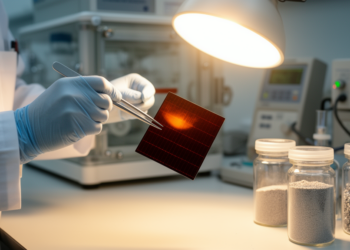
A SCAPS-1D simulation study reports that a lead-free inorganic Cs2BiAgI6 perovskite solar cell with optimized TiO2 and Cu2O transport layers ...

Simulations show that tuning the valence band offset at the hole transport layer interface of lead-free Cs2PdBr6 perovskite solar cells ...
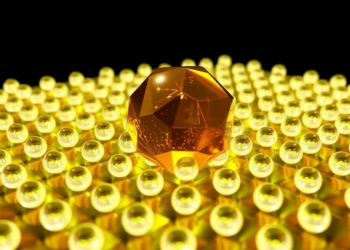
Researchers have discovered that tightly packed C60 molecules create band-like electronic states that drive recombination in perovskite solar cells, and ...

Researchers have introduced solid-state emissive guest acceptors that open thermally accessible radiative pathways, suppressing non-radiative voltage losses and enabling certified ...
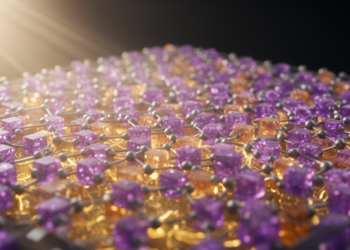
Researchers blended three self-assembled molecules into high-entropy hole-selective contacts, achieving a certified 27.31% efficiency and negligible loss after 1,300 hours ...
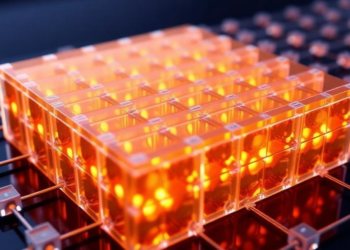
Researchers built 2D perovskite spacer cations in situ from formamidinium and n-hexyl phosphonic acid, achieving 26.32% efficiency and retaining over ...

Researchers fabricated spray-deposited CFTS/CdS solar cells reaching 5.23 percent efficiency and used SCAPS-1D simulations calibrated to the experiments to identify ...