• HOME
  • NEWS
  • EXPLORE
    • CAREER
      • Companies
      • Jobs
    • EVENTS
    • iGEM
      • News
      • Team
    • PHOTOS
    • VIDEO
    • WIKI
  • BLOG
  • COMMUNITY
    • FACEBOOK
    • INSTAGRAM
    • TWITTER
Thursday, November 19, 2026
BIOENGINEER.ORG
No Result
View All Result
  • Login
  • HOME
  • NEWS
  • EXPLORE
    • CAREER
      • Companies
      • Jobs
        • Lecturer
        • PhD Studentship
        • Postdoc
        • Research Assistant
    • EVENTS
    • iGEM
      • News
      • Team
    • PHOTOS
    • VIDEO
    • WIKI
  • BLOG
  • COMMUNITY
    • FACEBOOK
    • INSTAGRAM
    • TWITTER
No Result
View All Result
Bioengineer.org
No Result
View All Result
Home NEWS Science News Technology

Adaptive Decision Tree Rectifier Boosts Energy Harvesting Efficiency By 17.5 Percent

by
November 12, 2026
in Technology
Reading Time: 2 mins read
0
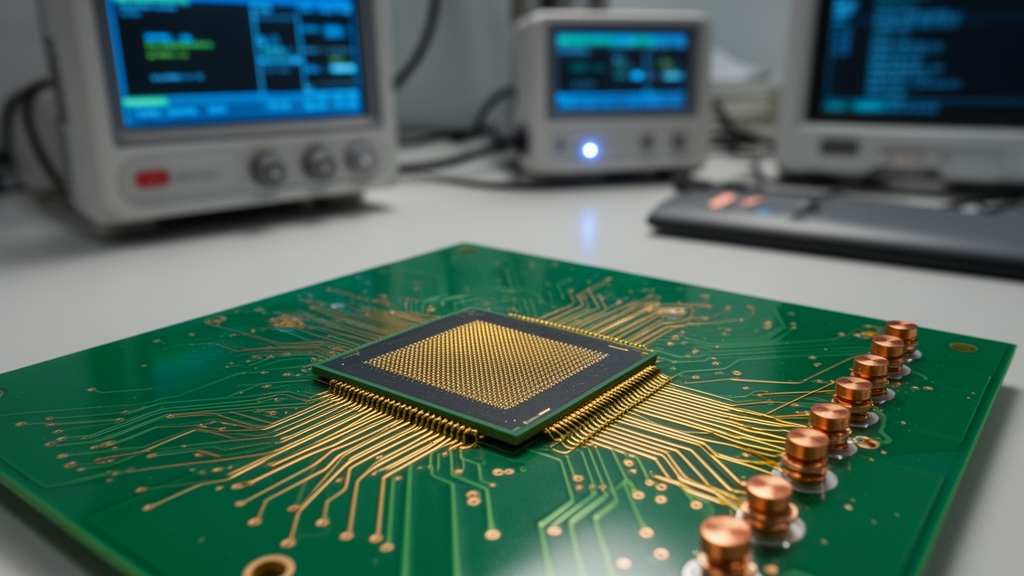
Adaptive Decision Tree Rectifier Boosts Energy Harvesting Efficiency By 17.5 Percent

Adaptive Decision Tree Rectifier Boosts Energy Harvesting Efficiency By 17.5 Percent

Share on FacebookShare on TwitterShare on LinkedinShare on RedditShare on Telegram

An adaptive radio frequency energy conversion architecture that utilizes machine learning for real-time impedance tuning has achieved a 17.5 percent improvement in power conversion efficiency over conventional static matching networks. Developed by researchers T. Sathiyapriya, V. Gurunathan, Govind Murari Upadhyay, and Shyam Akashe, the system—termed the Adaptive Impedance-Matched RF Energy Conversion Topology, or AIRECT—was detailed in a study published in Discover Applied Sciences. Experimental evaluations revealed that the topology achieved peak power conversion efficiencies of 72.6 percent at 0.915 GHz and 71.2 percent at 2.45 GHz, addressing a persistent efficiency bottleneck in ambient electromagnetic energy harvesting.

Radio frequency rectifiers serve an essential role in collecting ambient electromagnetic energy and transforming it into usable direct current electricity. This ambient power generation is increasingly targeted for low-power electronics, including Internet of Things sensor networks, wearable devices, and smart infrastructure. In conventional implementations, however, rectifiers rely on static impedance-matching networks. These fixed networks suffer from inherently limited power conversion efficiency and demonstrate poor adaptability whenever radio frequency operating conditions fluctuate.

To resolve these operational limitations, the AIRECT design integrates a dual-band voltage doubler rectifier configured for operation at both 0.915 GHz and 2.45 GHz alongside an automated adaptive impedance matching network. The tuning hardware incorporates switched capacitor banks and varactor tuning elements. Control over these components is driven by a Decision Tree model trained on the CART and C5.0 classification algorithms, allowing the system to adjust circuit parameters dynamically based on incoming radio frequency metrics, including input power, the reflection coefficient, and input impedance.

In performance testing, the Decision Tree model demonstrated an inference time of 2.83 milliseconds and attained a prediction accuracy of 98.9 percent. The researchers highlighted that the model maintains low computational complexity, rendering it suitable for direct embedded implementation on resource-constrained platforms. By combining rapid millisecond-scale execution with high predictive accuracy, the adaptive network maintains alignment under varying operational conditions without requiring heavy processing overhead.

The authors reported that the resulting architecture provides a practical and energy-efficient solution for adaptive radio frequency harvesting across low-power Internet of Things networks and biomedical applications. Published as an open-access research article under peer-reviewed acceptance, the study demonstrates a viable pathway for improving energy capture from common ambient wireless transmissions without introducing prohibitive computational burdens.

Subject of Research: Adaptive impedance matching in dual-band radio frequency energy harvesting rectifiers

Article Title: Energy-efficient self-matched RF rectifier with decision tree-based adaptive impedance tuning

Article References: Sathiyapriya, T., Gurunathan, V., Upadhyay, G. M., & Akashe, S. (2026). Energy-efficient self-matched RF rectifier with decision tree-based adaptive impedance tuning. Discover Applied Sciences. https://doi.org/10.1007/s42452-026-09681-z

Image Credits: AI Generated

DOI: 10.1007/s42452-026-09681-z

Keywords: radio frequency energy harvesting, RF rectifiers, AIRECT, adaptive impedance matching, power conversion efficiency, decision tree algorithms, CART algorithm, C5.0 algorithm, voltage doubler rectifier, switched capacitor banks, varactor tuning, dual-band rectifiers, 0.915 GHz, 2.45 GHz, reflection coefficient, Internet of Things, wearable devices, biomedical applications

News Source: Denise Maddox. (November 12, 2026). Adaptive Decision Tree Rectifier Boosts Energy Harvesting Efficiency By 17.5 Percent. Scienmag.


Tags: 0.915 GHz2.45 GHzadaptive impedance matchingAIRECTbiomedical applicationsC5.0 algorithmCART algorithmdecision tree algorithmsdual-band rectifiersInternet of Thingspower conversion efficiencyradio frequency energy harvestingreflection coefficientRF rectifiersswitched capacitor banksvaractor tuningvoltage doubler rectifierwearable devices
Share12Tweet7Share2ShareShareShare1

Related Posts

FinTech Expansion Drives Higher Audit Fees in Chinese Non-Financial Listed Firms

FinTech Expansion Drives Higher Audit Fees in Chinese Non-Financial Listed Firms

November 19, 2026
Controlled Precursor Transformation Yields High-Performance LiFePO4 Cathodes

Controlled Precursor Transformation Yields High-Performance LiFePO4 Cathodes

November 19, 2026

Simulated lead-free double perovskite solar cell reaches 33.55 percent efficiency

November 19, 2026

Coal Gangue Replacement Up to Thirty Percent Optimizes Geopolymer Pervious Concrete

November 19, 2026

POPULAR NEWS

  • Municipal Leaders Rely on Tech Champions Lacking Training and Compensation

    Municipal Leaders Rely on Tech Champions Lacking Training and Compensation

    29 shares
    Share 12 Tweet 7
  • Virtual Reality Cognitive Games Show Preliminary Promise for Stroke Recovery Outcomes

    29 shares
    Share 12 Tweet 7
  • Alzheimer’s Risk Gene SORL1 Deficiency Impairs Mitochondrial Function in Human Microglia

    29 shares
    Share 12 Tweet 7
  • Optimized Streptozotocin Delivery Regimen Improves Sporadic Alzheimer’s Disease Modeling in Rodents

    29 shares
    Share 12 Tweet 7

About

We bring you the latest biotechnology news from best research centers and universities around the world. Check our website.

Follow us

Recent News

Chromatin Mapping Identifies BrKAN2 as a Master Regulator of Leaf Heading

Winter Migratory Ducks Carry Diverse Antibiotic Resistance Genes Across Japan

Age Predicts White Matter Lesions in Migraine Rather Than Headache Characteristics

Subscribe to Blog via Email

Enter your email address to subscribe to this blog and receive notifications of new posts by email.

Join 88 other subscribers
  • Contact Us

Bioengineer.org © Copyright 2023 All Rights Reserved.

Welcome Back!

Login to your account below

Forgotten Password?

Retrieve your password

Please enter your username or email address to reset your password.

Log In
No Result
View All Result
  • Homepages
    • Home Page 1
    • Home Page 2
  • News
  • National
  • Business
  • Health
  • Lifestyle
  • Science

Bioengineer.org © Copyright 2023 All Rights Reserved.