
PLOS Pathogens retracts Flaviviridae methylation study
PLOS Pathogens retracted a study on Flaviviridae methylation due to unresolved concerns about data integrity in specific figures.
PLOS Pathogens retracted a study on Flaviviridae methylation due to unresolved concerns about data integrity in specific figures.

A PLOS Pathogens study shows that SARS-CoV-2 RNA, nucleocapsid protein and anti-N IgG1 form immune complexes that trigger inflammatory cytokines ...
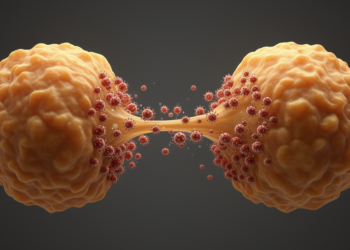
HIV-1 cell-to-cell infection of macrophages escapes the BST-2 tetherin restriction factor independently of Vpu, while remaining sensitive to the protease ...
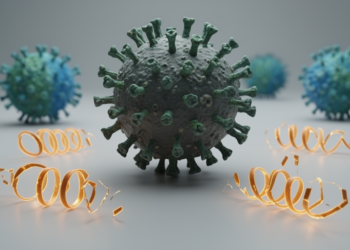
A PLOS Pathogens study provides the first systematic characterization of defective viral genomes generated during PRRSV-2 infection, linking them to ...
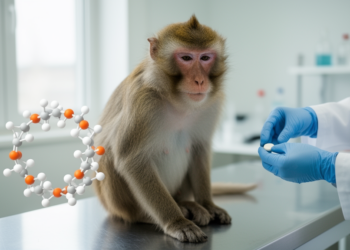
Oral uracil treatment increased susceptibility to rectal SIV acquisition in macaques despite limited measurable intestinal immune changes, while uracil suppositories ...

A new PLOS Pathogens review introduces the NIAID-funded MUCOR-ADVANCE consortium, which unites diagnostics, immunotherapy and pathogenesis research against mucormycosis, a ...
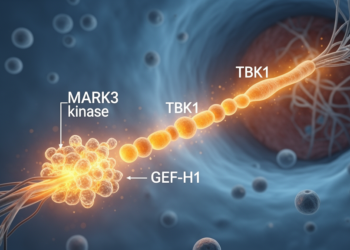
A new study identifies MARK3 as a kinase that promotes type I interferon production by phosphorylating GEF-H1 and activating the ...
A study of people with HIV-1 and cryptococcal meningitis reveals diverse mechanisms shaping viral populations in the central nervous system, ...
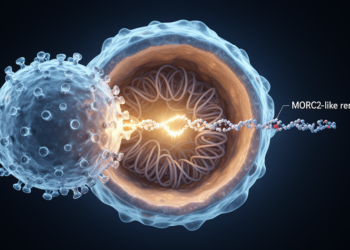
A new PLOS Pathogens study shows that human cytomegalovirus induces and recruits the host chromatin remodeler MORC2 to viral replication ...

A multiomic study in PLOS Pathogens shows that intranasal HSV-1 infection drives localized, interferon-dominated remodeling of microglia in discrete brainstem ...
Researchers engineered a cell-penetrating peptide that mimics the intracellular function of the SCARB2 receptor, broadly inhibiting EV-A71 and CV-A16 in ...

A new PLOS Pathogens study finds that the microRNA-1246 regulates macrophage lipid metabolism and helps explain why some household contacts ...

New research reveals how nitrogen starvation, a cryptochrome photoreceptor, and humidity checkpoints govern the transcriptional program that drives spore formation ...
Researchers have identified the nuclear receptor AcNR1F as a ligand-activated molecular switch that regulates cuticle remodeling, development, and reproduction in ...
A tuberculosis toxin that destroys only the tryptophan transfer RNA tricks the bacterium into boosting amino acid synthesis while preserving ...
A new PLOS Pathogens study shows that the interferon-induced GTPase GBP7 unexpectedly promotes HSV-1 infection by activating the translation factor ...

New structural and biochemical analyses of the hepatitis C virus E2 glycoprotein show that germline-reverted broadly neutralizing antibodies recognize the ...

New research in PLOS Pathogens shows that Zika virus produces two isoforms of the NS2A protein, with the full-length form ...

A coupled epidemiological and evolutionary model of influenza shows that vaccination can accelerate viral escape and even raise infection incidence ...
New research in mice shows that curli amyloid fibers from Salmonella and E. coli biofilms can drive the production of ...