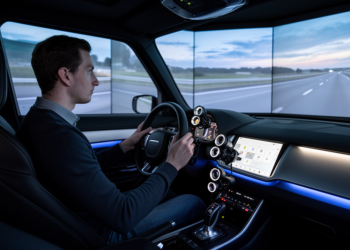
Multimodal Edge AI System Accurately Detects Driver Impairment in Real-Time Simulator Tests
Researchers have engineered an edge-computing driver monitoring system that couples multimodal sensor fusion with a local language model to deliver ...
Researchers have engineered an edge-computing driver monitoring system that couples multimodal sensor fusion with a local language model to deliver ...
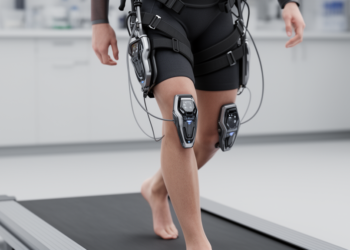
A study in healthy adults demonstrates that bilateral thigh-mounted inertial sensors can reliably estimate step lengths and detect gait asymmetry ...
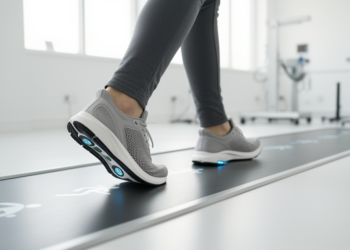
Wearable inertial sensors combining spatiotemporal and swing metrics separated uncomplicated from complicated hereditary spastic paraplegia with 86.8 percent accuracy in ...

A study reveals that people with mild to moderate Parkinson’s disease adopt varied axial coordination strategies rather than uniform en-bloc ...
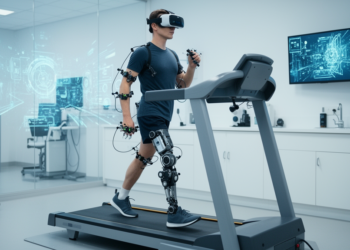
A study finds individuals with lower-limb amputation demonstrate high tolerance and distinct gait adaptations as immersive virtual reality environments become ...

A systematic review finds low evidence of reliability and variable validity for inertial sensor scores in Parkinson's disease motor evaluations.
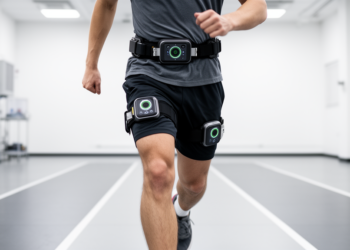
A personalized deep learning framework using wearable inertial sensors accurately estimates continuous hip adduction and flexion moments across diverse walking ...
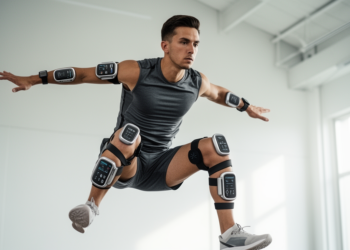
A comprehensive narrative review reveals that while wearable sensors and artificial intelligence effectively track functional athletic movement, current evidence does ...
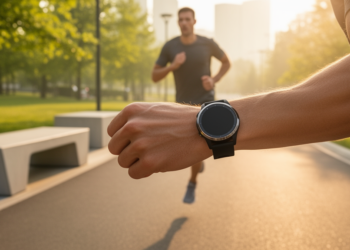
A privacy-preserving federated learning framework named FedXHAR resolves data heterogeneity and personal movement tracking across wearable sensors without exposing raw ...
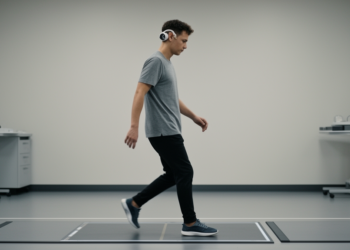
Adults with sensorineural hearing loss and vestibular impairment exhibit restricted, less consistent multi-segment movements during demanding walking tasks.

Computer scientists developed an unsupervised cross-domain adaptation framework that improves wearable activity recognition across varying users, genders, and sensor locations ...
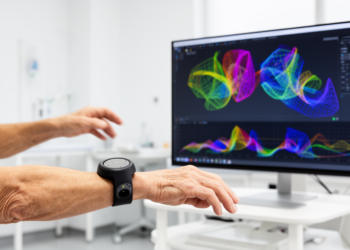
A systematic review of seventeen studies reveals that artificial intelligence and single inertial sensors can recognize functional activities in stroke ...
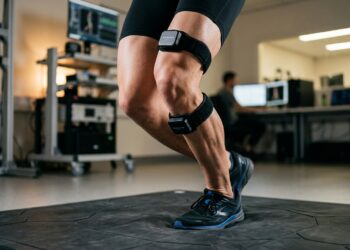
Wearable inertial measurement units distinguished table tennis players categorized into higher movement-fault tiers based on knee joint valgus and angular ...
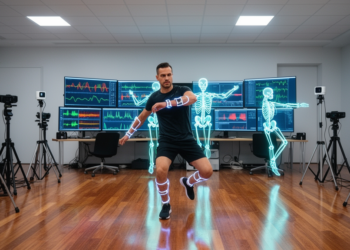
Researchers developed a multimodal deep-learning framework that evaluates competitive aerobics movements by combining synchronized video, skeletal tracking, wearable inertial data, ...

An experimental trial in older adults reveals that walking exercise at the first ventilatory threshold temporarily destabilizes static balance, while ...

In a cross-sectional study of 105 stroke survivors, turning performance under dual-task conditions predicted safe mobility and mediated the functional ...

Engineers instrumented an electric scooter with panoramic stereo cameras, time-of-flight sensors, helmet telemetry, and satellite positioning to record two-wheeler dynamics ...
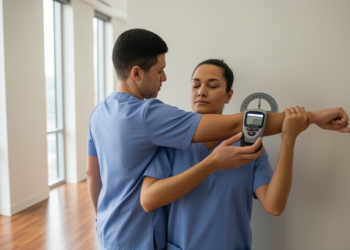
A systematic review indicates that smartphone applications and wearable sensors achieve favorable reliability for measuring active shoulder range of motion, ...
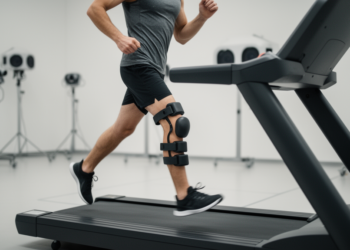
A novel human joint motion capture model combining quaternion forward kinematics, dynamic calibration, and the Madgwick algorithm achieves reduced orientation ...
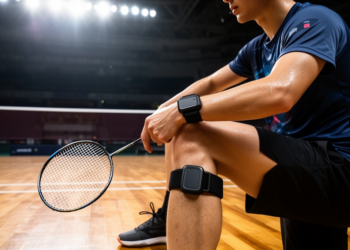
Researchers evaluated offline machine-learning classification of physical fatigue in badminton athletes using wearable inertial measurement units, achieving fold-mean area under ...