
Rail Contaminants and Creepage Sharply Alter Wheel-Rail Friction and Wear Rates
Twin-disc experiments and numerical simulations reveal how leaf debris, oil lubricants, and creepage dictate friction stability and severe wear at ...
Twin-disc experiments and numerical simulations reveal how leaf debris, oil lubricants, and creepage dictate friction stability and severe wear at ...
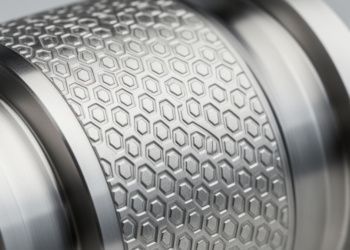
Researchers found that applying an R3-2-3 combined surface texture to reciprocating plunger pairs reduced the mean friction coefficient by 53.9 ...
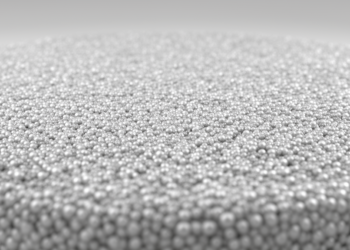
A systematic study reveals that controlled thermal curing and ambient storage aging reduce wear scar dimensions by over eighty percent ...
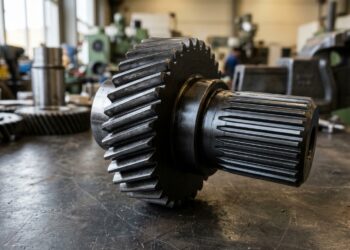
A systematic study reveals that salt-bath nitrocarburizing at 570 degrees Celsius for two hours creates a balanced compound layer that ...
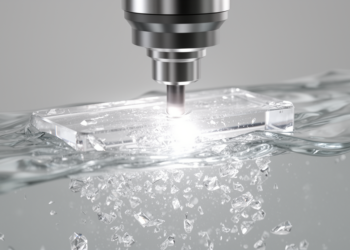
A multiscale study combining macroscopic tribometer tests and molecular dynamics simulations reveals that an aqueous medium reduces friction while accelerating ...
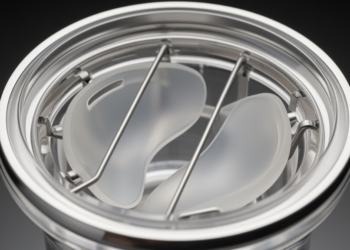
Computational simulations show that embedding structural stays into the two-circle geometric construction of the Wheatley aortic valve mitigates leaflet buckling ...
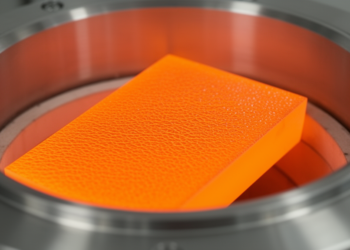
Vacuum annealing of laser-cladded CoCrFeNiAl0.7 high-entropy alloy coatings at 750 °C for four hours significantly enhances hardness while minimizing friction ...

Researchers calibrated a Drucker-Prager constitutive model using response surface methodology to accurately predict compression damage and robotic gripping forces across ...

A three-dimensional numerical study shows that oblique fretting contact regions in planetary gear systems fluctuate with changing load magnitudes rather ...
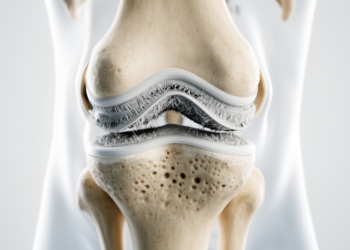
An ex vivo biomechanical study reveals that degenerated human menisci couple increased surface friction with reduced compressive stiffness under simulated ...
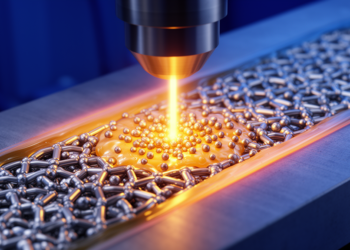
Researchers found that adding two weight percent cerium oxide refined the microstructure, increased microhardness, and enhanced the wear and corrosion ...
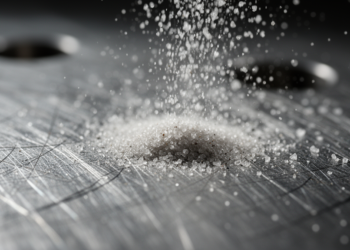
Wear tests on gear steel showed that smaller sand particles remove more material than larger grains despite generating less friction.
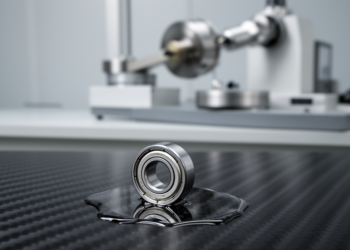
A new study reports that PEEK composites co-reinforced with carbon fiber and hexagonal boron nitride achieved a friction coefficient of ...
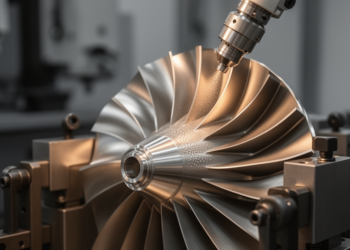
Researchers used room-temperature surface mechanical attrition treatment to refine the grains of Inconel X-750, raising surface hardness by 12.5 percent ...
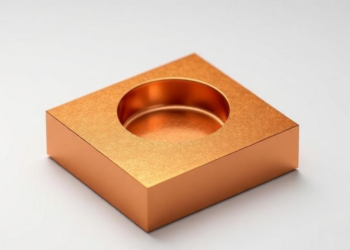
Molecular dynamics simulations show that polycrystalline CuCrCoFeNi high-entropy alloy coatings absorb most scratch-induced deformation through stacking faults, dislocation structures, and ...