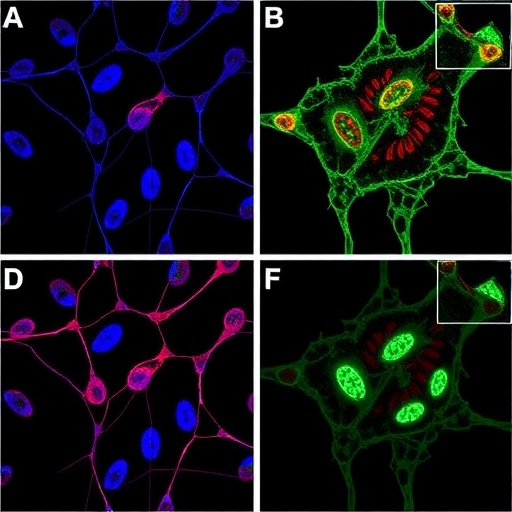
In a groundbreaking effort to propel research on pituitary tumours into a new era, scientists at the Germans Trias i Pujol Research Institute’s Endocrinology, Thyroid and Obesity Research Group have conducted a comprehensive systematic review that synthesizes and catalogs the vast array of omics data accumulated in this domain. With pituitary neuroendocrine tumours (PitNETs) representing a complex and heterogeneous class of disorders, understanding their molecular underpinnings is critical for advancing diagnosis, prognosis, and treatment options. This ambitious project aggregates data from 471 scientific papers published through mid-2025, employing cutting-edge omics technologies such as genomics, transcriptomics, epigenomics, and proteomics.
Omics sciences, capitalizing on high-throughput technologies, allow for the holistic analysis of genetic material, gene expression profiles, protein dynamics, and epigenetic modifications. The study’s synthesis of pituitary tumour related omics data addresses a pressing bottleneck: disparate datasets scattered across multiple repositories, often accompanied by inconsistent annotations and limited clinical metadata. By creating a unified centralized catalogue, the researchers have constructed a powerful resource designed to facilitate data reuse, cross-validation, and integration, thus enabling the development of more precise and personalized predictive models for pituitary diseases.
Joan Gil, the study’s lead author, articulates the significance of this project, emphasizing that the systematic review not only harvests and catalogs existing data, but also standardizes method descriptions and clinical annotations, setting a foundation upon which future research initiatives can build. The catalogue consolidates information on data availability and methodological diversity, addressing a critical gap hindering the interoperability and comparability of omics datasets in the pituitary tumour research landscape. This resource paves the way for improved reproducibility and benchmarking within this specialized field.
Despite rapid advances in omics technologies, the review highlights significant challenges that temper their transformative potential. The most glaring limitation is the pervasive lack of standardized data formats and comprehensive clinical annotations accompanying many datasets. Such deficits compromise the utility of data for precision medicine applications, where detailed phenotypic and clinical metadata are essential to contextualize molecular findings. The absence of these standardized, granular annotations hinders the derivation of robust, generalizable models capable of predicting disease trajectories or therapeutic responses across diverse patient cohorts.
Manel Puig-Domingo, senior author and leader of the endocrinology research group, underscores how these challenges curtail the exploitation of omics data in pituitary tumours. His insights reveal that despite methodological breakthroughs spanning next-generation sequencing, mass spectrometry-based proteomics, and single-cell transcriptomics, translational progress stalls without clinically meaningful data harmonization. This revelation calls for concerted efforts to embed rigorous clinical annotation practices and data standards in future omics studies to maximize impact on patient care.
Furthermore, the study pioneers a novel framework for categorizing omics datasets not only by their biological scope but also by their prospective utility in precision medicine. This critical evaluation stratifies data based on factors such as data accessibility, annotation richness, and relevance to specific pituitary tumour subtypes or syndromes like acromegaly and Cushing’s disease. By offering this nuanced perspective, the authors equip researchers with a roadmap that guides dataset selection for targeted investigations, hypothesis testing, and the design of integrative, multi-omics analyses.
The significance of this aggregate knowledge cannot be overstated. Pituitary tumours represent a unique clinical challenge marked by varied hormone secretion profiles, diverse etiologies, and often unpredictable outcomes. The improved ability to leverage consolidated multi-omics data will foster the identification of novel biomarkers for early diagnosis, molecular classification of tumour subtypes, and therapeutic targets. Enhanced dataset accessibility also promotes collaborative research endeavors, accelerating innovation through shared insights and cross-disciplinary approaches.
This systematic review and resulting catalogue align strongly with broader scientific trajectories emphasizing open science, FAIR data principles (Findable, Accessible, Interoperable, Reusable), and integrative bioinformatics. Enabling secondary use of data for validation and benchmarking not only increases research efficiency but also reduces redundancy, fostering cumulative knowledge accrual. These initiatives represent essential steps toward the realization of truly personalized medicine paradigms in neuroendocrinology.
Technically, the process leveraged advanced data-mining algorithms and bioinformatics pipelines to extract metadata and standardize annotations across heterogeneous studies. The compilation entailed mapping diverse omics platforms, normalizing datasets, and annotating clinical variables derived from multiple sources, thus creating a relational database capable of supporting complex queries and integrative analytics. This rigorous methodology ensures robustness and extensibility, making the catalogue a dynamic resource that will evolve with the field.
From a translational standpoint, this endeavor bridges foundational molecular discoveries with clinical applicability. By highlighting data gaps and advocating for improved annotation standards, the study catalyzes a virtuous cycle where molecular data informs clinical protocols and clinical observations refine molecular inquiries. Ultimately, this synergy promises enhanced patient stratification and individualized therapeutic regimens for pituitary tumour patients, addressing current unmet clinical needs.
In summation, this monumental review and data harmonization initiative spearheaded by the IGTP research group exemplifies how systematic curation and structured integration of omics data can revolutionize niche medical fields. Beyond compiling information, it delivers a strategically organized knowledge platform that empowers future research to transcend existing barriers in pituitary tumour biology. As biomedical research increasingly embraces big data and precision medicine, such frameworks will become indispensable tools shaping the future of personalized healthcare.
Subject of Research: Cells
Article Title: Assessing the Value of Data-Driven Frameworks for Personalized Medicine in Pituitary Tumours: A Critical Overview
News Publication Date: 8-Jan-2026
Web References: http://dx.doi.org/10.3390/make8010016
Image Credits: IGTP
Keywords: Omics, Personalized medicine, Bioinformatics, Oncology, Cancer research, Pituitary gland
Tags: advancing diagnosis and treatment of PitNETscentralized resource for omics datachallenges in clinical metadata for tumorscomprehensive catalog of omics studiesdata integration in cancer researchepigenomics and proteomics researchgenomics and transcriptomics in PitNETshigh-throughput omics technologiesmolecular underpinnings of pituitary disorderspersonalized predictive models for pituitary diseasespituitary tumors omics datasystematic review of pituitary neuroendocrine tumors