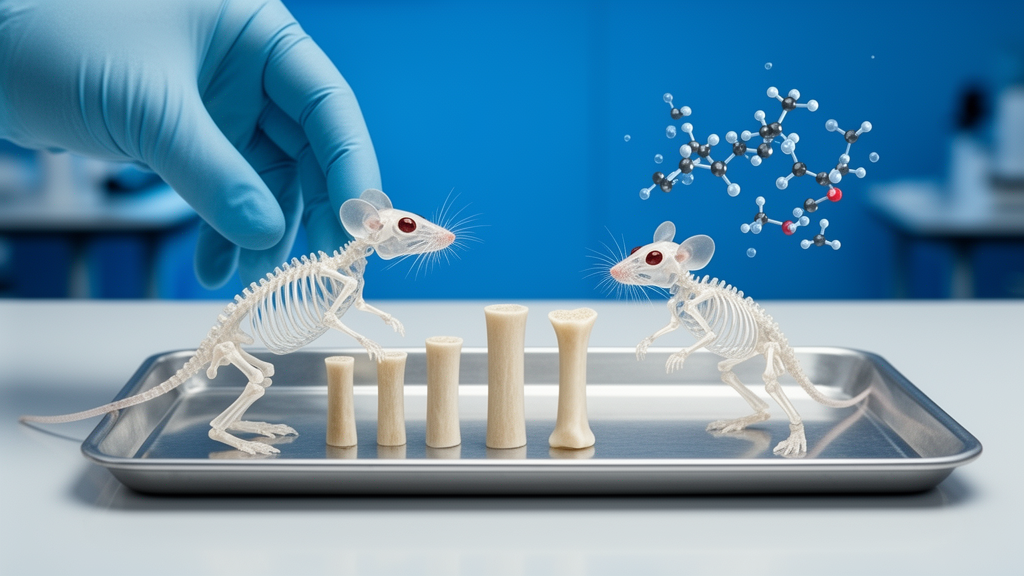
A systematic review of 13 preclinical studies reports that ellagic acid improved bone-related outcomes in laboratory systems by supporting osteoblast differentiation and bone formation while suppressing osteoclast differentiation and bone resorption. The studies included cell experiments and animal models of osteoporosis induced by ovariectomy or microgravity. Across those models, ellagic acid was associated with better bone mineral density, trabecular microarchitecture and mechanical strength.
The review found convergent evidence linking these effects to signaling pathways involving SMAD2/3, BMP2, SIRT1/Nrf2/HO-1, CDK12, RANKL–RANK, NF-κB, MAPK and ERK. Its scope was limited to English-language in vivo and in vitro research available through November 2025; it did not test ellagic acid in people with osteoporosis. The researchers searched PubMed, Scopus, Web of Science and Google Scholar in accordance with PRISMA guidelines.
Eligible investigations assessed the effects of ellagic acid on osteoporosis-related outcomes. Information was extracted about each experimental model, the compound’s dosage and administration, the signaling pathways evaluated and the bone-related results. Thirteen studies met the inclusion criteria.
The evidence came from cell cultures and animal models rather than clinical trials, so the findings describe laboratory activity under experimental conditions rather than established benefits for human bone health. The review’s purpose was to assess the available preclinical evidence and identify molecular pathways associated with ellagic acid’s effects. Ellagic acid enhanced osteoblast differentiation, viability and bone-forming capacity in the included experiments.
It increased osteogenic markers and was associated with activation of SMAD2/3 and BMP2 signaling, as well as the SIRT1/Nrf2/HO-1 pathway. The compound also inhibited CDK12, which the review identified as a negative regulator of osteoblast differentiation. In parallel, ellagic acid reduced osteoclast differentiation and bone resorption.
It disrupted RANKL–RANK interactions and inhibited downstream NF-κB, MAPK and ERK signaling. Together, these results indicate that the compound affected both bone formation and bone breakdown in the reviewed experimental systems. They do not establish that the same balance of effects will occur in patients.
Animal experiments extended these cellular findings to structural and mechanical outcomes. In ovariectomy-induced and microgravity-induced osteoporosis models, ellagic acid administration improved bone mineral density, preserved trabecular microarchitecture and increased mechanical strength. The treated animals also showed attenuation of oxidative stress and inflammatory responses within the bone microenvironment.
These observations are consistent with the review’s interpretation that ellagic acid may protect bone through coordinated effects on formation, resorption and the cellular environment. However, the evidence base consists of controlled preclinical studies rather than human trials. The authors also identified bioavailability as an important challenge for translating the results.
They concluded that large-scale, long-term clinical studies are required to confirm efficacy, determine appropriate dosing strategies and address bioavailability before ellagic acid can be considered an established osteoporosis treatment.
Subject of Research: Preclinical evidence on ellagic acid effects in osteoporosis cell and animal models
Article Title: Ellagic acid and bone health: a systematic review of preclinical studies on its protective role against osteoporosis
Article References: Gholizadeh, M., Sarajar, B. O., Asadi, J., & Soleimani, A. A. (2026). Ellagic acid and bone health: a systematic review of preclinical studies on its protective role against osteoporosis. Molecular Biology Reports, 53(1), Article 1531. https://doi.org/10.1007/s11033-026-12648-3
Image Credits: AI Generated
DOI: 10.1007/s11033-026-12648-3
Keywords: ellagic acid, osteoporosis, systematic review, preclinical studies, bone formation, bone resorption, osteoblasts, osteoclasts, animal models, clinical evidence, Ellagic, acid
News Source: Drew Townsend. (October 20, 2026). Systematic review maps ellagic acid’s bone effects in preclinical models. Scienmag.