• HOME
  • NEWS
  • EXPLORE
    • CAREER
      • Companies
      • Jobs
    • EVENTS
    • iGEM
      • News
      • Team
    • PHOTOS
    • VIDEO
    • WIKI
  • BLOG
  • COMMUNITY
    • FACEBOOK
    • INSTAGRAM
    • TWITTER
Wednesday, August 12, 2026
BIOENGINEER.ORG
No Result
View All Result
  • Login
  • HOME
  • NEWS
  • EXPLORE
    • CAREER
      • Companies
      • Jobs
        • Lecturer
        • PhD Studentship
        • Postdoc
        • Research Assistant
    • EVENTS
    • iGEM
      • News
      • Team
    • PHOTOS
    • VIDEO
    • WIKI
  • BLOG
  • COMMUNITY
    • FACEBOOK
    • INSTAGRAM
    • TWITTER
  • HOME
  • NEWS
  • EXPLORE
    • CAREER
      • Companies
      • Jobs
        • Lecturer
        • PhD Studentship
        • Postdoc
        • Research Assistant
    • EVENTS
    • iGEM
      • News
      • Team
    • PHOTOS
    • VIDEO
    • WIKI
  • BLOG
  • COMMUNITY
    • FACEBOOK
    • INSTAGRAM
    • TWITTER
No Result
View All Result
Bioengineer.org
No Result
View All Result
Home NEWS Science News Chemistry

Synthetic version of CBD treats seizures in rats

Bioengineer by Bioengineer
May 28, 2019
in Chemistry
Reading Time: 2 mins read
0
IMAGE
Share on FacebookShare on TwitterShare on LinkedinShare on RedditShare on Telegram

IMAGE

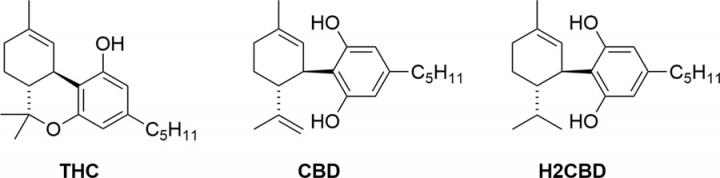
Credit: Mascal laboratory, UC Davis

A synthetic, non-intoxicating analogue of cannabidiol (CBD) is effective in treating seizures in rats, according to research by chemists at the University of California, Davis.

The synthetic CBD alternative is easier to purify than a plant extract, eliminates the need to use agricultural land for hemp cultivation, and could avoid legal complications with cannabis-related products. The work was recently published in the journal Scientific Reports.

“It’s a much safer drug than CBD, with no abuse potential and doesn’t require the cultivation of hemp,” said Mark Mascal, professor in the UC Davis Department of Chemistry. Mascal’s laboratory at UC Davis carried out the work in collaboration with researchers at the University of Reading, U.K.

Products containing CBD have recently become popular for their supposed health effects and because the compound does not cause a high. CBD is also being investigated as a pharmaceutical compound for conditions including anxiety, epilepsy, glaucoma and arthritis. But because it comes from extracts of cannabis or hemp plants, CBD poses legal problems in some states and under federal law. It is also possible to chemically convert CBD to tetrahydrocannabinol (THC), the intoxicating compound in marijuana.

8,9-Dihydrocannabidiol (H2CBD) is a synthetic molecule with a similar structure to CBD. Mascal’s laboratory developed a simple method to inexpensively synthesize H2CBD from commercially available chemicals. “Unlike CBD, there is no way to convert H2CBD to intoxicating THC,” he said.

One important medical use of cannabis and CBD is in treatment of epilepsy. The U.S. Food and Drug Administration has approved an extract of herbal CBD for treating some seizure conditions and there is also strong evidence from animal studies.

The researchers tested synthetic H2CBD against herbal CBD in rats with induced seizures. H2CBD and CBD were found to be equally effective for the reduction of both the frequency and severity of seizures.

Mascal is working with colleagues at the UC Davis School of Medicine to carry out more studies in animals with a goal of moving into clinical trials soon. UC Davis has applied for a provisional patent on antiseizure use of H2CBD and its analogues, and Mascal has founded a company, Syncanica, to continue development.

###

Additional authors on the paper are Nema Hafezi and Deping Wang at UC Davis, and Yuhan Hu, Gessica Serra, Mark Dallas and Jeremy Spencer at the University of Reading.

Media Contact
Andy Fell
[email protected]

Original Source

https://www.ucdavis.edu/news/synthetic-version-cbd-treats-seizures-rats

Related Journal Article

http://dx.doi.org/10.1038/s41598-019-44056-y

Tags: BiochemistryChemistry/Physics/Materials SciencesMedicine/HealthPharmaceutical ChemistryPharmaceutical SciencesPharmaceutical/Combinatorial Chemistry
Share12Tweet8Share2ShareShareShare2

Related Posts

AI Forecasts the Ocean Amid the Climate Crisis

August 12, 2026
Dual-interface design enables high-performance ampere-hour aqueous zinc-iodine pouch cells

Dual-interface design enables high-performance ampere-hour aqueous zinc-iodine pouch cells

August 12, 2026

Multiscale Hybridization and Chemical Bonding Create Ultra-Durable Flexible Strain Sensors

August 12, 2026

X-ray Science Moves Beyond the Nobel Prize’s Limits

August 12, 2026
Please login to join discussion

POPULAR NEWS

  • Cement Plants Could Help Remove COâ‚‚ From the Atmosphere

    29 shares
    Share 12 Tweet 7
  • Nearly All Tested Personal Care and Cleaning Products Contain Unlabeled Chemicals

    29 shares
    Share 12 Tweet 7
  • Molecular Clues Reveal Why Neuromas Cause Pain

    29 shares
    Share 12 Tweet 7
  • Mount Sinai Reaches Milestone 2 in $101 Million XPRIZE Healthspan Competition

    29 shares
    Share 12 Tweet 7

About

We bring you the latest biotechnology news from best research centers and universities around the world. Check our website.

Follow us

Recent News

Cement Plants Could Help Remove COâ‚‚ From the Atmosphere

Nearly All Tested Personal Care and Cleaning Products Contain Unlabeled Chemicals

Molecular Clues Reveal Why Neuromas Cause Pain

Subscribe to Blog via Email

Enter your email address to subscribe to this blog and receive notifications of new posts by email.

Join 86 other subscribers
  • Contact Us

Bioengineer.org © Copyright 2023 All Rights Reserved.

Welcome Back!

Login to your account below

Forgotten Password?

Retrieve your password

Please enter your username or email address to reset your password.

Log In
No Result
View All Result
  • Homepages
    • Home Page 1
    • Home Page 2
  • News
  • National
  • Business
  • Health
  • Lifestyle
  • Science

Bioengineer.org © Copyright 2023 All Rights Reserved.