• HOME
  • NEWS
  • EXPLORE
    • CAREER
      • Companies
      • Jobs
    • EVENTS
    • iGEM
      • News
      • Team
    • PHOTOS
    • VIDEO
    • WIKI
  • BLOG
  • COMMUNITY
    • FACEBOOK
    • INSTAGRAM
    • TWITTER
Monday, October 5, 2026
BIOENGINEER.ORG
No Result
View All Result
  • Login
  • HOME
  • NEWS
  • EXPLORE
    • CAREER
      • Companies
      • Jobs
        • Lecturer
        • PhD Studentship
        • Postdoc
        • Research Assistant
    • EVENTS
    • iGEM
      • News
      • Team
    • PHOTOS
    • VIDEO
    • WIKI
  • BLOG
  • COMMUNITY
    • FACEBOOK
    • INSTAGRAM
    • TWITTER
  • HOME
  • NEWS
  • EXPLORE
    • CAREER
      • Companies
      • Jobs
        • Lecturer
        • PhD Studentship
        • Postdoc
        • Research Assistant
    • EVENTS
    • iGEM
      • News
      • Team
    • PHOTOS
    • VIDEO
    • WIKI
  • BLOG
  • COMMUNITY
    • FACEBOOK
    • INSTAGRAM
    • TWITTER
No Result
View All Result
Bioengineer.org
No Result
View All Result
Home NEWS Science News

Synthetic nerve conduit bridges the gap in arm nerve repair

Bioengineer by Bioengineer
January 22, 2020
in Science News
Reading Time: 2 mins read
0
IMAGE
Share on FacebookShare on TwitterShare on LinkedinShare on RedditShare on Telegram

IMAGE

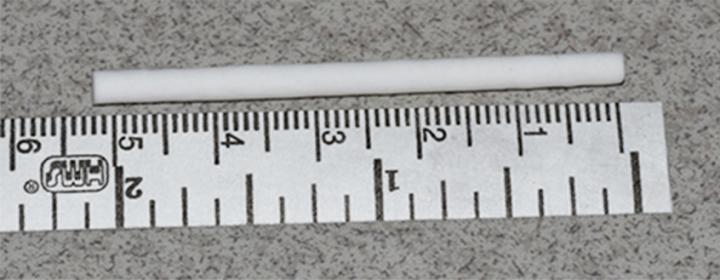
Credit: [Credit: N.B. Fadia et al., Science Translational Medicine (2019)]


A team of scientists has created a biodegradable, synthetic conduit that repairs large gaps in injured nerves, which supported recovery and accelerated neuronal healing in a macaque model. The synthetic nerve conduits could offer a viable alternative to autografts – the current gold standard treatment – for supporting the regeneration of nerves in patients who have experienced trauma and severe injuries. Traumas or surgical procedures can damage the body’s peripheral nerves, resulting in gaps between the nerves that impair movement and daily life. Peripheral nerves do have the ability to slowly regenerate across small gaps with some assistance, but larger gaps from more severe injuries are more challenging to heal. Clinicians treat large nerve gaps by transplanting nerve tissue from elsewhere in the body – called an autograft – but this approach doesn’t work for all types of injuries and can cause pain or a loss of sensation. Building on previous work in rats, Neil Fadia and colleagues tested a synthetic conduit that can bridge large nerve gaps by guiding the regrowth of neurons. Their device is a small, tube-shaped object made of a biodegradable polyester with microspheres that release GDNF – a protein that supports the survival of neurons – embedded in the wall of the tube. When implanted into macaques with large nerve defects in their arms, the nerve guide boosted nerve regeneration and the nerves’ ability to conduct signals over the course of a year. The animals that received the conduits recovered their motor skills as well as those treated with autografts and showed superior recruitment of cells that sheathe neurons in myelin, an important protein that insulates nerves.

###

Media Contact
Science Press Package Team
[email protected]
202-326-6440

Related Journal Article

http://dx.doi.org/10.1126/scitranslmed.aav7753

Tags: Biomedical/Environmental/Chemical EngineeringMedicine/Health
Share12Tweet8Share2ShareShareShare2

Related Posts

New AI Detector Spots Machine-Written Science Papers With 91.5% Accuracy

New AI Detector Spots Machine-Written Science Papers With 91.5% Accuracy

October 5, 2026
Wavelets Meet Attention: New AI Spots Tiny Changes in Satellite Images With Unusual Precision

Wavelets Meet Attention: New AI Spots Tiny Changes in Satellite Images With Unusual Precision

October 5, 2026

Failing Cellular Recycling Lets Zombie Cells Pile Up as We Age, Study Finds

October 5, 2026

Soft Flexible Framework Material Could Improve Solid-State Battery Design

October 5, 2026
Please login to join discussion

POPULAR NEWS

  • Alloys That Shrink Their Own Grains: New PIX Mechanism Refines Metals With Heat Alone

    Alloys That Shrink Their Own Grains: New PIX Mechanism Refines Metals With Heat Alone

    29 shares
    Share 12 Tweet 7
  • Endurance Exercise Reshapes the Liver in Males and Females Through Distinct Molecular Routes

    29 shares
    Share 12 Tweet 7
  • Single Transcription Factor PU.1 Rapidly Converts Fibroblasts into Macrophage-Lineage Cells

    29 shares
    Share 12 Tweet 7
  • New Scale Measures How Ready Nurse Educators Really Are for the AI Era

    29 shares
    Share 12 Tweet 7

About

We bring you the latest biotechnology news from best research centers and universities around the world. Check our website.

Follow us

Recent News

Alloys That Shrink Their Own Grains: New PIX Mechanism Refines Metals With Heat Alone

Endurance Exercise Reshapes the Liver in Males and Females Through Distinct Molecular Routes

Single Transcription Factor PU.1 Rapidly Converts Fibroblasts into Macrophage-Lineage Cells

Subscribe to Blog via Email

Success! An email was just sent to confirm your subscription. Please find the email now and click 'Confirm' to start subscribing.

Join 85 other subscribers
  • Contact Us

Bioengineer.org © Copyright 2023 All Rights Reserved.

Welcome Back!

Login to your account below

Forgotten Password?

Retrieve your password

Please enter your username or email address to reset your password.

Log In
No Result
View All Result
  • Homepages
    • Home Page 1
    • Home Page 2
  • News
  • National
  • Business
  • Health
  • Lifestyle
  • Science

Bioengineer.org © Copyright 2023 All Rights Reserved.