SAN ANTONIO — July 25, 2022 — Dr. Stephen Fuselier, executive director of the Space Science Directorate at Southwest Research Institute (SwRI), has been named co-chair of the National Academies Solar and Space Physics Decadal Survey. Fuselier will lead the survey together with Dr. Robyn Millan of Dartmouth College.
“As one of the broadest-based scientists in heliophysics, Stephen is an excellent choice to lead the decadal survey for Solar and Space Physics,” said Dr. Jim Burch, vice president of SwRI’s Space Science and Engineering Division. “He has achieved transformational science results from the aurora in the upper atmosphere to the edge of the solar system including the Earth’s magnetosphere and bow shock, Saturn’s magnetosphere and comets.”
The Decadal Survey is an independent activity undertaken by the National Academies and is sponsored by federal agencies including NASA, the National Oceanic and Atmospheric Administration (NOAA), and the National Science Foundation (NSF). Through a rigorous review process, the Survey will describe the highest priority science goals, develop a comprehensive ranked research strategy for the 2024-2033 timeframe, and assess the state of the profession. The Survey focuses on advancing scientific understanding of the Sun, Sun-Earth connections and the origins of space weather as well as the Sun’s interactions with other bodies in the solar system, the interplanetary medium and the interstellar medium.
“The survey represents countless voices from the scientific community and beyond as part of a wide-reaching effort to guide future research and investments in solar and space physics,” Fuselier said. “I’m honored that I’ve been selected along with my co-chair to play a pivotal role.”
Fuselier has played a key role in numerous NASA missions, including serving as a co-investigator on the Interstellar Mapping and Acceleration Probe (IMAP), sensor lead on the Interstellar Boundary Explorer (IBEX) mission and deputy principal investigator on the Tandem Reconnection and Cusp Electrodynamics Reconnaissance Satellites (TRACERS).
Fuselier is the second SwRI scientist to be named a co-chair of a Decadal Survey, after Dr. Robin Canup served as co-chair of the Planetary Science and Astrobiology Decadal Survey for 2023-2034. In 2021, Fuselier was elected to the National Academy of Sciences for his distinguished and continuing achievements in original research — one of the highest honors given to a scientist or engineer in the United States. With this distinction, Fuselier was also elected to the Texas Academy of Medicine, Engineering, Science & Technology (TAMEST). TAMEST is composed of the Texas-based members of the three national academies — of medicine, engineering, and sciences — as well as the state’s 11 Nobel laureates and members of the Royal Society.
The National Academies are private, nonprofit institutions that provide independent, objective analysis and advice to the nation to solve complex problems and inform public policy decisions related to science, technology and medicine. They operate under an 1863 congressional charter signed by President Abraham Lincoln establishing the National Academy of Sciences.
For more information on the decadal survey, visit: https://nas.edu/ssphdecadal.
For more information, visit https://www.swri.org/heliophysics.
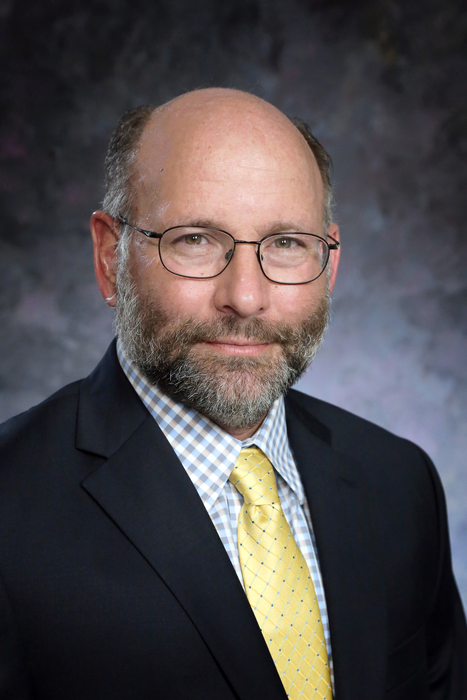
Credit: Southwest Research Institute
SAN ANTONIO — July 25, 2022 — Dr. Stephen Fuselier, executive director of the Space Science Directorate at Southwest Research Institute (SwRI), has been named co-chair of the National Academies Solar and Space Physics Decadal Survey. Fuselier will lead the survey together with Dr. Robyn Millan of Dartmouth College.
“As one of the broadest-based scientists in heliophysics, Stephen is an excellent choice to lead the decadal survey for Solar and Space Physics,” said Dr. Jim Burch, vice president of SwRI’s Space Science and Engineering Division. “He has achieved transformational science results from the aurora in the upper atmosphere to the edge of the solar system including the Earth’s magnetosphere and bow shock, Saturn’s magnetosphere and comets.”
The Decadal Survey is an independent activity undertaken by the National Academies and is sponsored by federal agencies including NASA, the National Oceanic and Atmospheric Administration (NOAA), and the National Science Foundation (NSF). Through a rigorous review process, the Survey will describe the highest priority science goals, develop a comprehensive ranked research strategy for the 2024-2033 timeframe, and assess the state of the profession. The Survey focuses on advancing scientific understanding of the Sun, Sun-Earth connections and the origins of space weather as well as the Sun’s interactions with other bodies in the solar system, the interplanetary medium and the interstellar medium.
“The survey represents countless voices from the scientific community and beyond as part of a wide-reaching effort to guide future research and investments in solar and space physics,” Fuselier said. “I’m honored that I’ve been selected along with my co-chair to play a pivotal role.”
Fuselier has played a key role in numerous NASA missions, including serving as a co-investigator on the Interstellar Mapping and Acceleration Probe (IMAP), sensor lead on the Interstellar Boundary Explorer (IBEX) mission and deputy principal investigator on the Tandem Reconnection and Cusp Electrodynamics Reconnaissance Satellites (TRACERS).
Fuselier is the second SwRI scientist to be named a co-chair of a Decadal Survey, after Dr. Robin Canup served as co-chair of the Planetary Science and Astrobiology Decadal Survey for 2023-2034. In 2021, Fuselier was elected to the National Academy of Sciences for his distinguished and continuing achievements in original research — one of the highest honors given to a scientist or engineer in the United States. With this distinction, Fuselier was also elected to the Texas Academy of Medicine, Engineering, Science & Technology (TAMEST). TAMEST is composed of the Texas-based members of the three national academies — of medicine, engineering, and sciences — as well as the state’s 11 Nobel laureates and members of the Royal Society.
The National Academies are private, nonprofit institutions that provide independent, objective analysis and advice to the nation to solve complex problems and inform public policy decisions related to science, technology and medicine. They operate under an 1863 congressional charter signed by President Abraham Lincoln establishing the National Academy of Sciences.
For more information on the decadal survey, visit: https://nas.edu/ssphdecadal.
For more information, visit https://www.swri.org/heliophysics.
Method of Research
News article
Subject of Research
Not applicable