• HOME
  • NEWS
  • EXPLORE
    • CAREER
      • Companies
      • Jobs
    • EVENTS
    • iGEM
      • News
      • Team
    • PHOTOS
    • VIDEO
    • WIKI
  • BLOG
  • COMMUNITY
    • FACEBOOK
    • INSTAGRAM
    • TWITTER
Sunday, May 10, 2026
BIOENGINEER.ORG
No Result
View All Result
  • Login
  • HOME
  • NEWS
  • EXPLORE
    • CAREER
      • Companies
      • Jobs
        • Lecturer
        • PhD Studentship
        • Postdoc
        • Research Assistant
    • EVENTS
    • iGEM
      • News
      • Team
    • PHOTOS
    • VIDEO
    • WIKI
  • BLOG
  • COMMUNITY
    • FACEBOOK
    • INSTAGRAM
    • TWITTER
  • HOME
  • NEWS
  • EXPLORE
    • CAREER
      • Companies
      • Jobs
        • Lecturer
        • PhD Studentship
        • Postdoc
        • Research Assistant
    • EVENTS
    • iGEM
      • News
      • Team
    • PHOTOS
    • VIDEO
    • WIKI
  • BLOG
  • COMMUNITY
    • FACEBOOK
    • INSTAGRAM
    • TWITTER
No Result
View All Result
Bioengineer.org
No Result
View All Result
Home NEWS Science News Chemistry

SwRI-led team studies binaries to make heads or tails of planet formation

Bioengineer by Bioengineer
June 25, 2019
in Chemistry
Reading Time: 2 mins read
0
IMAGE
Share on FacebookShare on TwitterShare on LinkedinShare on RedditShare on Telegram

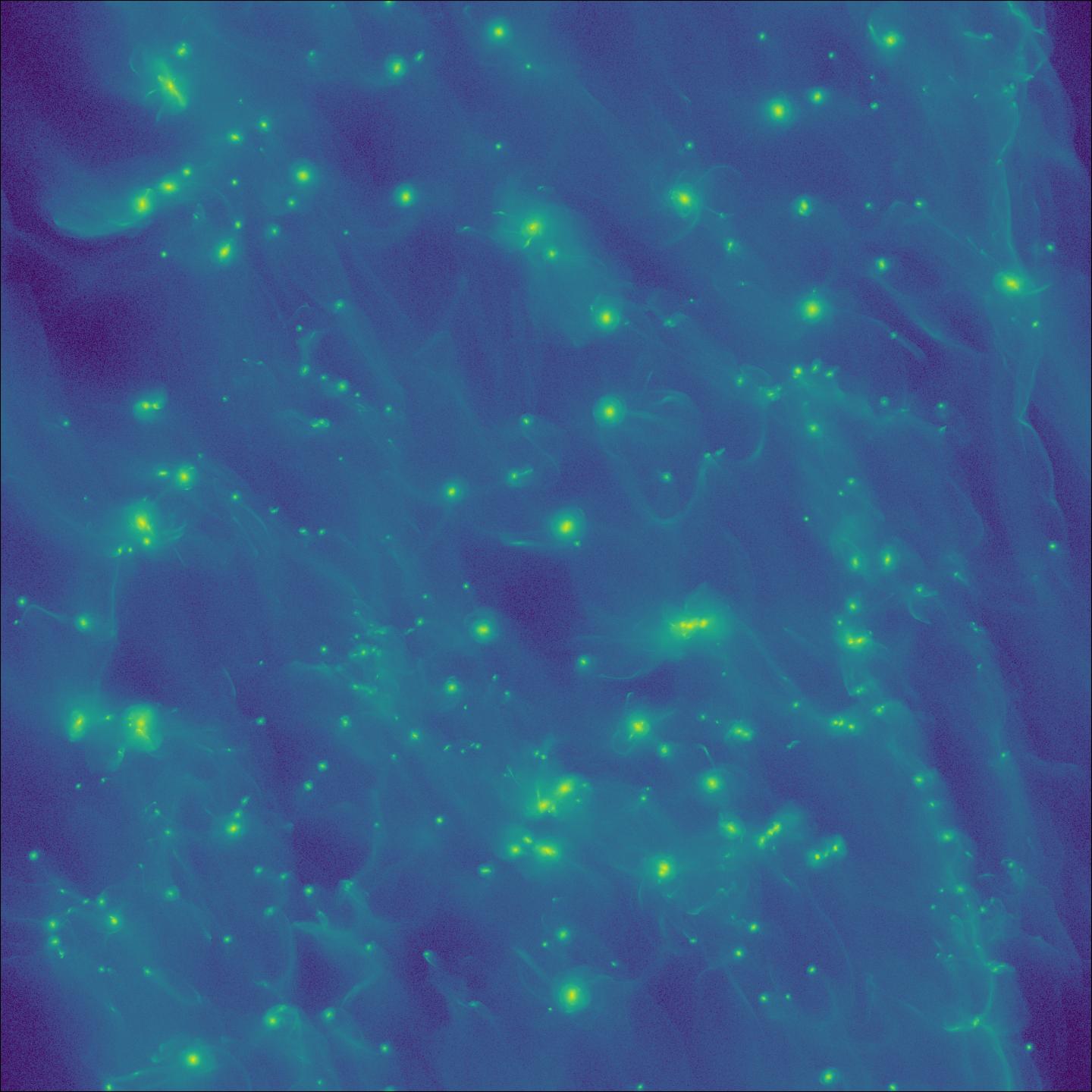
Kuiper Belt object orientations support streaming instability hypothesis
IMAGE

Credit: HST/StSci/SwRI/Simon Porter

SAN ANTONIO — June 25, 2019 — A Southwest Research Institute-led team studied the orientation of distant solar system bodies to bolster the “streaming instability” theory of planet formation.

“One of the least understood steps in planet growth is the formation of planetesimals, bodies more than a kilometer across, which are just large enough to be held together by gravity,” said SwRI scientist Dr. David Nesvorny, the lead author of the paper “Trans-Neptunian Binaries as Evidence for Planetesimal Formation by the Streaming Instability” published in Nature Astronomy.

During the initial stages of planet growth, dust grains gently collide and chemically stick to produce larger particles. However, as grains grow larger, collisions likely become more violent and destructive. Scientists have struggled to understand how planetary growth passes the ‘meter-size barrier.’

The streaming instability theory posits that as large dust grains interact with the gas that orbits young stars, streaming mechanisms cause grains to clump into dense regions and collapse under their own gravity to form planetesimals.

The team studied objects beyond Neptune that orbit each other as binary pairs in the Kuiper Belt. Unlike comets flung by Jupiter or asteroids bombarded by collisions and radiation, the distant Kuiper Belt has not been disturbed much since it formed, so these primordial objects provide hints about the early solar system. If a pair orbits in the same direction as the planets orbit, it’s considered heads-up. It’s tails-up if it orbits in the opposite direction.

Using the Hubble Space Telescope and the Keck Observatory in Hawaii, the team found that most binaries, about 80%, orbit heads-up, which astronomers call “prograde.” This finding contradicted the theory that binaries form when two passing planetesimals are captured into a binary. That theory predicts mostly tails-up or “retrograde” orbits.

To test whether the streaming instability could explain these Kuiper Belt binaries, the team analyzed simulations on large supercomputers. They found that the dense clumps formed by the streaming instability rotated heads-up 80% of the time, in agreement with the Kuiper Belt objects.

“While our simulations can’t yet follow the collapse all the way to forming binaries, it appears we are on the right track,” said SwRI’s Dr. Jacob B. Simon, who coauthored the paper.

“The solar system offers many clues to how planets formed, both around our Sun and distant stars,” Nesvorny said. “Although, these clues can be difficult to interpret, observers and theorists working together are starting to make heads or tails of these clues — and the evidence is mostly heads.”

###

For more information, visit https://www.swri.org/planetary-science.

Media Contact
Deb Schmid
[email protected]

Original Source

https://www.swri.org/press-release/kuiper-belt-object-orientations-streaming-instability-planet-formation?utm_source=EurekAlert!&utm_medium=Distribution&utm_campaign=Heads-Up-PR

Related Journal Article

http://dx.doi.org/10.1038/s41550-019-0806-z

Tags: AstronomyAstrophysicsComets/AsteroidsExperiments in SpacePlanets/MoonsSatellite Missions/ShuttlesSpace/Planetary Science
Share12Tweet8Share2ShareShareShare2

Related Posts

Miniature Sensor Uses Light to Detect Touch — Chemistry

Miniature Sensor Uses Light to Detect Touch

May 8, 2026
Iron Minerals Determine Whether Dissolved Organic Matter Fuels Microbes or Becomes Long-Term Carbon Storage — Chemistry

Iron Minerals Determine Whether Dissolved Organic Matter Fuels Microbes or Becomes Long-Term Carbon Storage

May 8, 2026

Kate Evans Appointed Associate Lab Director for Biological and Environmental Systems Science at ORNL

May 8, 2026

Advancing Multiscale Modeling and Overcoming Operational Challenges in Autothermal COâ‚‚-to-Methanol Reactors

May 8, 2026
Please login to join discussion

POPULAR NEWS

  • Research Indicates Potential Connection Between Prenatal Medication Exposure and Elevated Autism Risk

    840 shares
    Share 336 Tweet 210
  • New Study Reveals Plants Can Detect the Sound of Rain

    727 shares
    Share 290 Tweet 181
  • Scientists Investigate Possible Connection Between COVID-19 and Increased Lung Cancer Risk

    68 shares
    Share 27 Tweet 17
  • Salmonella Haem Blocks Macrophages, Boosts Infection

    61 shares
    Share 24 Tweet 15

About

We bring you the latest biotechnology news from best research centers and universities around the world. Check our website.

Follow us

Recent News

Evaluating Digoxin Use in Patients with Symptomatic Rheumatic Heart Disease

Evaluating the Effectiveness and Safety of Digitalis Glycosides in Treating Heart Failure

Urdu Fall Risk Questionnaire Adapted for Elderly

Subscribe to Blog via Email

Enter your email address to subscribe to this blog and receive notifications of new posts by email.

Join 82 other subscribers
  • Contact Us

Bioengineer.org © Copyright 2023 All Rights Reserved.

Welcome Back!

Login to your account below

Forgotten Password?

Retrieve your password

Please enter your username or email address to reset your password.

Log In
No Result
View All Result
  • Homepages
    • Home Page 1
    • Home Page 2
  • News
  • National
  • Business
  • Health
  • Lifestyle
  • Science

Bioengineer.org © Copyright 2023 All Rights Reserved.