AMHERST – University of Massachusetts Amherst researchers have received an award to develop a new type of sweat monitor that can be applied to the skin just like a temporary tattoo and assess the molecules present, such as cortisol. The tattoos will ultimately give individuals better insight into their health and serve as a tool for researchers to discover new early indications of diseases.
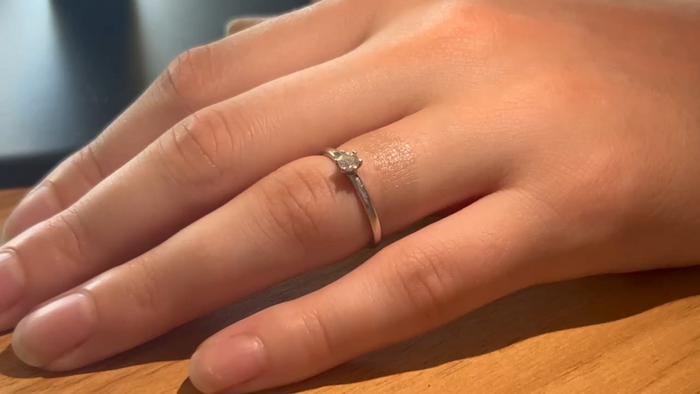
Credit: Courtesy of Dmitry Kireev
AMHERST – University of Massachusetts Amherst researchers have received an award to develop a new type of sweat monitor that can be applied to the skin just like a temporary tattoo and assess the molecules present, such as cortisol. The tattoos will ultimately give individuals better insight into their health and serve as a tool for researchers to discover new early indications of diseases.
“There are a lot of vital biomolecules that are present in sweat that we need to measure to really understand overall human performance and correlation to different diseases,” says research lead and assistant professor of biomedical engineering, Dmitry Kireev.
For this initial research stage, Kireev will focus on measuring cortisol, a biomarker associated with stress, stroke, Cushing’s syndrome and the rare chronic condition Addison’s disease. However, he hopes to expand the technology to other compounds, such as glucose, lactate, female hormone estrogen, inflammation markers and many more once the method has been established.
Kireev will use the two-year, nearly $200,000 EArly-concept Grant for Exploratory Research (EAGER) grant from the National Science Foundation to develop these graphene-based tattoos. “It’s almost entirely transparent, exceptionally conductive and it really goes into this perfect contact with the human skin,” he says. “It’s imperceptibly self-adhesive—we don’t apply any adhesive, we literally transfer it on skin.”
Most existing methods for analyzing sweat are time-consuming and labor-intensive, limiting them to a laboratory setting. Kireev’s design is based on a method that is simple enough for lay people to use, not just trained clinicians. “Current sweat analysis that’s typically done is in clinics is using liquid chromatography mass spectroscopy,” he explains. “These are all refrigerator-sized machines that are amazing—they could measure all your sweat—but you need to swab the sweat sample, store and analyze. The process is slow, and cost-ineffective.”
However, a device simple for an individual to use would open the possibilities for future research. “We want to have routine analysis [of these bio analytes] so we don’t only get information about people when they’re sick or when they have the problem, but before it happens,” Kireev says.
He also notes that many people are interested in personally tracking their own health and this technology provides growth in the field of personalized healthcare. For instance, cortisol impacts a person’s circadian rhythm. If a person can track their cortisol over the day, it may shed light on their sleep habits.
This research is the merger of two research tracks. First, is the development of this graphene-based tattoo to function as a passive electrode, measuring electrical activity on the body. Second, is research on graphene-based biosensors that are rigid. “Now, the idea is to combine these two technologies together, functionalizing biomolecules on the graphene surface, and employing human skin and sweat as the intermediary,” Kireev says.
Photo and video assets are available for publication here, courtesy of Kireev.
Contact
Dmitry Kireev, [email protected]
Julia Westbrook, [email protected] 413-545-0149