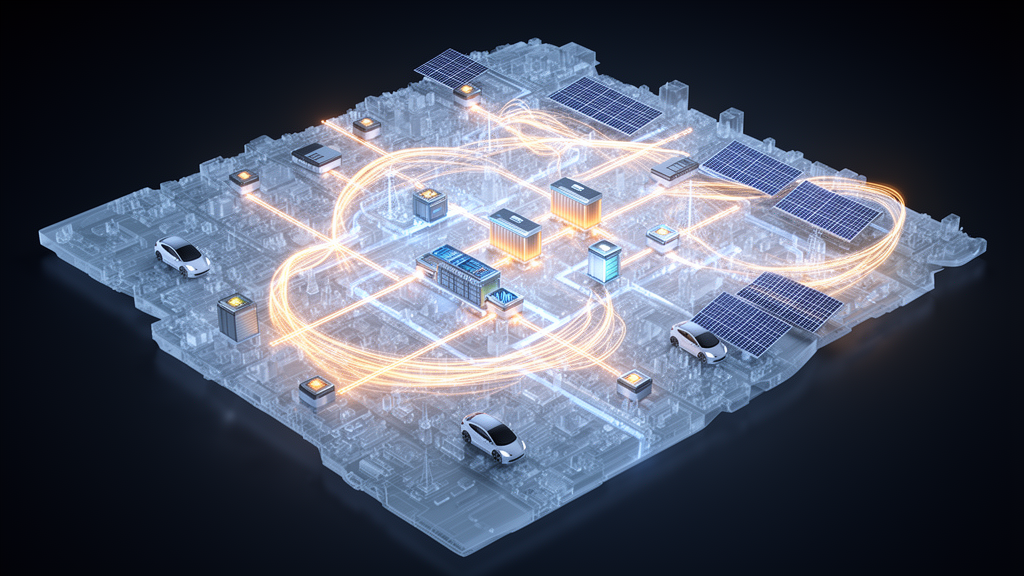
A new survey in Energy Informatics argues that the surge of distributed energy resources—rooftop photovoltaics, battery storage, electric vehicles and flexible loads—is reshaping power grid dynamics in ways that conventional control architectures cannot fully manage, and that artificial intelligence methods are becoming central to real-time grid operation.
The paper, authored by Chen Baraf Cohen, Aleksei Tepljakov and Dmitry Baimel and published on 8 October 2026, reviews AI methods across four operational domains: stability and real-time control, fault management and resilience, operational forecasting and energy management, and DER coordination. It is published as an open access review article.
A core element of the survey is a taxonomy of the relevant methodologies, spanning supervised learning, deep learning, reinforcement learning, multi-agent systems and explainable AI, presented alongside a structured review of reported performance in each category.
The authors describe as a central contribution a systematic comparison of AI deployment requirements in isolated versus interconnected grids. According to the abstract, this comparison shows that grid context is a first-order design variable, affecting control authority, stability margins and validation requirements for AI-based control systems.
The survey also assesses five cross-cutting deployment barriers—safety certification, explainability, cybersecurity, standardisation and data accessibility—against current technology readiness levels, framing these as the practical hurdles standing between laboratory demonstrations and dependable grid deployment.
Looking forward, the paper reviews emerging paradigms including large language models, foundation models for grid copilot applications, and AI agents for autonomous EMS/SCADA integration, which the authors position as the frontier of this transformation in grid operations.
Research priorities identified in the survey emphasise isolated-grid validation, safe reinforcement learning, and hybrid AI–conventional control integration, reflecting the authors’ view that AI systems must be validated and constrained before taking on operational roles in live networks.
As a review article, the paper synthesises existing literature rather than reporting new experimental results, and its findings describe the state of research and deployment challenges rather than measured outcomes from any single grid. The published version is an early-access, peer-reviewed accepted manuscript that remains subject to further edits before the final Version of Record.
Subject of Research: AI methods for real-time operation of power grids with high penetration of distributed energy resources
Article Title: AI-enabled operation of power grids under high penetration of distributed energy resources: a survey
Article References: Cohen, C. B., Tepljakov, A., & Baimel, D. (2026). AI-enabled operation of power grids under high penetration of distributed energy resources: a survey. Energy Informatics. https://doi.org/10.1186/s42162-026-00692-z
Image Credits: AI Generated
DOI: 10.1186/s42162-026-00692-z
Keywords: artificial intelligence, power grids, distributed energy resources, reinforcement learning, smart grids, energy management, grid stability, explainable AI, cybersecurity, energy informatics, AI-enabled, operation
News Source: Denise Maddox. (October 28, 2026). Survey maps how AI could run power grids flooded with solar, batteries and EVs. Scienmag.