

• HOME
  • NEWS
  • EXPLORE
    • CAREER
      • Companies
      • Jobs
    • EVENTS
    • iGEM
      • News
      • Team
    • PHOTOS
    • VIDEO
    • WIKI
  • BLOG
  • COMMUNITY
    • FACEBOOK
    • INSTAGRAM
    • TWITTER
Sunday, November 1, 2026
BIOENGINEER.ORG
No Result
View All Result
  • Login
  • HOME
  • NEWS
  • EXPLORE
    • CAREER
      • Companies
      • Jobs
        • Lecturer
        • PhD Studentship
        • Postdoc
        • Research Assistant
    • EVENTS
    • iGEM
      • News
      • Team
    • PHOTOS
    • VIDEO
    • WIKI
  • BLOG
  • COMMUNITY
    • FACEBOOK
    • INSTAGRAM
    • TWITTER
No Result
View All Result
Bioengineer.org
No Result
View All Result
Home NEWS Science News Health

Suppressor tRNAs restore mutant p53 and shrink tumours in mice

by
October 29, 2026
in Health
Reading Time: 2 mins read
0
Suppressor tRNAs restore mutant p53 and shrink tumours in mice

Suppressor tRNAs restore mutant p53 and shrink tumours in mice

Share on FacebookShare on TwitterShare on LinkedinShare on RedditShare on Telegram

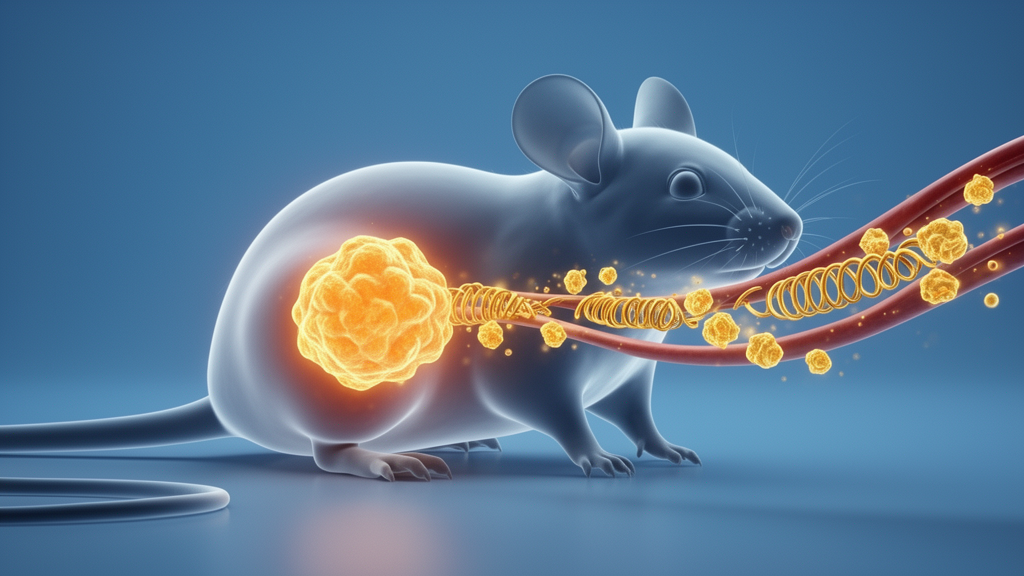
Suppressor transfer RNAs, a class of molecules that can override premature stop signals in DNA’s protein-coding instructions, have been used to restore full-length p53 from nonsense-mutant TP53 genes, and in mouse models the approach drove substantial tumour regression, according to a study published in Nature Communications.

Nonsense mutations introduce premature stop codons into tumour suppressor genes, truncating the proteins they encode and contributing to cancer initiation and progression. These mutations have long been considered undruggable, because a single conventional agent struggles to rescue the functional impairment caused by many different truncated protein variants.

The researchers observed that suppressor tRNAs could overcome diverse nonsense mutations in TP53, restoring expression of full-length p53 and its function. The engineered tRNAs enabled high-fidelity incorporation of optimal amino acids at the mutation site, and in some cases the resulting p53 variants showed enhanced transcriptional activity compared with restored wild-type p53, suppressing tumour cell proliferation.

Notably, the sup-tRNA-produced p53 variants reduced cancer cell colony area by up to 82 percent in cell culture experiments, exceeding the activity of simply restored wild-type p53.

To extend the strategy beyond TP53, the team developed a computational model that guides sup-tRNA design using in silico saturation mutagenesis, allowing targeted readthrough of different nonsense-mutant tumour suppressor genes.

In two xenograft models carrying nonsense-mutant TP53, lipid nanoparticle delivery of sup-tRNAs produced up to a 74 percent reduction in tumour volume, an effect the authors attribute to robust recovery of p53 expression and function.

As a monotherapy, the sup-tRNA treatment surpassed nab-paclitaxel chemotherapy in efficacy in the tested models. When combined with chemotherapy, the treatment induced near-complete tumour regression, with a maximum of 93 percent reduction in tumour volume, and no detectable toxicity was observed in multiple mouse tumour models.

The findings highlight tRNA-based therapy as a promising strategy for rescuing nonsense-mutant TP53. The work was published as an open-access article on 23 October 2026, and the version shared at publication is an accepted manuscript subject to further edits before the final version of record. As with all preclinical xenograft studies, results in mouse models do not establish safety or efficacy in humans, and clinical translation would require further testing.

Subject of Research: Using engineered suppressor tRNAs to restore tumour suppressor protein function from nonsense-mutant TP53 in cancer models

Article Title: Suppressor tRNAs restore functionally enhanced tumour suppressor protein to induce tumour regression

Article References: Kong, B., Zheng, Z., Mi, Z., Dou, Z., Yang, Y., Shen, Y., Dong, L., Lv, J., Li, Y., Liang, Q., Tian, S., & Xia, Q. (2026). Suppressor tRNAs restore functionally enhanced tumour suppressor protein to induce tumour regression. Nature Communications. https://doi.org/10.1038/s41467-026-78578-7

Image Credits: AI Generated

DOI: 10.1038/s41467-026-78578-7

Keywords: suppressor tRNA, TP53, p53, nonsense mutation, tumour suppressor, lipid nanoparticle, xenograft, tumour regression, gene therapy, cancer, readthrough, Nature Communications

News Source: Nathaniel Bowman. (October 29, 2026). Suppressor tRNAs restore mutant p53 and shrink tumours in mice. Scienmag.


Tags: cancerGene Therapylipid nanoparticleNature Communicationsnonsense mutationp53readthroughsuppressor tRNATP53tumour regressiontumour suppressorxenograft
Share12Tweet7Share2ShareShareShare1

Related Posts

ZNF207 shields glutamine transporter ASCT2 from degradation to fuel liver cancer growth

ZNF207 shields glutamine transporter ASCT2 from degradation to fuel liver cancer growth

October 30, 2026
Most Ethiopian HIV patients on dolutegravir therapy show good knowledge, survey finds

Most Ethiopian HIV patients on dolutegravir therapy show good knowledge, survey finds

October 30, 2026

Serum and urine protein biomarkers may sharpen prostate cancer detection beyond PSA

October 30, 2026

One gene locus flags atrial fibrillation risk after major surgery, UK Biobank study finds

October 30, 2026

POPULAR NEWS

  • Microbial Sources and Stress Shape the Hidden Endophytes of an Invasive Plant

    Microbial Sources and Stress Shape the Hidden Endophytes of an Invasive Plant

    29 shares
    Share 12 Tweet 7
  • Firebreaks Leave Lasting Scars in Grasslands While Wildfire Heals Fast

    29 shares
    Share 12 Tweet 7
  • ZNF207 shields glutamine transporter ASCT2 from degradation to fuel liver cancer growth

    29 shares
    Share 12 Tweet 7
  • Systematic review maps sustainability tensions in offshore wind development

    29 shares
    Share 12 Tweet 7

About

We bring you the latest biotechnology news from best research centers and universities around the world. Check our website.

Follow us

Recent News

Microbial Sources and Stress Shape the Hidden Endophytes of an Invasive Plant

Firebreaks Leave Lasting Scars in Grasslands While Wildfire Heals Fast

ZNF207 shields glutamine transporter ASCT2 from degradation to fuel liver cancer growth

Subscribe to Blog via Email

Enter your email address to subscribe to this blog and receive notifications of new posts by email.

Join 86 other subscribers
  • Contact Us

Bioengineer.org © Copyright 2023 All Rights Reserved.

Welcome Back!

Login to your account below

Forgotten Password?

Retrieve your password

Please enter your username or email address to reset your password.

Log In
No Result
View All Result
  • Homepages
    • Home Page 1
    • Home Page 2
  • News
  • National
  • Business
  • Health
  • Lifestyle
  • Science

Bioengineer.org © Copyright 2023 All Rights Reserved.
