• HOME
  • NEWS
  • EXPLORE
    • CAREER
      • Companies
      • Jobs
    • EVENTS
    • iGEM
      • News
      • Team
    • PHOTOS
    • VIDEO
    • WIKI
  • BLOG
  • COMMUNITY
    • FACEBOOK
    • INSTAGRAM
    • TWITTER
Thursday, June 25, 2026
BIOENGINEER.ORG
No Result
View All Result
  • Login
  • HOME
  • NEWS
  • EXPLORE
    • CAREER
      • Companies
      • Jobs
        • Lecturer
        • PhD Studentship
        • Postdoc
        • Research Assistant
    • EVENTS
    • iGEM
      • News
      • Team
    • PHOTOS
    • VIDEO
    • WIKI
  • BLOG
  • COMMUNITY
    • FACEBOOK
    • INSTAGRAM
    • TWITTER
  • HOME
  • NEWS
  • EXPLORE
    • CAREER
      • Companies
      • Jobs
        • Lecturer
        • PhD Studentship
        • Postdoc
        • Research Assistant
    • EVENTS
    • iGEM
      • News
      • Team
    • PHOTOS
    • VIDEO
    • WIKI
  • BLOG
  • COMMUNITY
    • FACEBOOK
    • INSTAGRAM
    • TWITTER
No Result
View All Result
Bioengineer.org
No Result
View All Result
Home NEWS Science News Chemistry

Super volcanic eruptions interrupt ozone recovery

Bioengineer by Bioengineer
July 15, 2019
in Chemistry
Reading Time: 2 mins read
0
IMAGE
Share on FacebookShare on TwitterShare on LinkedinShare on RedditShare on Telegram

IMAGE

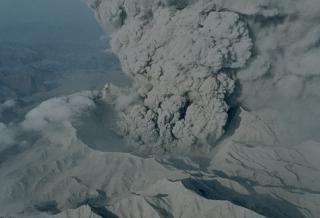
Credit: Global Volcanism Program

Since the Antarctic ozone hole was detected in 1985, depletion of the ozone layer–the “big umbrella” that protects all life on Earth–has raised considerable concern. The efforts of international communities led to the success of the “Montreal Protocol on Substances that Destroy the Ozone Layer”, signed in 1987, which banned global production and usage of chlorofluorocarbons, the leading cause of the depleted ozone. Since then, ozone depleting substances (ODSs) in the stratosphere have gradually been erased and further ozone destruction avoided. The ozone layer has been gradually recovering from the bottom up, and scientists estimate it will reach the level of the 1980s by the middle of this century.

“However, strong volcanic eruptions, especially when a super volcano erupts, will have a strong impact on ozone, and might interrupt the ozone recovery processes,” says Associate Professor Ke Wei from the Institute of Atmospheric Physics, Chinese Academy of Sciences. Wei is the corresponding author of a paper recently published in Advances in Atmospheric Sciences.

To estimate the effect of a possible super volcano on the recovering ozone layer, Wei’s team worked with Russian scientists and used a transport model and a chemistry-climate model to simulate the impact of super volcanic eruptions on the stratospheric ozone during different ozone recovery periods.

The results show that the percentage of global mean total column ozone depletion in the ‘half ODSs level of the 1990s’ scenario is approximately 6%, and the percentage is 6.4% in the tropics. When all anthropogenic ODSs are removed and only natural sources (mainly CH3Cl and CH3Br) remain, a super volcanic eruption produces a global mean ozone depletion of 2.5%, with a 4.4% loss in the tropics.

“Such ‘few’ destructions shouldn’t be underestimated, as the Ozone Assessment Report in 2014 by the World Meteorological Organization suggested an ozone depletion of 2.5% outside the polar regions during the worst depletion period in the 1990s,” says the lead author, Dr. Luyang Xu.

Xu is concerned that, since super volcanic eruptions might also inject large load of halogens into the atmosphere, which directly destroy ozone in the stratosphere, the true depletion caused by super volcanoes might therefore be even more serious than the estimation.

However, current observations and studies are unable to provide enough information on the exact quantities of volcanic halogens entering the stratosphere. Moreover, in the Paleozoic Era, when the ozone layer was relatively weak and thin, could a super volcanic eruption have destroyed the thin stratospheric ozone layer and further influenced the evolution of life and the environment? All these questions need to be further investigated.

###

The study was supported by the National Key Research and Development Project of China, the National Natural Science Foundation of China, and the Youth Innovation Promotion Association of the Chinese Academy of Sciences.

Media Contact
Zheng Lin
[email protected]

Original Source

http://english.iap.cas.cn/RE/201907/t20190712_212957.html

Related Journal Article

http://dx.doi.org/10.1007/s00376-019-8241-8

Tags: ArchaeologyAtmospheric ScienceBiologyEarth ScienceGeophysicsMeteorology
Share12Tweet8Share2ShareShareShare2

Related Posts

AI and Physics Collaborate to Design Advanced Hydrogen Storage Materials

June 25, 2026

International Team Including Dresden Scientists Develops Novel Designer Proteins for Advanced Study of Living Tissue

June 25, 2026

New Study Uncovers Key Factors Driving Water Chemistry in Nanoscale Environments

June 25, 2026

Plasma Technology Extends Catalyst Lifespan in Hydrogen Production

June 24, 2026
Please login to join discussion

POPULAR NEWS

  • Saying Goodbye to PGY-6: Pediatric Fellowship Realities

    103 shares
    Share 41 Tweet 26
  • Multi-Hospital Study Reveals Long Covid Burden Is Twice as High as Current Estimates

    92 shares
    Share 36 Tweet 23
  • Detection of EDCs in Breast Milk and Infant Urine Up to Six Months Highlights Early Exposure Risks

    77 shares
    Share 31 Tweet 19
  • New Drug Candidate Developed at McMaster Shows Potential for Treating Brain Cancer

    58 shares
    Share 23 Tweet 15

About

We bring you the latest biotechnology news from best research centers and universities around the world. Check our website.

Follow us

Recent News

Tracking Lanthanide-Labeled Microplastics in Plants

POSTECH Researchers Slash Cost of Reconstituted Cell-Free Systems by 95%

AI and Physics Collaborate to Design Advanced Hydrogen Storage Materials

Subscribe to Blog via Email

Success! An email was just sent to confirm your subscription. Please find the email now and click 'Confirm' to start subscribing.

Join 82 other subscribers
  • Contact Us

Bioengineer.org © Copyright 2023 All Rights Reserved.

Welcome Back!

Login to your account below

Forgotten Password?

Retrieve your password

Please enter your username or email address to reset your password.

Log In
No Result
View All Result
  • Homepages
    • Home Page 1
    • Home Page 2
  • News
  • National
  • Business
  • Health
  • Lifestyle
  • Science

Bioengineer.org © Copyright 2023 All Rights Reserved.