• HOME
  • NEWS
  • EXPLORE
    • CAREER
      • Companies
      • Jobs
    • EVENTS
    • iGEM
      • News
      • Team
    • PHOTOS
    • VIDEO
    • WIKI
  • BLOG
  • COMMUNITY
    • FACEBOOK
    • INSTAGRAM
    • TWITTER
Thursday, May 21, 2026
BIOENGINEER.ORG
No Result
View All Result
  • Login
  • HOME
  • NEWS
  • EXPLORE
    • CAREER
      • Companies
      • Jobs
        • Lecturer
        • PhD Studentship
        • Postdoc
        • Research Assistant
    • EVENTS
    • iGEM
      • News
      • Team
    • PHOTOS
    • VIDEO
    • WIKI
  • BLOG
  • COMMUNITY
    • FACEBOOK
    • INSTAGRAM
    • TWITTER
  • HOME
  • NEWS
  • EXPLORE
    • CAREER
      • Companies
      • Jobs
        • Lecturer
        • PhD Studentship
        • Postdoc
        • Research Assistant
    • EVENTS
    • iGEM
      • News
      • Team
    • PHOTOS
    • VIDEO
    • WIKI
  • BLOG
  • COMMUNITY
    • FACEBOOK
    • INSTAGRAM
    • TWITTER
No Result
View All Result
Bioengineer.org
No Result
View All Result
Home NEWS Science News Biology

Study unravels new insights into a Parkinson’s disease protein

Bioengineer by Bioengineer
January 16, 2020
in Biology
Reading Time: 3 mins read
0
IMAGE
Share on FacebookShare on TwitterShare on LinkedinShare on RedditShare on Telegram

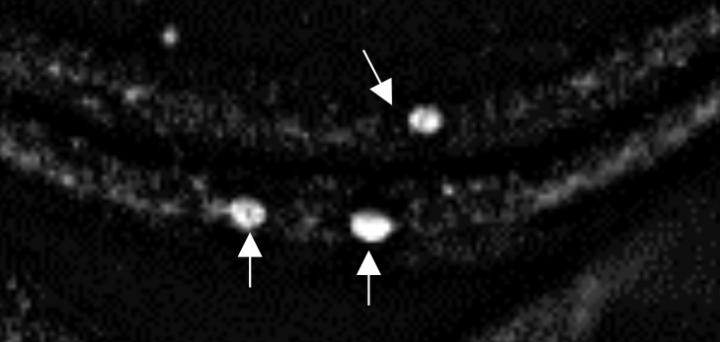
Research on alpha-synuclein highlights a potential therapeutic strategy
IMAGE

Credit: Anderson, Hirpa, Zheng, Banerjee and Gunawardena, Frontiers in Cellular Neuroscience, Jan. 2020. The image is cropped from a graphic published in the journal article, which is distributed under Creative Commons…


BUFFALO, N.Y. — Research by University at Buffalo biologists is providing new insights into alpha-synuclein, a small acidic protein associated with Parkinson’s disease.

Alpha-synuclein is known to form abnormal clumps in the brains of patients with Parkinson’s, but scientists are still trying to understand how and why this happens.

The new study explores alpha-synuclein’s basic properties, with a focus on a section of the protein known as the non-amyloidal component (NAC). The research was done on fruit fly larvae that were genetically engineered to produce both normal and mutated forms of human alpha-synuclein.

The study, led by University at Buffalo biologist Shermali Gunawardena, was published on Jan. 10 in the journal Frontiers in Cellular Neuroscience.

Some key findings:

  • The NAC region appears to aid alpha-synuclein in moving through pathways called axons that run from one area of a neuron to another. When the NAC region was missing, alpha-synuclein did not move within axons.

  • Alpha-synuclein that’s missing the NAC region may help to prevent unwanted aggregates of the protein. In experiments, Gunawardena’s team showed that it’s possible — at least in fruit flies — to prevent some key problems that occur when too much alpha-synuclein is produced: clumping of the protein; abnormalities in the structure of synapses, which form connections between neurons; and a decrease in the speed at which larvae crawl. The scientists found that when the larvae are engineered to produce both excess alpha-synuclein and a version of alpha-synuclein with the NAC region missing, the larvae crawl normally, the protein doesn’t aggregate, and the synapses are normal.

“We show that in fruit fly larvae, we’re able to prevent some problems mimicking symptoms of Parkinson’s disease, such as accumulation of alpha-synuclein in neurons,” says Gunawardena, PhD, associate professor of biological sciences in the UB College of Arts and Sciences.

“Our work highlights a potential early treatment strategy for Parkinson’s disease that would leverage the use of deletion of the NAC region,” Gunawardena adds. “One reason this study is important is because it shows rescue of alpha-synuclein aggregates, synaptic morphological defects and locomotion defects seen in Parkinson’s disease in the context of a whole organism.”

###

The paper’s first author is Eric N. Anderson, a UB PhD graduate in biological sciences. In addition to Anderson and Gunawardena, co-authors include UB undergraduate students Delnessaw Hirpa and Kan Hong Zheng, who have since completed their degrees, as well as Rupkatha Banerjee, a current UB PhD candidate in biological sciences.

The research was partially funded by the National Institute of Neurological Disorders and Stroke in the National Institutes of Health, and the John R. Oishei Foundation. Anderson was supported by the Arthur A. Schomburg Fellowship Program at UB.

Media Contact
Charlotte Hsu
[email protected]
716-645-4655

Original Source

http://www.buffalo.edu/news/releases/2020/01/012.html

Related Journal Article

http://dx.doi.org/10.3389/fncel.2019.00540

Tags: BiologyGeneticsMedicine/HealthneurobiologyParkinson
Share12Tweet8Share2ShareShareShare2

Related Posts

Early Delivery Improves Outcomes for Mothers and Babies in Hypertensive Pregnancies — Biology

Early Delivery Improves Outcomes for Mothers and Babies in Hypertensive Pregnancies

May 21, 2026
How Atlantic Herring Rewired Their Reproductive Strategy to Thrive in Changing Oceans — Biology

How Atlantic Herring Rewired Their Reproductive Strategy to Thrive in Changing Oceans

May 20, 2026

Study Finds Young Fraser River Chinook Salmon Swimming in Chemical Mixture

May 20, 2026

Thousands of UK Beekeepers Contribute Honey to Advance Environmental Science

May 20, 2026
Please login to join discussion

POPULAR NEWS

  • blank

    New Study Reveals Plants Can Detect the Sound of Rain

    733 shares
    Share 292 Tweet 183
  • ESMO 2025: mRNA COVID Vaccines Enhance Efficacy of Cancer Immunotherapy

    304 shares
    Share 122 Tweet 76
  • Research Indicates Potential Connection Between Prenatal Medication Exposure and Elevated Autism Risk

    846 shares
    Share 338 Tweet 212
  • Breastmilk Balances E. coli and Beneficial Bacteria in Infant Gut Microbiomes

    58 shares
    Share 23 Tweet 15

About

We bring you the latest biotechnology news from best research centers and universities around the world. Check our website.

Follow us

Recent News

Innovative Reusable Brick Walls Revolutionize Construction Industry

Nonlinear Atomic Tunneling Enhanced by Bright Squeezed Vacuum

Label-Free Super-Resolution Imaging of Live Cells

Subscribe to Blog via Email

Enter your email address to subscribe to this blog and receive notifications of new posts by email.

Join 82 other subscribers
  • Contact Us

Bioengineer.org © Copyright 2023 All Rights Reserved.

Welcome Back!

Login to your account below

Forgotten Password?

Retrieve your password

Please enter your username or email address to reset your password.

Log In
No Result
View All Result
  • Homepages
    • Home Page 1
    • Home Page 2
  • News
  • National
  • Business
  • Health
  • Lifestyle
  • Science

Bioengineer.org © Copyright 2023 All Rights Reserved.