Researchers investigating periodontal tissue biology have identified CCN4 and DPT as specific signature markers of fibroblast subpopulations that undergo osteogenic differentiation during periodontitis. By integrating bulk transcriptomic datasets with single-cell RNA sequencing, the investigation defined fourteen core osteogenesis-related genes within periodontal ligament fibroblasts and delineated distinct cellular subsets driving bone formation under inflammatory disease conditions.
To characterize the heterogeneity and differentiation dynamics of these stromal cells, the researchers integrated bulk RNA sequencing data with publicly available datasets to isolate osteogenesis-related genes. Single-cell RNA sequencing was subsequently deployed to resolve distinct fibroblast subpopulations. Differentiation trajectories and hub genes were mapped using pseudotime trajectory inference through Slingshot and Monocle 2 alongside tradeSeq analysis, while functional enrichment profiling was conducted to clarify subpopulation roles and the biological consequences of gene perturbations.
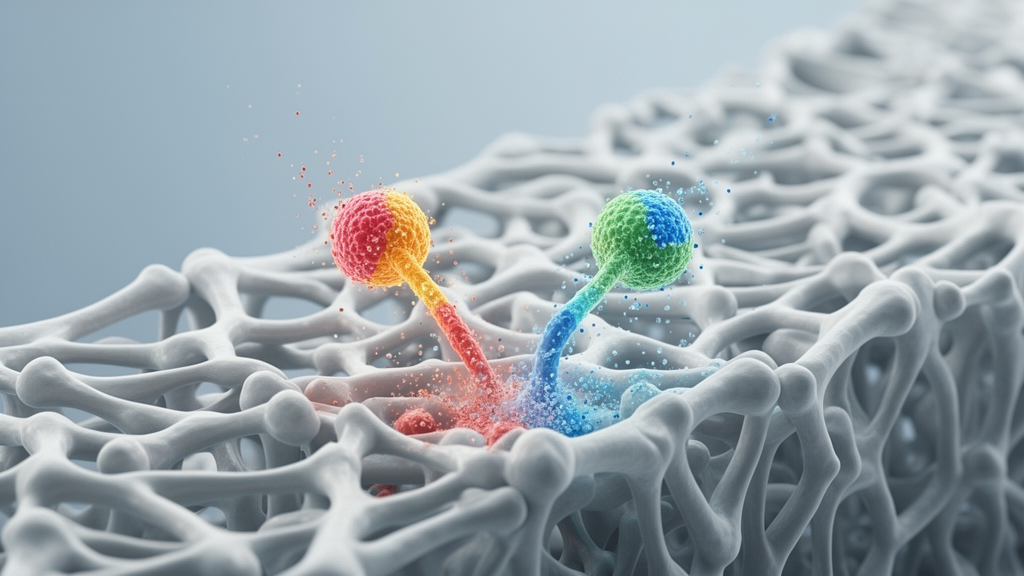
Pseudotime trajectory inference revealed divergent developmental paths for CCN4-positive fibroblasts depending on tissue state. In healthy periodontal conditions, CCN4-positive fibroblasts followed a trajectory leading to immune-functional Fibroblasts 2. In contrast, under periodontitis conditions, these cells shifted their differentiation course to yield osteogenic Fibroblasts 3. During osteogenic differentiation in periodontitis, researchers identified 19 differentiation-associated genes in the CCN4-positive fibroblast subset and 94 genes in the DPT-positive subset.
Computational modeling further clarified the functional roles of these marker genes through in silico knockout analysis. Simulated loss-of-function perturbations of CCN4 and DPT altered expression profiles of downstream genes significantly enriched in osteogenesis and angiogenesis signaling pathways. These computational predictions indicated that CCN4 and DPT play central roles in coordinating the genetic programs required for new bone formation and associated vascular processes within inflamed periodontal tissues.
Intercellular communication modeling via CellChat demonstrated complex signaling networks among CCN4-positive fibroblasts, DPT-positive fibroblasts, and endothelial cells, mediated by WNT, midkine, NOTCH, and platelet-derived growth factor pathways, with midkine signaling dominating communication between fibroblast subsets. Spatial transcriptomics confirmed non-random tissue organization: spatial proximity was highest among CCN4-positive fibroblasts, Fibroblasts 1, DPT-positive fibroblasts, and Fibroblasts 3, as well as between DPT-positive fibroblasts and endothelial cells, whereas immune-functional Fibroblasts 2 remained spatially distant.
Laboratory validation using reverse transcription-quantitative polymerase chain reaction and immunostaining in cultured cells and mouse models confirmed that CCN4 and DPT were highly expressed under osteogenic and periodontitis conditions. The authors concluded that CCN4 and DPT represent hallmark signature genes for osteogenic fibroblast subpopulations in periodontitis that potentially contribute to periodontal tissue repair through coordinated intracellular and intercellular mechanisms, while noting that the findings reflect cell culture and animal model systems rather than demonstrated human clinical efficacy.
The study was conducted by a multidisciplinary research team led by corresponding author Guo Jian Liu alongside Shan Su Jin, Xin Li, Kun Yan Zhao, Yu Qiao Xu, and Dan Yi Ma. The investigators represent several collaborative institutions at Zunyi Medical University, including the Key Laboratory of Oral Disease Research of Guizhou Education Department, the School of Stomatology, the Department II of Orthodontics at the Affiliated Stomatological Hospital, and oncology specialists from the Second Affiliated Hospital and Guizhou Province’s Key Laboratory for Cancer Prevention and Treatment. Published in Frontiers in Physiology within the Craniofacial Biology and Dental Research section, their multi-omics investigation aimed to resolve longstanding uncertainties regarding stromal cell diversity in periodontal disease.
Subject of Research: Fibroblast subpopulations and osteogenic differentiation markers in periodontitis
Article Title: Multi-omics characterization of fibroblast subpopulations involved in osteogenic differentiation in periodontitis
Article References: Jin, S., Li, X., Zhao, Y., Xu, Q., Ma, Y., & Liu, J. (2026). Multi-omics characterization of fibroblast subpopulations involved in osteogenic differentiation in periodontitis. Frontiers in Physiology, 17, Article 1995127. https://doi.org/10.3389/fphys.2026.1995127
Image Credits: AI Generated
DOI: 10.3389/fphys.2026.1995127
Keywords: periodontitis, fibroblasts, osteogenic differentiation, CCN4, DPT, single-cell RNA sequencing, spatial transcriptomics, periodontal ligament, Multi-omics, characterization, fibroblast, subpopulations
News Source: Drew Townsend. (November 14, 2026). Study Uncovers Key Fibroblast Subsets Driving Bone Formation in Periodontitis. Scienmag.