• HOME
  • NEWS
  • EXPLORE
    • CAREER
      • Companies
      • Jobs
    • EVENTS
    • iGEM
      • News
      • Team
    • PHOTOS
    • VIDEO
    • WIKI
  • BLOG
  • COMMUNITY
    • FACEBOOK
    • INSTAGRAM
    • TWITTER
Tuesday, May 19, 2026
BIOENGINEER.ORG
No Result
View All Result
  • Login
  • HOME
  • NEWS
  • EXPLORE
    • CAREER
      • Companies
      • Jobs
        • Lecturer
        • PhD Studentship
        • Postdoc
        • Research Assistant
    • EVENTS
    • iGEM
      • News
      • Team
    • PHOTOS
    • VIDEO
    • WIKI
  • BLOG
  • COMMUNITY
    • FACEBOOK
    • INSTAGRAM
    • TWITTER
  • HOME
  • NEWS
  • EXPLORE
    • CAREER
      • Companies
      • Jobs
        • Lecturer
        • PhD Studentship
        • Postdoc
        • Research Assistant
    • EVENTS
    • iGEM
      • News
      • Team
    • PHOTOS
    • VIDEO
    • WIKI
  • BLOG
  • COMMUNITY
    • FACEBOOK
    • INSTAGRAM
    • TWITTER
No Result
View All Result
Bioengineer.org
No Result
View All Result
Home NEWS Science News Biology

Study shows how bacteria guide electron flow for efficient energy generation

Bioengineer by Bioengineer
May 14, 2018
in Biology
Reading Time: 2 mins read
0
Share on FacebookShare on TwitterShare on LinkedinShare on RedditShare on Telegram
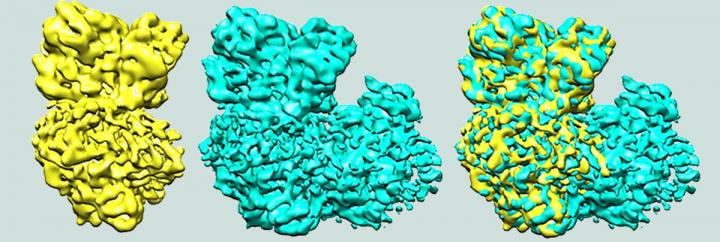
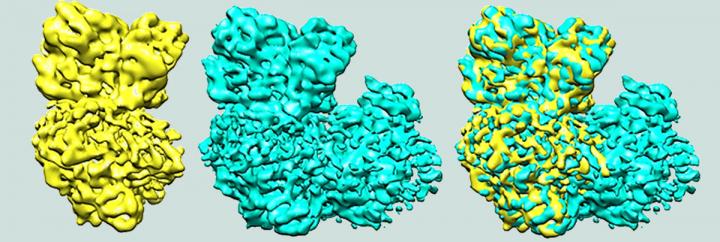
IMAGE

Credit: Robert Gennis

CHAMPAIGN, Ill. — Biochemists at the University of Illinois have isolated a protein supercomplex from a bacterial membrane that, like a battery, generates a voltage across the bacterial membrane. The voltage is used to make ATP, a key energy currency of life. The new findings, reported in the journal Nature, will inform future efforts to obtain the atomic structures of large membrane protein supercomplexes.

"With billions of years of evolutionary experience, bacteria are adept at surviving in changing environments," said Robert Gennis, a University of Illinois professor emeritus of biochemistry who led the new research with biochemistry professor Emad Tajkhorshid.

"Most have the ability to modify, replace or combine molecular tools to suit the new demands – sometimes within a single cell's lifetime," Gennis said. These tools include enzymes, which catalyze chemical reactions to perform specific tasks.

The energy required by the bacterium is obtained by transporting electrons from high energy food molecules to oxygen, similar to what occurs in plant or animal cells, Gennis said. Electrons pass from one enzyme to another until finally reaching oxygen.

Typically, an enzyme passes an electron on during a random collision with another enzyme. The researchers showed that in some conditions, nature eliminates the need for random collisions by sticking the enzymes together to form a "supercomplex." Each part of the supercomplex can generate a voltage, but all parts must function in sequence," Gennis said.

"It makes sense that they will function as a single unit to make sure the electron transport is rapid and the electrons end up where they belong," he said. "Supercomplexes are probably important in all electron transport chains, but in most cases, attempts to isolate them fail because they fall apart. We were lucky to be studying an organism called a Flavobacterium, in which the supercomplex is stable."

Rather than relying on detergents to extract the proteins from the membrane, as is typically done in such experiments, the team tried an industrial polymer – a kind that plastics are made from. Using this polymer, they extracted and isolated the supercomplex in a single, rapid step. The process embedded the supercomplex in a small disc of membrane shaped like a coin.

With the help of their collaborators at the University of Toronto and the New York Structural Biology Center, the team used cryo-electron microscopy to determine the configuration of the supercomplex components.

"Evolution has resulted in a very efficient 'nano-machine' that is also beautiful to look at. Seeing how this works gives one a great appreciation of nature and is one of the joys of doing science," Gennis said.

###

The National Institutes of Health, National Science Foundation and Canadian Institutes of Health Research supported this research.

Editor's notes:

To reach Robert Gennis, call 217-333-9075; email [email protected].

The paper "Structure of the alternative complex III in a supercomplex with cytochrome oxidase" is available online and from the U. of I. News Bureau.

Media Contact

Steph Adams
[email protected]
217-333-5802
@NewsAtIllinois

http://www.illinois.edu

Original Source

https://news.illinois.edu/view/6367/650304 http://dx.doi.org/10.1038/s41586-018-0061-y
Share13Tweet8Share2ShareShareShare2

Related Posts

How Bats Filter Out Background Noise to Sharpen Prey Detection — Biology

How Bats Filter Out Background Noise to Sharpen Prey Detection

May 19, 2026
Newly Discovered “Happy-Face” Spider Species Found in the Indian Himalayas — Biology

Newly Discovered “Happy-Face” Spider Species Found in the Indian Himalayas

May 19, 2026

Fischer’s Blue Butterflies Less Attractive on Non-Native Diet, Study Finds

May 19, 2026

How One Protein Uses Embryonic Brain Language to Maintain Plasticity in Adult Neurons

May 19, 2026
Please login to join discussion

POPULAR NEWS

  • Research Indicates Potential Connection Between Prenatal Medication Exposure and Elevated Autism Risk

    845 shares
    Share 338 Tweet 211
  • New Study Reveals Plants Can Detect the Sound of Rain

    731 shares
    Share 292 Tweet 182
  • Salmonella Haem Blocks Macrophages, Boosts Infection

    62 shares
    Share 25 Tweet 16
  • Breastmilk Balances E. coli and Beneficial Bacteria in Infant Gut Microbiomes

    58 shares
    Share 23 Tweet 15

About

We bring you the latest biotechnology news from best research centers and universities around the world. Check our website.

Follow us

Recent News

High-Efficiency Multi-Scale 3D Volumetric Holography

TAILORx and RxPONDER Trials Transition to Discovery Platform Leveraging Advanced Tumor Profiling and AI for Breast Cancer Recurrence Analysis

Common Asthma Medication Exhibits Potential in Combating Aggressive Cancers

Subscribe to Blog via Email

Enter your email address to subscribe to this blog and receive notifications of new posts by email.

Join 82 other subscribers
  • Contact Us

Bioengineer.org © Copyright 2023 All Rights Reserved.

Welcome Back!

Login to your account below

Forgotten Password?

Retrieve your password

Please enter your username or email address to reset your password.

Log In
No Result
View All Result
  • Homepages
    • Home Page 1
    • Home Page 2
  • News
  • National
  • Business
  • Health
  • Lifestyle
  • Science

Bioengineer.org © Copyright 2023 All Rights Reserved.