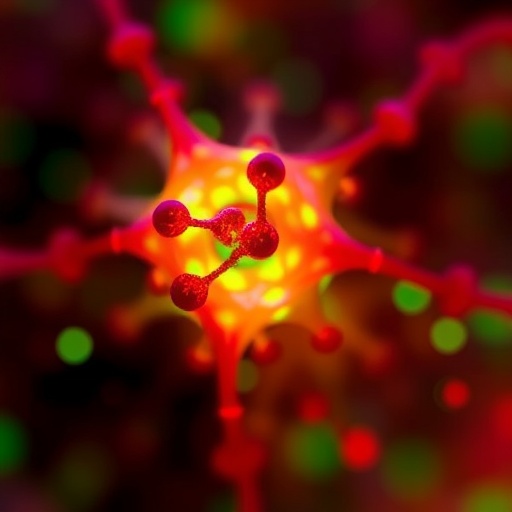
Primate color vision depends on three cone pigments that all bind the same chromophore, 11-cis-retinal. Yet small differences in the surrounding protein tune each pigment to different wavelengths, enabling red–green discrimination with remarkable precision. Studying these cone pigments has been difficult because they are structurally fragile, limiting researchers’ ability to connect sequence changes to spectral shifts.
A new study led by Associate Professor Kota Katayama (Nagoya Institute of Technology) analyzed red- and green-sensitive cone pigments from the crab-eating macaque, a model closely matching human cone biology. By obtaining three-dimensional structural information in the dark state, the team could directly interrogate how protein microenvironments reshape pigment behavior.
The researchers identified that the nearly 30 nm difference in light absorption between macaque red and green pigments can be explained by just three amino acid substitutions: A180S, F277Y, and A285T. Rather than significantly altering the retinal chromophore’s shape, the substitutions shift the electrostatic environment around the chromophore.
Detailed computer modeling supported a mechanism in which electrostatics, not geometry, determine spectral tuning. The largest contribution comes from introducing a threonine residue positioned near the retinal chromophore, whose hydroxyl group strongly modifies local charge interactions. This subtly rebalances how light energy is absorbed across wavelengths.
Beyond tuning, the study uncovered a previously unknown membrane-facing opening in cone pigments that is absent in rhodopsin, the rod-cell pigment. This structural feature suggests a pathway that may facilitate faster retinal access and exchange, aligning with the rapid regeneration required for continuous color vision under bright illumination.
To test causality, the team created mutant pigments by swapping residues toward the red sequence and quantified how each change affected absorption. The combined experimental and computational results converged on electrostatic remodeling as the primary driver of spectral divergence.
The findings also help connect genetic variation to visual perception: if a few positions can re-tune absorption by altering local charge landscapes, then naturally occurring mutations may underlie specific forms of color vision deficiency. The structural map may therefore guide future studies of retinal-exchange efficiency and photoreceptor dysfunction.
In the long term, these molecular principles could inform therapeutic strategies targeting visual G protein-coupled receptors. By linking sequence, electrostatics, and membrane access pathways, the work provides a framework for rational intervention rather than trial-and-error.
Subject of Research: Animals
Article Title: Structural insights into spectral tuning and retinal exchange in cone visual pigments
News Publication Date: 25-Jun-2026
Web References: https://doi.org/10.1126/science.adz3996
References: 10.1126/science.adz3996
Image Credits: Credit: Associate Professor Kota Katayama from Nagoya Institute of Technology, Japan
Keywords: color vision; cone visual pigments; 11-cis-retinal; spectral tuning; electrostatics; macaque; retinal exchange; structural biology; G protein-coupled receptors
Tags: amino acid substitutionschromophoreColor visioncomputer modeling of visual pigmentscone pigmentselectrostatic environmentmolecular basis of visionprimate cone biologyred-green color discriminationretinal chromophorespectral tuningstructural analysis of cone pigments