• HOME
  • NEWS
  • EXPLORE
    • CAREER
      • Companies
      • Jobs
    • EVENTS
    • iGEM
      • News
      • Team
    • PHOTOS
    • VIDEO
    • WIKI
  • BLOG
  • COMMUNITY
    • FACEBOOK
    • INSTAGRAM
    • TWITTER
Saturday, January 17, 2026
BIOENGINEER.ORG
No Result
View All Result
  • Login
  • HOME
  • NEWS
  • EXPLORE
    • CAREER
      • Companies
      • Jobs
        • Lecturer
        • PhD Studentship
        • Postdoc
        • Research Assistant
    • EVENTS
    • iGEM
      • News
      • Team
    • PHOTOS
    • VIDEO
    • WIKI
  • BLOG
  • COMMUNITY
    • FACEBOOK
    • INSTAGRAM
    • TWITTER
  • HOME
  • NEWS
  • EXPLORE
    • CAREER
      • Companies
      • Jobs
        • Lecturer
        • PhD Studentship
        • Postdoc
        • Research Assistant
    • EVENTS
    • iGEM
      • News
      • Team
    • PHOTOS
    • VIDEO
    • WIKI
  • BLOG
  • COMMUNITY
    • FACEBOOK
    • INSTAGRAM
    • TWITTER
No Result
View All Result
Bioengineer.org
No Result
View All Result
Home NEWS Science News Cancer

Study sheds light on how cells in the body can sense cancer

Bioengineer by Bioengineer
June 5, 2019
in Cancer
Reading Time: 2 mins read
0
Share on FacebookShare on TwitterShare on LinkedinShare on RedditShare on Telegram

Fresh insights into how cells alert the body when they are in danger of becoming cancerous could open new doors in the search for therapies.

Scientists have discovered that regular cells can take on characteristics of immune cells, which can send warning signs when they are stressed or in danger.

The mechanism is part of the body’s system for removing older cells, a natural part of the ageing process, known as senescence.

Researchers say the system may also help the body detect cancer cells sooner, so that they can be removed before tumours form.

Senescence stops cells from dividing and prevents damaged cells from continuing to grow. The process is prompted by stress to the cell. It is also triggered when genes that have the potential to cause cancer – called oncogenes – become active.

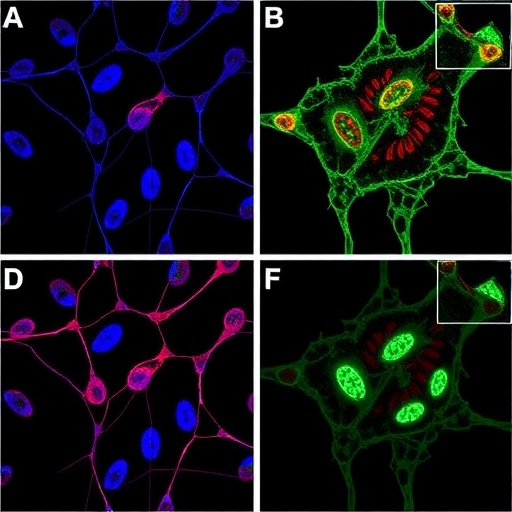
Researchers at the University of Edinburgh found that key immune molecules inside cells, called TLR2 and TLR10, detect when oncogenes are switched on.

This initiates a cascade of chemical signals that cause inflammation and trigger immune cells to remove the damaged cell.

TLR2 and TLR10 were known to be important for detecting infections such as bacteria and viruses, but this is the first time they have been found to play a key role in ordinary cell ageing.

The study, published in Science Advances, was carried out at the Cancer Research UK Edinburgh Centre at the University of Edinburgh.

Dr Juan-Carlos Acosta, CRUK Career Development Fellow at the University of Edinburgh, said: “The results of the study extend our knowledge of molecular mechanisms controlling senescence and may lead to new strategies for development of anti-cancer and anti-aging therapeutics based on innate-immune receptor manipulation.”

Dr Matthew Hoare, Clinician Scientist and Honorary Consultant from the Cancer Research UK Cambridge Institute, said: “Damaged cancer-causing cells become senescent and are then killed by the body’s own immune system. However, if the immune system does not destroy the senescent cell, the surrounding tissue can become inflamed, promoting cancer development.

“This is a really hot area for research, as senescence has the potential to stop cancer development in the earliest stages. These findings show for the first time that damaged cancer-causing cells use TLR2/10 signalling to become inflamed, presenting potential drug targets that could help the body clear senescent cells before they cause harm.”

###

Media Contact
Jen Middleton
[email protected]
http://dx.doi.org/10.1126/sciadv.aaw0254

Tags: BiologycancerCell BiologyImmunology/Allergies/AsthmaMedicine/Health
Share13Tweet8Share2ShareShareShare2

Related Posts

MicroRNAs in Cancer: AI-Driven Translational Insights

January 15, 2026

Psycho-Oncologists: Key Indicators of Patient Distress

January 13, 2026

METTL14-Regulated miR-101-3p Boosts NSCLC Drug Sensitivity

January 13, 2026

Carvacrol and Chloroquine Synergistically Halt Melanoma Metastasis

January 13, 2026
Please login to join discussion

POPULAR NEWS

  • Enhancing Spiritual Care Education in Nursing Programs

    155 shares
    Share 62 Tweet 39
  • PTSD, Depression, Anxiety in Childhood Cancer Survivors, Parents

    147 shares
    Share 59 Tweet 37
  • Robotic Ureteral Reconstruction: A Novel Approach

    77 shares
    Share 31 Tweet 19
  • Study Reveals Lipid Accumulation in ME/CFS Cells

    54 shares
    Share 22 Tweet 14

About

We bring you the latest biotechnology news from best research centers and universities around the world. Check our website.

Follow us

Recent News

Optimizing Hydrogen Engine Control: Lean vs. Stoichiometric

Genome Assembly of Helan Shan Pika Aids Conservation

Distributed Model Predictive Control for Nano UAV Swarms

Subscribe to Blog via Email

Enter your email address to subscribe to this blog and receive notifications of new posts by email.

Join 71 other subscribers
  • Contact Us

Bioengineer.org © Copyright 2023 All Rights Reserved.

Welcome Back!

Login to your account below

Forgotten Password?

Retrieve your password

Please enter your username or email address to reset your password.

Log In
No Result
View All Result
  • Homepages
    • Home Page 1
    • Home Page 2
  • News
  • National
  • Business
  • Health
  • Lifestyle
  • Science

Bioengineer.org © Copyright 2023 All Rights Reserved.