A new study protocol published in BMC Primary Care lays out a plan to test whether radiofrequency thermotherapy for cutaneous leishmaniasis can be delivered safely and effectively by primary healthcare workers in rural Ethiopia, rather than being confined to distant specialist centers. No treatment results are reported yet; instead, the document describes in detail how the trial will be organized, who will be enrolled, and what outcomes will be measured.
Cutaneous leishmaniasis is the motivating problem. Ethiopia is estimated to record between 20,000 and 30,000 new cases each year, with roughly 30 million people living at risk of infection, and reports cited by the authors indicate a rise in prevalence over the last two decades. More than 93 percent of Ethiopian cases are caused by Leishmania aethiopica, a species often linked to chronic, difficult-to-treat lesions. The disease attacks exposed skin, particularly the face, producing ulcerative, crusted, indurated or nodular lesions that can persist for months or years and leave permanent scarring. Beyond the physical damage, the protocol cites studies associating the disease with stigma, anxiety, depression, social isolation, reduced quality of life and impaired productivity, with children and young adults making up a large share of those affected.
Access to care is the central bottleneck the study intends to address. Diagnostic and treatment services in Ethiopia are concentrated in a small number of specialized centers, and most patients live in remote rural areas far from those facilities. Patients often travel long distances at substantial financial cost, and previous reports from Ethiopia indicate that many present only after six to 24 months of disease onset. Delayed treatment, the authors note, could increase the risk of extensive scarring, chronic lesions, stigma and ongoing transmission within endemic communities.
The current standard treatment, intralesional sodium stibogluconate, carries its own burdens. It must be injected directly into the wound weekly for at least five weeks, or given systemically daily for at least 17 days. Antileishmanial medicines are expensive, frequently unavailable and associated with significant adverse effects. Research conducted in Ethiopia cited in the protocol found that intralesional sodium stibogluconate achieved only about 60 percent effectiveness, with nearly all patients experiencing injection-site pain and some developing moderate to severe adverse reactions. Concerns about emerging drug resistance and dependence on donated medications further challenge the sustainability of treatment programs in low-resource settings.
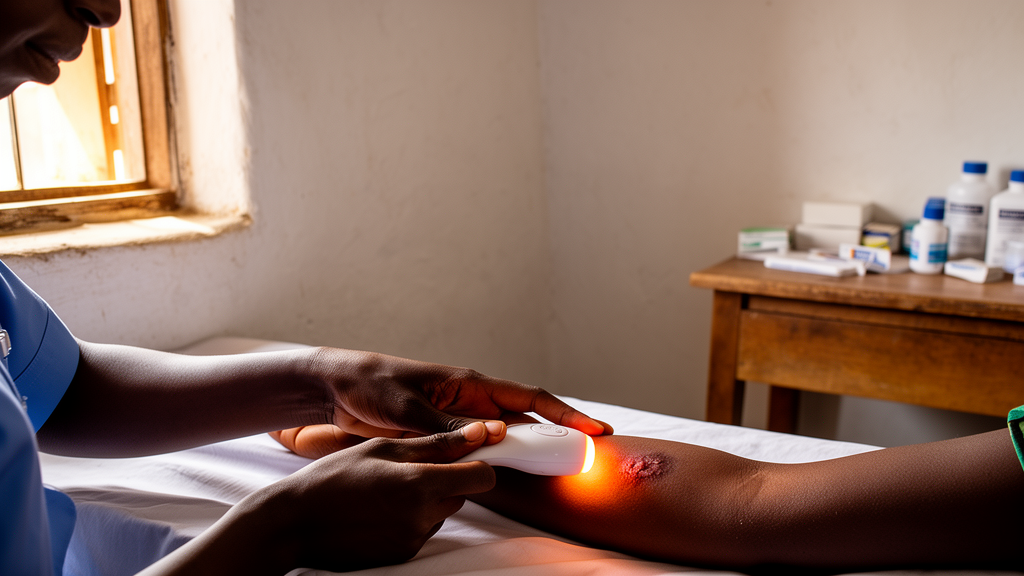
Thermotherapy offers the proposed alternative. Using the ThermoMed device, radiofrequency-induced heat is applied to the lesion at 50 degrees Celsius for 30 seconds, exploiting the temperature sensitivity of Leishmania parasites in the skin. The protocol reviews multiple clinical trials of the approach conducted in Guatemala, Afghanistan, Colombia, India, Sri Lanka, Brazil and Iran, along with a meta-analysis of controlled clinical trials confirming its efficacy for cutaneous leishmaniasis. Practical advantages cited include single-session administration, fewer systemic adverse effects, lower risk of drug resistance and potentially reduced scarring. What remains missing, the authors argue, is evidence on operational feasibility: nearly all prior studies examined clinical efficacy and safety under specialist supervision, while little is known about acceptability, appropriateness and fidelity when the therapy moves into decentralized primary healthcare.
The planned study will take place in the Sodo and South Sodo districts of East Gurage Zone in Central Ethiopia, roughly 105 kilometers southwest of Addis Ababa. The two districts have a combined population exceeding 175,000 people across 58 kebeles, one primary hospital, eight health centers and 58 health posts, and currently none of these facilities provides routine cutaneous leishmaniasis diagnosis or treatment. Based on zonal health bureau estimates, the districts are expected to report approximately 350 to 400 new cases annually. Health centers are staffed by nurses, health officers, midwives and general practitioners, while health posts rely on health extension workers, the frontline cadre the intervention aims to enlist for community sensitization, early case identification, referral and follow-up tracing.
Methodologically, the study is a mixed-methods implementation research project anchored in the Medical Research Council framework for complex interventions, unfolding in three sequential phases. Stage I focuses on co-design: dermatologists, primary care staff, health extension workers, district health officials and implementation experts will refine a draft care package covering staff training, deployment of ThermoMed devices at selected health centers, referral pathways between health posts, health centers and specialized hospitals, and supportive supervision and mentorship. Stage II is a pilot in two health centers in which approximately 20 patients will receive thermotherapy from trained primary care staff, with feasibility, acceptability, appropriateness and fidelity assessed through focus group discussions, in-depth interviews and psychometric instruments including the Feasibility of Intervention Measure, Intervention Appropriateness Measure and Acceptability of Intervention Measure. Stage III expands implementation to additional health centers and recruits the remaining participants under routine conditions, alongside continuous supervision and an economic evaluation from the health system perspective comparing incremental costs of decentralized delivery with conventional referral-based specialist care.
The quantitative core is a quasi-experimental treatment outcome assessment enrolling 103 patients with uncomplicated cutaneous leishmaniasis. Eligibility is restricted to people aged 12 to 60 years with clinically suspected localized disease, fewer than four lesions, lesions smaller than four centimeters in their longest diameter, and lesions not adjacent to the eyes, lips, ears, nose or mucosal surfaces. The sample size calculation assumes a treatment success rate of 70 percent when thermotherapy is administered by specialists and 45 percent when delivered at primary care level, using 80 percent power, a 5 percent significance level, and adjustments for 10 percent attrition and 75 percent diagnostic accuracy. After structured training, primary care workers will diagnose patients clinically, document lesion characteristics, collect lesion scrapings for PCR confirmation and administer thermotherapy. Patients will be evaluated every four weeks up to Day 90 for clinical response, lesion epithelialization, nodule flattening and acute adverse events, with a second application permitted at Week 4 or Week 8 depending on response. Complete cure at Day 90 is the primary clinical endpoint, and patients achieving it will be followed to Day 180 to assess long-term scarring and monitor relapse. Patients from catchment areas without thermotherapy services will serve as a comparison group to estimate the rate of spontaneous cure and will later be referred for treatment if eligible.
Qualitative and analytical components round out the design. Focus group discussions of six to eight participants will include primary care staff, health extension workers and district officials, while in-depth interviews will engage patients, caregivers and community representatives, with recruitment continuing until thematic saturation. Transcripts will be analyzed thematically using a framework analysis approach, with coding performed iteratively by multiple researchers to identify barriers, facilitators, perceptions of thermotherapy, health system readiness and implementation experiences. Quantitative data will be captured through REDCap-based electronic case report forms with built-in validation checks and pseudonymized identifiers, analyzed in R using descriptive and inferential statistics, with Cox proportional hazards regression models potentially applied to factors associated with treatment success and healing time. The authors acknowledge that the quasi-experimental design without full randomization may introduce selection bias and confounding, and that shortages of trained personnel, equipment and infrastructure, high workloads and limited dermatologic experience among primary care workers may affect fidelity and sustainability.
If the study proceeds as planned, its contribution will be implementation evidence rather than a new clinical claim: measurements of whether thermotherapy can be feasibly, acceptably and appropriately delivered by primary healthcare workers through task-sharing, and at what cost. The authors state that findings are expected to inform national efforts to decentralize cutaneous leishmaniasis services, improve access to safe and effective treatment for underserved populations in endemic areas, and offer broader lessons for integrating neglected tropical disease services into primary healthcare systems in low-resource settings. They also describe the project, to their knowledge, as the first designed to assess the feasibility of integrating thermotherapy for cutaneous leishmaniasis management into routine primary healthcare services. Until the three phases are completed and reported, the efficacy and safety of the approach in this setting remain questions the protocol is designed to answer, not findings it can already confirm.
Subject of Research: A protocol for implementation research evaluating thermotherapy delivery for cutaneous leishmaniasis in Ethiopian primary healthcare facilities.
Article Title: Feasibility of integrating thermotherapy (TT) for the treatment of Cutaneous Leishmaniasis into the primary healthcare facilities in east gurage zone, ethiopia: a protocol for an implementation research study
Article References: Ejigu, D. A., Fekadu, A., Kinfe, M., Doni, S. N., Gadisa, E., Ali, S., Schunk, M., Wieser, A., & Rothe, C. (2026). Feasibility of integrating thermotherapy (TT) for the treatment of Cutaneous Leishmaniasis into the primary healthcare facilities in east gurage zone, ethiopia: a protocol for an implementation research study. BMC Primary Care, 27(1), Article 385. https://doi.org/10.1186/s12875-026-03615-9
Image Credits: AI Generated
DOI: 10.1186/s12875-026-03615-9
Keywords: cutaneous leishmaniasis, thermotherapy, Ethiopia, primary healthcare, implementation research, task-sharing, study protocol, neglected tropical diseases, health extension workers, quasi-experimental design, Leishmania aethiopica, East Gurage Zone
News Source: Ophelia Keating. (October 29, 2026). Study Protocol Tests Thermotherapy for Skin Leishmaniasis in Ethiopian Primary Care. Scienmag.