• HOME
  • NEWS
  • EXPLORE
    • CAREER
      • Companies
      • Jobs
    • EVENTS
    • iGEM
      • News
      • Team
    • PHOTOS
    • VIDEO
    • WIKI
  • BLOG
  • COMMUNITY
    • FACEBOOK
    • INSTAGRAM
    • TWITTER
Friday, May 22, 2026
BIOENGINEER.ORG
No Result
View All Result
  • Login
  • HOME
  • NEWS
  • EXPLORE
    • CAREER
      • Companies
      • Jobs
        • Lecturer
        • PhD Studentship
        • Postdoc
        • Research Assistant
    • EVENTS
    • iGEM
      • News
      • Team
    • PHOTOS
    • VIDEO
    • WIKI
  • BLOG
  • COMMUNITY
    • FACEBOOK
    • INSTAGRAM
    • TWITTER
  • HOME
  • NEWS
  • EXPLORE
    • CAREER
      • Companies
      • Jobs
        • Lecturer
        • PhD Studentship
        • Postdoc
        • Research Assistant
    • EVENTS
    • iGEM
      • News
      • Team
    • PHOTOS
    • VIDEO
    • WIKI
  • BLOG
  • COMMUNITY
    • FACEBOOK
    • INSTAGRAM
    • TWITTER
No Result
View All Result
Bioengineer.org
No Result
View All Result
Home NEWS Science News Biology

Study: Omega-3 fatty acids fight inflammation via cannabinoids

Bioengineer by Bioengineer
July 18, 2017
in Biology
Reading Time: 2 mins read
0
Share on FacebookShare on TwitterShare on LinkedinShare on RedditShare on Telegram
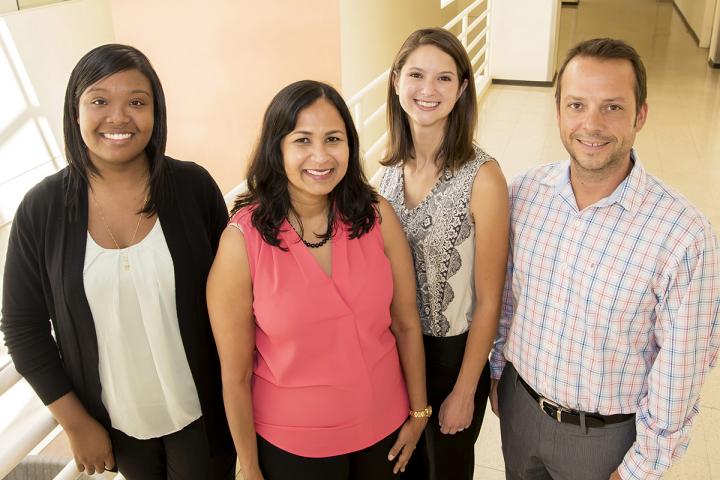
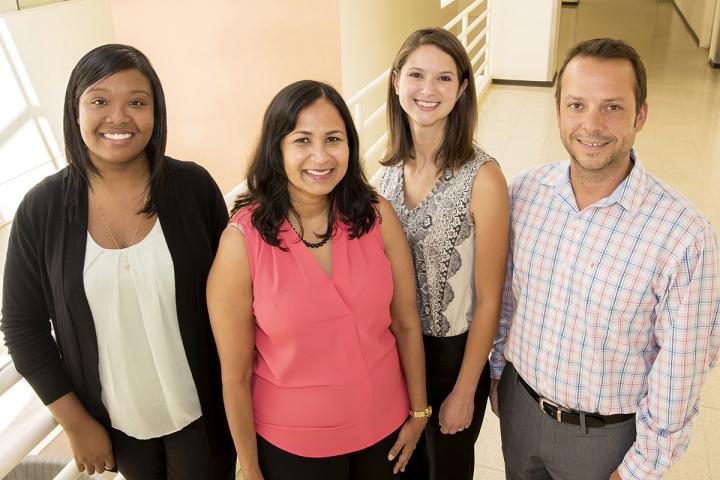
IMAGE

Credit: Photo by Steph Adams

CHAMPAIGN, Ill. — Chemical compounds called cannabinoids are found in marijuana and also are produced naturally in the body from omega-3 fatty acids. A well-known cannabinoid in marijuana, tetrahydrocannabinol, is responsible for some of its euphoric effects, but it also has anti-inflammatory benefits. A new study in animal tissue reveals the cascade of chemical reactions that convert omega-3 fatty acids into cannabinoids that have anti-inflammatory benefits — but without the psychotropic high.

The findings are published in the Proceedings of the National Academy of Sciences.

Foods such as meat, eggs, fish and nuts contain omega-3 and omega-6 fatty acids, which the body converts into endocannabinoids — cannabinoids that the body produces naturally, said Aditi Das, a University of Illinois professor of comparative biosciences and biochemistry, who led the study. Cannabinoids in marijuana and endocannabinoids produced in the body can support the body's immune system and therefore are attractive targets for the development of anti-inflammatory therapeutics, she said.

In 1964, the Israeli chemist Raphael Mechoulam was the first to discover and isolate THC from marijuana. To test whether he had found the compound that produces euphoria, he dosed cake slices with 10 milligrams of pure THC and gave them to willing friends at a party. Their reactions, from nonstop laughter, to lethargy, to talkativeness, confirmed that THC was a psychotropic cannabinoid.

It wasn't until 1992 that researchers discovered endocannabinoids produced naturally in the body. Since then, several other endocannabinoids have been identified, but not all have known functions.

Cannabinoids bind to two types of cannabinoid receptors in the body – one that is found predominantly in the nervous system and one in the immune system, Das said.

"Some cannabinoids, such as THC in marijuana or endocannabinoids can bind to these receptors and elicit anti-inflammatory and anti-pain action," she said.

"Our team discovered an enzymatic pathway that converts omega-3-derived endocannabinoids into more potent anti-inflammatory molecules that predominantly bind to the receptors found in the immune system," Das said. "This finding demonstrates how omega-3 fatty acids can produce some of the same medicinal qualities as marijuana, but without a psychotropic effect."

###

The study was an interdisciplinary effort led by recent comparative biosciences alumnus Daniel McDougle and supported by current biochemistry graduate student Josephine Watson. The team included U. of I. animal sciences professor Rodney Johnson; U. of I. bioengineering professor Kristopher Kilian; Michael Holinstat, of the University of Michigan; and Lucas Li, the director of the Metabolomics Center at the Roy J. Carver Biotechnology Center at Illinois.

The National Institutes of Health and the American Heart Association supported this research.

Editor's notes:

To reach Aditi Das, call 217-244-0630; email [email protected]. The paper "Anti-inflammatory omega-3 endocannabinoid epoxides" is available online and from the U. of I. News Bureau.

Media Contact

Steph Adams, Science Writer
[email protected]
217-333-5802
@NewsAtIllinois

http://www.illinois.edu

Related Journal Article

http://dx.doi.org/10.1073/pnas.1610325114
Share12Tweet8Share2ShareShareShare2

Related Posts

Early Delivery Improves Outcomes for Mothers and Babies in Hypertensive Pregnancies — Biology

Early Delivery Improves Outcomes for Mothers and Babies in Hypertensive Pregnancies

May 21, 2026
How Atlantic Herring Rewired Their Reproductive Strategy to Thrive in Changing Oceans — Biology

How Atlantic Herring Rewired Their Reproductive Strategy to Thrive in Changing Oceans

May 20, 2026

Study Finds Young Fraser River Chinook Salmon Swimming in Chemical Mixture

May 20, 2026

Thousands of UK Beekeepers Contribute Honey to Advance Environmental Science

May 20, 2026
Please login to join discussion

POPULAR NEWS

  • blank

    New Study Reveals Plants Can Detect the Sound of Rain

    733 shares
    Share 292 Tweet 183
  • ESMO 2025: mRNA COVID Vaccines Enhance Efficacy of Cancer Immunotherapy

    304 shares
    Share 122 Tweet 76
  • Research Indicates Potential Connection Between Prenatal Medication Exposure and Elevated Autism Risk

    846 shares
    Share 338 Tweet 212
  • Breastmilk Balances E. coli and Beneficial Bacteria in Infant Gut Microbiomes

    58 shares
    Share 23 Tweet 15

About

We bring you the latest biotechnology news from best research centers and universities around the world. Check our website.

Follow us

Recent News

Innovative Reusable Brick Walls Revolutionize Construction Industry

Nonlinear Atomic Tunneling Enhanced by Bright Squeezed Vacuum

Label-Free Super-Resolution Imaging of Live Cells

Subscribe to Blog via Email

Success! An email was just sent to confirm your subscription. Please find the email now and click 'Confirm' to start subscribing.

Join 82 other subscribers
  • Contact Us

Bioengineer.org © Copyright 2023 All Rights Reserved.

Welcome Back!

Login to your account below

Forgotten Password?

Retrieve your password

Please enter your username or email address to reset your password.

Log In
No Result
View All Result
  • Homepages
    • Home Page 1
    • Home Page 2
  • News
  • National
  • Business
  • Health
  • Lifestyle
  • Science

Bioengineer.org © Copyright 2023 All Rights Reserved.