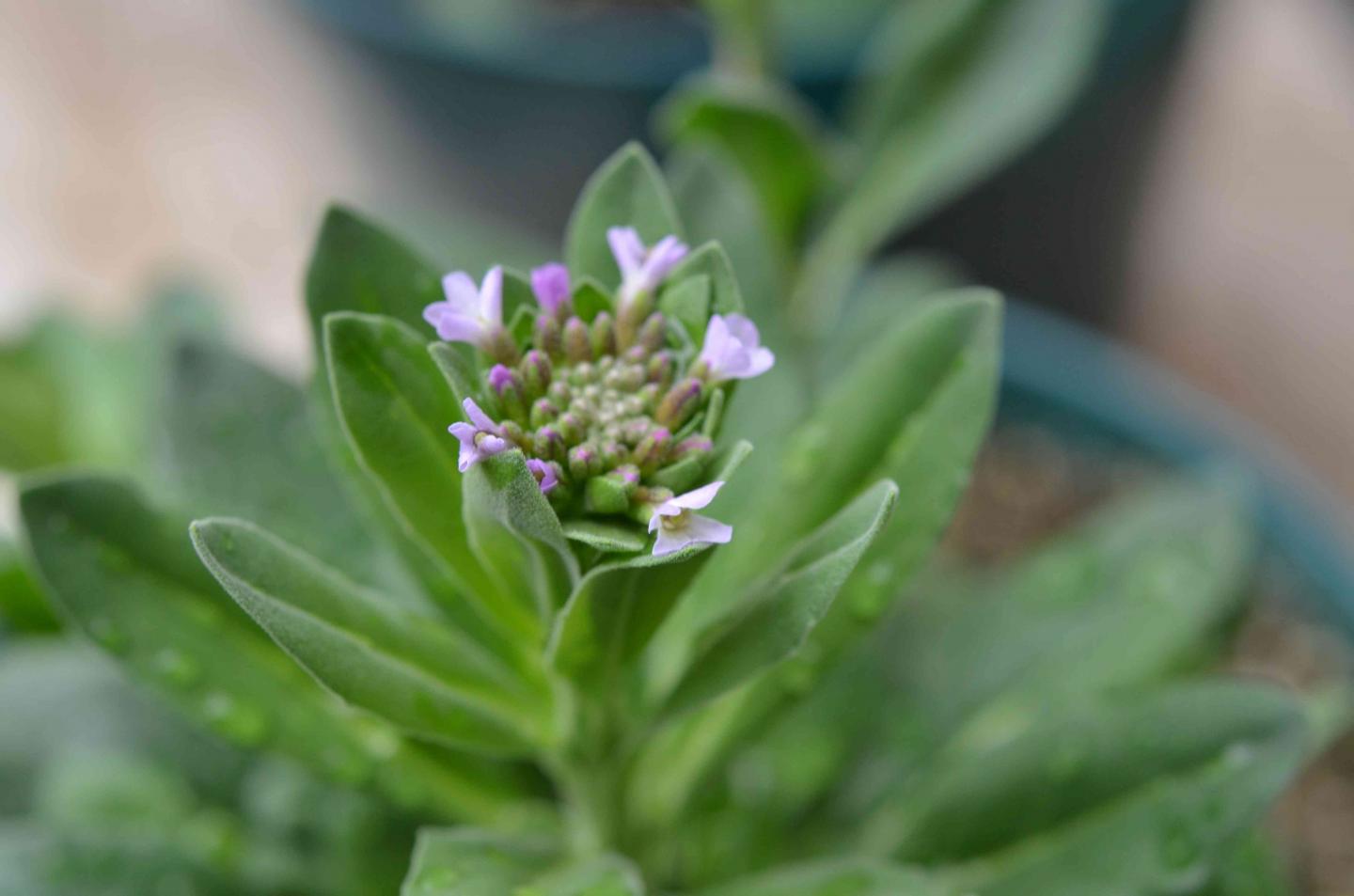
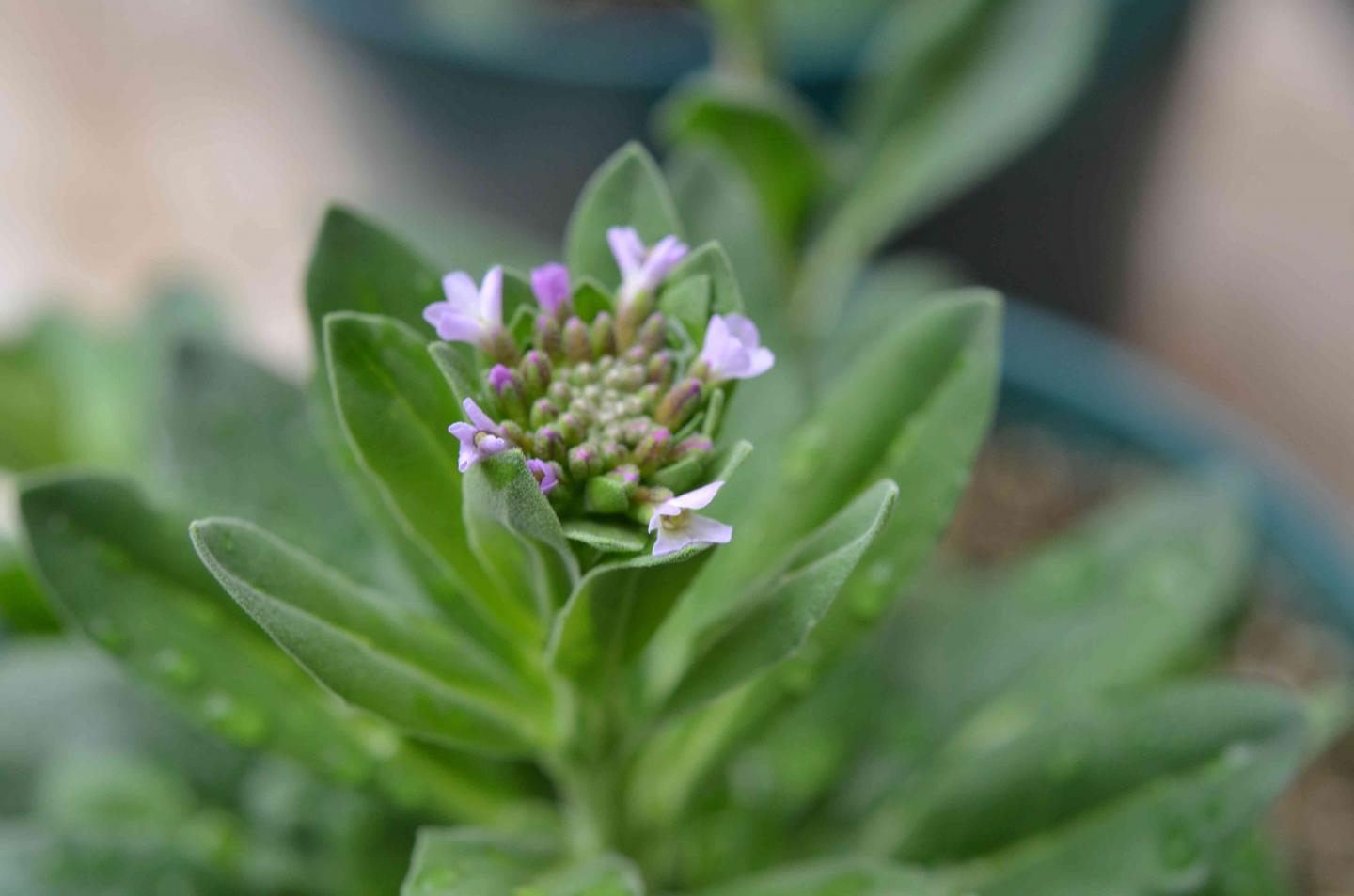
Credit: Elizabeth Waters
New research, published today in Botany, investigates how well native California wild mustard species withstand increasing temperatures with the goal of developing a better understanding of heat stress on plants in a warming climate. This study makes an important contribution to a growing body of research aimed at better understanding the effects of global climate change on our ability to grow plants for food.
Thermotolerance, the ability of an organism to withstand heat, is a particularly important trait in plants since plants are fixed in place and cannot move to cooler locations to avoid heat-related stress. Plants must tolerate a wide array of stresses in order to survive, grow, and reproduce. Tolerance to external stresses such as cold, salt, or heat can have significant impacts on plant productivity and plant biogeography. Global climate change and the resulting increase in temperatures will have a substantial, but not yet completely understood impact on both crop productivity and the survival of wild plant species. To date, very little is known about the responses of wild plants to high temperature stress.
In this study, researchers from San Diego State University and Siena College looked at members of the Boechera genus, a large genus of over 100 species that is restricted to North America and is found mostly west of the Rockies, to gain a better understanding of how these plants respond to heat stress. The study found clear evidence that the Boechera species are more thermotolerant than the model species Arabidopsis thaliana and that there is considerable differences among the Boechera species when it comes to how they tolerate heat in terms of chlorophyll fluorescence and heat shock gene expression.
"Our study highlights that there is considerable natural variation for thermotolerance and heat shock gene expression in wild plants. As our climate warms, it becomes crucial that we further develop our understanding of plant responses to high temperatures and have a clear understanding of the strategies that contribute to thermotolerance," says Dr. Elizabeth Waters. "Our study shows that there is considerable natural variation in how plants respond to temperature stress".
The study also concludes that Boechera are a tractable system for studying thermotolerance and that further study of these species will provide valuable insights into the mechanism of thermotolerance in plants. "Continued studies of this interesting native California species should provide important insights into how plants acquire thermotolerance and protect photosynthesis from heat stress," continues Dr. Waters.
This research makes an important contribution to identifying both the plants that are at the highest risk in a warming climate and those that have the capacity to withstand high temperatures. With this knowledge, researchers can further their understanding of heat tolerance with the goal of improving crops that lack the ability to withstand high temperature stress. This study and others clearly show that climate change, with its increasing temperatures and more frequent heat waves, will have serious impact on both crop and native plant species.
###
The paper, "Patterns of thermotolerance, chlorophyll fluorescence, and heat shock gene expression vary among four Boechera species and Arabidopsis thaliana" by Gillian Halter. Nicole Simonetti, Cristy Suguitan, Kenneth Helm, Jessica Soroksky, and Elizabeth Waters was published today in Botany.
Media Contact
Rebecca Ross
[email protected]
613-791-8334
@cdnsciencepub
http://www.nrcresearchpress.com/