Conventional definitions of architectural excellence tend to privilege form and technology over social impact. A new study published in City, Territory and Architecture argues that this should be reversed: excellence, it contends, should be reconceptualised as the capacity to convert vulnerability into opportunity. The research, led by Ashraf M. Salama and Madhavi P. Patil, examines how responsive architecture can transform the realities of vulnerable communities in Global South contexts.
The study is grounded in theories that treat vulnerability as structurally produced rather than accidental, and in social sustainability frameworks that emphasise equity, participation and cultural continuity. On this basis, the authors position architecture as a socio-cultural agent of empowerment rather than a purely technical discipline, with architects acting as facilitators and advocates in generating social value for vulnerable communities.
Methodologically, the research takes a qualitative comparative case-study approach. It analyses ten projects recognised by the Aga Khan Award for Architecture between 1992 and 2025, organised into two typologies: education and knowledge environments, and healthcare and social support environments. Each project is examined across three analytical dimensions: the identification of vulnerability, responsive design strategies, and socio-cultural outcomes.
The findings indicate that vulnerability in the Global South is systemic rather than isolated. Across the award-recognised projects, the authors report that successful schemes consistently synthesise vernacular knowledge with contemporary solutions, prioritise participatory processes, and employ environmentally responsive technologies. Spatial configurations that foster social interaction, dignity and collective authorship also emerge as recurring features of the projects studied.
Beyond functional provision, the study argues that these projects contribute to place-based identity formation, community self-organisation and long-term social resilience. The authors conclude that responsive architecture constitutes a central paradigm of professional excellence, requiring architects to operate as facilitators and advocates in generating social value for vulnerable communities.
Subject of Research: How responsive architecture can transform vulnerable communities in the Global South
Article Title: Responsive architecture for transforming vulnerable realities in the Global South
Article References: Salama, A. M., & Patil, M. P. (2026). Responsive architecture for transforming vulnerable realities in the Global South. City, Territory and Architecture. https://doi.org/10.1186/s40410-026-00317-8
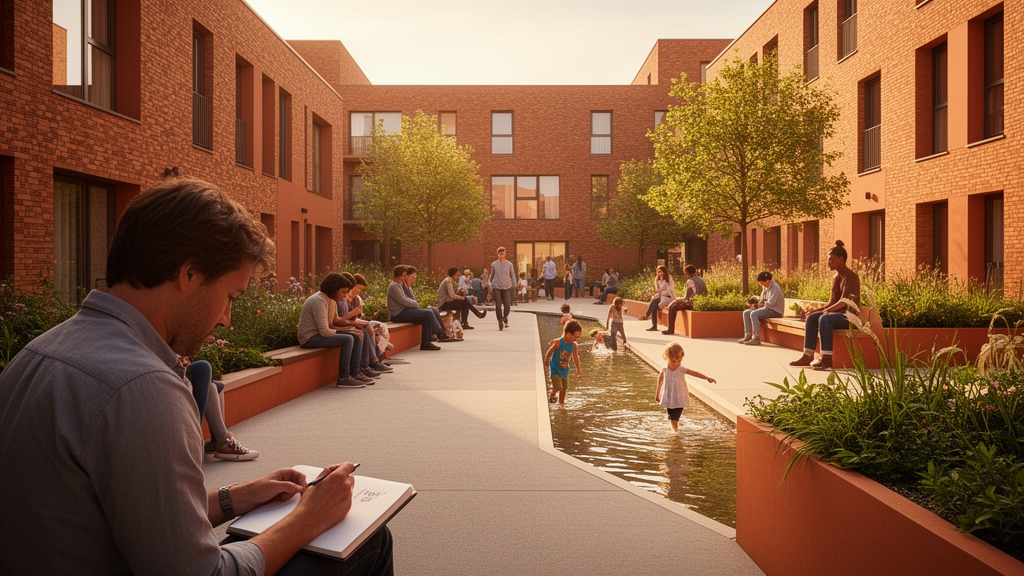
Image Credits: AI Generated
DOI: 10.1186/s40410-026-00317-8
Keywords: responsive architecture, Global South, Aga Khan Award, social sustainability, vulnerability, participatory design, vernacular knowledge, healthcare environments, education environments, community empowerment, Responsive, architecture
News Source: Courtney Benton. (October 29, 2026). Study of Aga Khan Award projects redefines architectural excellence as social impact. Scienmag.