• HOME
  • NEWS
  • EXPLORE
    • CAREER
      • Companies
      • Jobs
    • EVENTS
    • iGEM
      • News
      • Team
    • PHOTOS
    • VIDEO
    • WIKI
  • BLOG
  • COMMUNITY
    • FACEBOOK
    • INSTAGRAM
    • TWITTER
Saturday, May 30, 2026
BIOENGINEER.ORG
No Result
View All Result
  • Login
  • HOME
  • NEWS
  • EXPLORE
    • CAREER
      • Companies
      • Jobs
        • Lecturer
        • PhD Studentship
        • Postdoc
        • Research Assistant
    • EVENTS
    • iGEM
      • News
      • Team
    • PHOTOS
    • VIDEO
    • WIKI
  • BLOG
  • COMMUNITY
    • FACEBOOK
    • INSTAGRAM
    • TWITTER
  • HOME
  • NEWS
  • EXPLORE
    • CAREER
      • Companies
      • Jobs
        • Lecturer
        • PhD Studentship
        • Postdoc
        • Research Assistant
    • EVENTS
    • iGEM
      • News
      • Team
    • PHOTOS
    • VIDEO
    • WIKI
  • BLOG
  • COMMUNITY
    • FACEBOOK
    • INSTAGRAM
    • TWITTER
No Result
View All Result
Bioengineer.org
No Result
View All Result
Home NEWS Science News Biology

Study: Microbial dark matter dominates Earth’s environments

Bioengineer by Bioengineer
October 24, 2018
in Biology
Reading Time: 2 mins read
0
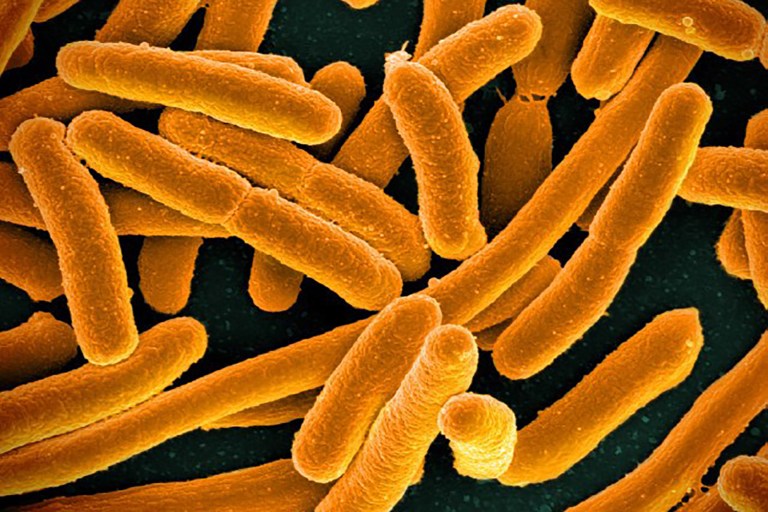
Colorized scanning electron micrograph of Escherichia color, grown in culture and adhered to a cover slop. NIAID/Flickr

Colorized scanning electron micrograph of Escherichia color, grown in culture and adhered to a cover slop. NIAID/Flickr

Share on FacebookShare on TwitterShare on LinkedinShare on RedditShare on Telegram
Colorized scanning electron micrograph of Escherichia color, grown in culture and adhered to a cover slop. NIAID/Flickr

Uncultured microbes–those whose characteristics have never been described because they have not yet been grown in a lab culture–could be dominating nearly all the environments on Earth except for the human body, according to a new study published in mSystems.

The research was led by Karen Lloyd, associate professor in the University of Tennessee, Knoxville’s Department of Microbiology. Lloyd’s study is the first time the population of uncultured microbes has been estimated.

Scientists have long been aware of this mass of uncultured microbes, also known by scientists as microbial dark matter. However, counting them one by one would be an impossible task and, up until now, researchers have not been able to even estimate how many of them there are.

Lloyd and her team now have an answer: they believe that as many as a quarter of the microbes on earth could come from the roughly 30 phyla–a taxonomic classification between kingdoms and classes–of microbes that have never been cultured.

Lloyd puts it in context with one example: “All vertebrates, every single animal with a spine, are contained within a single phylum. So this means that we potentially have 30 different types of microbes that are each as different from any already known microbe as giraffes are from starfish.”

To estimate how many uncultured microbes call this planet home, Lloyd and her team collected every DNA sequence deposited in public databases by researchers all over the world, totaling 1.5 million, and compared them to 26,000 DNA sequences of microbes and bacteria that have already been cultured.

“We quickly hit a serious computational limitation, but lucky for us, we have a great collaboration with the Joint Institute for Computational Sciences at Oak Ridge National Laboratory,” Lloyd said. “They were able to provide the computing power we needed to get the job done.”

The study and characterization of uncultured microbes can be a particularly valuable tool in specific fields–such as in medicine, where scientists have described cases of culture-resistant pathogens.

“Uncultured microbes are so vastly different than cultured ones that they might be doing unusual things, like surviving on extremely low energy or growing extraordinarily slowly, in ways that are hard for us even to imagine. It is also possible that these microbes can’t grow on their own in culture because they die if they are removed from their intricate relationships with each other or their particular environment. Since these microbes provide many ecosystem services–such as helping crops grow and battling climate change–solving the considerable puzzle they’ve presented us is a crucial challenge for modern microbiology,” said Lloyd.

###

Media Contact

Andrea Schneibel
[email protected]
865-974-3993
@UTKnoxville

UT System

Study: Microbial Dark Matter Dominates Earth’s Environments

Related Journal Article

http://dx.doi.org/10.1128/mSystems.00055-18
Share12Tweet8Share2ShareShareShare2

Related Posts

Ohio Wall Lizards Overcame Genetic Bottleneck Through Reproduction, Study Finds — Biology

Ohio Wall Lizards Overcame Genetic Bottleneck Through Reproduction, Study Finds

May 29, 2026
Double Agent Unveils Unexpected Revelations — Biology

Double Agent Unveils Unexpected Revelations

May 29, 2026

University of Toronto Scientists Work to Enhance Access to Advanced Research and Biomanufacturing Tools in Resource-Limited Areas

May 29, 2026

CLPTM1L Alters Lipid Rafts to Drive Glioblastoma Progression

May 29, 2026
Please login to join discussion

POPULAR NEWS

  • ESMO 2025: mRNA COVID Vaccines Enhance Efficacy of Cancer Immunotherapy

    319 shares
    Share 128 Tweet 80
  • Multi-Hospital Study Reveals Long Covid Burden Is Twice as High as Current Estimates

    80 shares
    Share 32 Tweet 20
  • Common Food Preservatives Associated with Elevated Blood Pressure and Increased Heart Disease Risk

    56 shares
    Share 22 Tweet 14
  • New Study Reveals Plants Can Detect the Sound of Rain

    736 shares
    Share 294 Tweet 184

About

We bring you the latest biotechnology news from best research centers and universities around the world. Check our website.

Follow us

Recent News

Peptide-Directed, Hypoxia-Sensitive AAV System Enables Tumor-Specific Delivery of Chemokines and PNAi in Non-Small Cell Lung Cancer

Protein Hydrolysate Boosts Immature Intestinal Barriers

Tile-Based Radiation Therapy Reduces Recurrence Risk in Brain Metastases, ASCO Study Finds

Subscribe to Blog via Email

Enter your email address to subscribe to this blog and receive notifications of new posts by email.

Join 82 other subscribers
  • Contact Us

Bioengineer.org © Copyright 2023 All Rights Reserved.

Welcome Back!

Login to your account below

Forgotten Password?

Retrieve your password

Please enter your username or email address to reset your password.

Log In
No Result
View All Result
  • Homepages
    • Home Page 1
    • Home Page 2
  • News
  • National
  • Business
  • Health
  • Lifestyle
  • Science

Bioengineer.org © Copyright 2023 All Rights Reserved.