• HOME
  • NEWS
  • EXPLORE
    • CAREER
      • Companies
      • Jobs
    • EVENTS
    • iGEM
      • News
      • Team
    • PHOTOS
    • VIDEO
    • WIKI
  • BLOG
  • COMMUNITY
    • FACEBOOK
    • INSTAGRAM
    • TWITTER
Sunday, September 6, 2026
BIOENGINEER.ORG
No Result
View All Result
  • Login
  • HOME
  • NEWS
  • EXPLORE
    • CAREER
      • Companies
      • Jobs
        • Lecturer
        • PhD Studentship
        • Postdoc
        • Research Assistant
    • EVENTS
    • iGEM
      • News
      • Team
    • PHOTOS
    • VIDEO
    • WIKI
  • BLOG
  • COMMUNITY
    • FACEBOOK
    • INSTAGRAM
    • TWITTER
  • HOME
  • NEWS
  • EXPLORE
    • CAREER
      • Companies
      • Jobs
        • Lecturer
        • PhD Studentship
        • Postdoc
        • Research Assistant
    • EVENTS
    • iGEM
      • News
      • Team
    • PHOTOS
    • VIDEO
    • WIKI
  • BLOG
  • COMMUNITY
    • FACEBOOK
    • INSTAGRAM
    • TWITTER
No Result
View All Result
Bioengineer.org
No Result
View All Result
Home NEWS Science News Biology

Study: Microbes could influence earth’s geological processes as much as volcanoes

Bioengineer by Bioengineer
April 24, 2019
in Biology
Reading Time: 2 mins read
0
IMAGE
Share on FacebookShare on TwitterShare on LinkedinShare on RedditShare on Telegram

Audio bites available
IMAGE

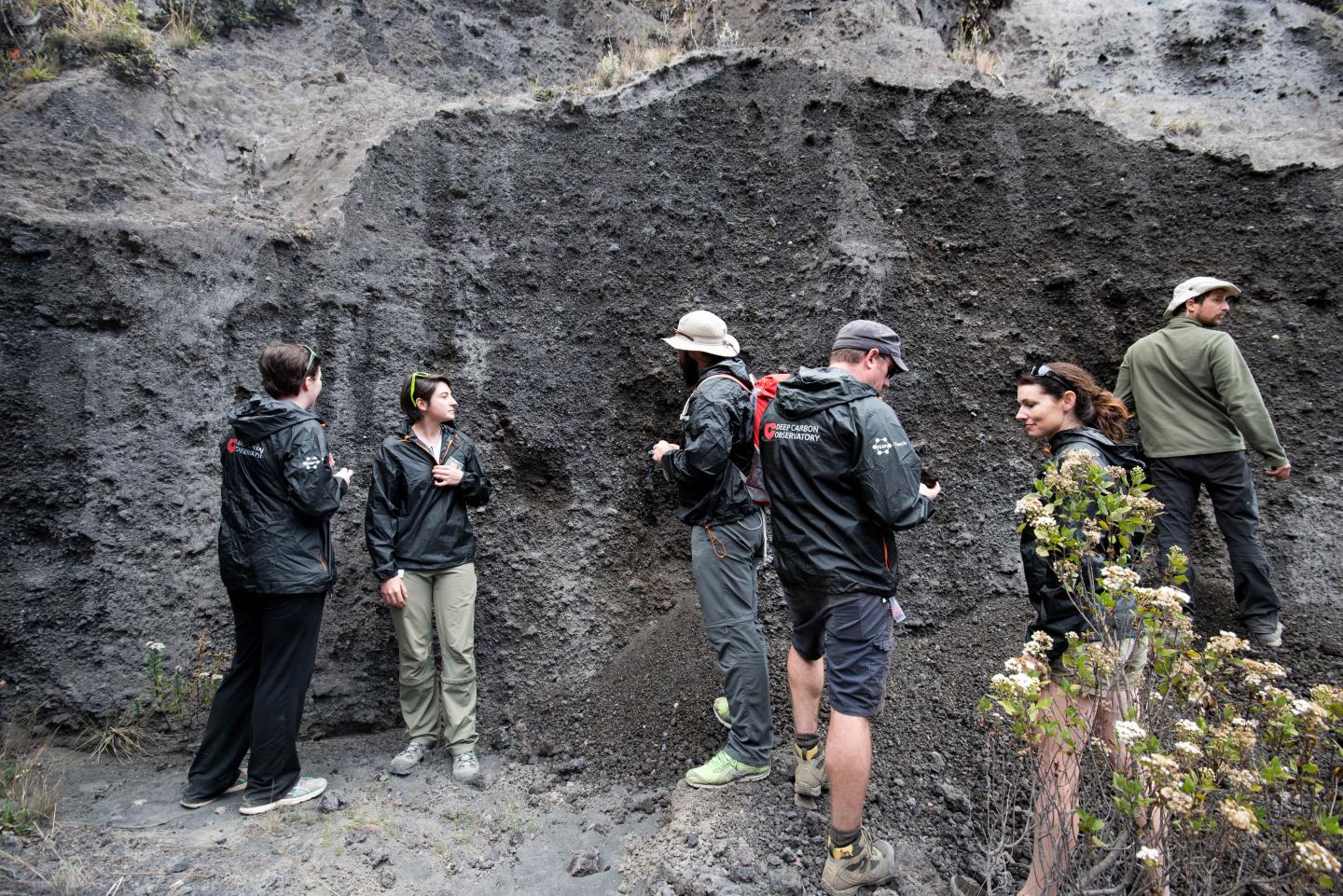
Credit: Photo by Tom Owens.

By acting as gatekeepers, microbes can affect geological processes that move carbon from the earth’s surface into its deep interior, according to a study published in Nature and coauthored by microbiologists at the University of Tennessee, Knoxville. The research is part of the Deep Carbon Observatory’s Biology Meets Subduction project.

“We usually think of geology as something that happens independently of life, and life just adjusts to the geology,” said Karen Lloyd, associate professor of microbiology at the University of Tennessee, Knoxville and senior author of the study. “But we found that microbes can impact major geological processes happening on Earth today.”

For the study, researchers evaluated the Costa Rica’s subduction zone, a point where the ocean floor sinks underneath the continental plate. The results showed that microbes consume and trap a small but measurable amount of the carbon sinking into the trench off Costa Rica’s Pacific coast. The microbes may also be involved in chemical processes that pull out even more carbon, leaving cement-like veins of calcite in the crust.

“It is amazing to consider that tiny microbes can potentially influence geological processes on similar scales as these powerful and visually impressive volcanoes, which are direct conduits to the earth’s interior,” said Maarten de Moor, coauthor and professor at the National University of Costa Rica’s Observatory of Volcanology and Seismology.

The unexpected findings have important implications for how much carbon moves from Earth’s surface into the interior, especially over geological timescales. The research is part of the Deep Carbon Observatory’s Biology Meets Subduction project.

In the future, researchers plan to investigate other forearc regions to see if this trend is widespread. If these biological and geochemical processes occur worldwide, they would translate to 19 percent less carbon entering the deep mantle than previously estimated.

###

CONTACT:

Andrea Schneibel

865-974-3993

[email protected]

Media Contact
Andrea Schneibel
[email protected]

Related Journal Article

http://dx.doi.org/10.1038/s41586-019-1131-5

Tags: BiologyClimate ChangeMicrobiology
Share15Tweet8Share2ShareShareShare2

Related Posts

Metagenomic sequencing for respiratory virus detection: methods and future directions

Metagenomic sequencing for respiratory virus detection: methods and future directions

September 6, 2026
Five-year surveillance of Culicoides biting midges and arboviruses in South Korea

Five-year surveillance of Culicoides biting midges and arboviruses in South Korea

September 6, 2026

Coastal tidal flats host varied microbes with multiple functional redundancy patterns

September 6, 2026

Who gets enteropathogenic E. coli infections and what else they carry

September 6, 2026
Please login to join discussion

POPULAR NEWS

  • Metagenomic sequencing for respiratory virus detection: methods and future directions

    29 shares
    Share 12 Tweet 7
  • MicroRNAs drive liver cancer regulation and offer new treatment hope

    29 shares
    Share 12 Tweet 7
  • Five-year surveillance of Culicoides biting midges and arboviruses in South Korea

    29 shares
    Share 12 Tweet 7
  • Coastal tidal flats host varied microbes with multiple functional redundancy patterns

    29 shares
    Share 12 Tweet 7

About

We bring you the latest biotechnology news from best research centers and universities around the world. Check our website.

Follow us

Recent News

Metagenomic sequencing for respiratory virus detection: methods and future directions

MicroRNAs drive liver cancer regulation and offer new treatment hope

Five-year surveillance of Culicoides biting midges and arboviruses in South Korea

Subscribe to Blog via Email

Enter your email address to subscribe to this blog and receive notifications of new posts by email.

Join 85 other subscribers
  • Contact Us

Bioengineer.org © Copyright 2023 All Rights Reserved.

Welcome Back!

Login to your account below

Forgotten Password?

Retrieve your password

Please enter your username or email address to reset your password.

Log In
No Result
View All Result
  • Homepages
    • Home Page 1
    • Home Page 2
  • News
  • National
  • Business
  • Health
  • Lifestyle
  • Science

Bioengineer.org © Copyright 2023 All Rights Reserved.