BUFFALO, N.Y. – Light therapy may accelerate the healing of skin damage from radiation therapy by up to 50%, according to a recent University at Buffalo-led study.
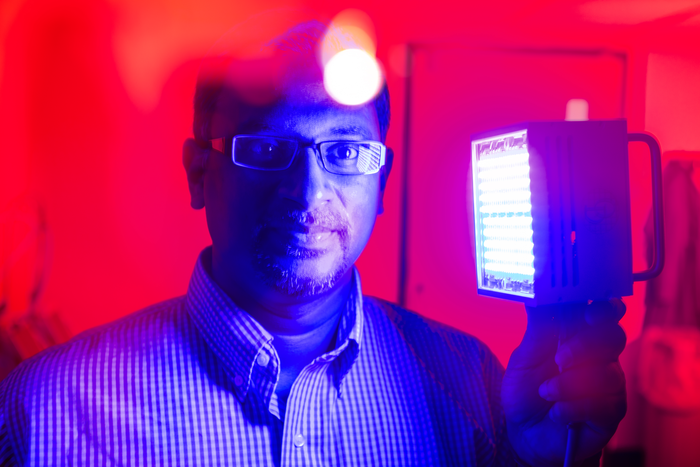
Credit: Photographer: Douglas Levere
BUFFALO, N.Y. – Light therapy may accelerate the healing of skin damage from radiation therapy by up to 50%, according to a recent University at Buffalo-led study.
The research found that photobiomodulation – a form of low-dose light therapy –lowered the severity of skin damage from radionecrosis (the breakdown of body tissue after radiation therapy), reduced inflammation, improved blood flow and helped wounds heal up to 19 days faster.
The findings, published on Dec. 28 in Photonics, follow prior reports on the effectiveness of light therapy in improving the healing of burn wounds and in relieving pain from oral mucositis caused by radiation and chemotherapy.
The research was led by Rodrigo Mosca, PhD, visiting fellow from the Nuclear and Energy Research Institute (IPEN) and the Federal University of Rio de Janeiro, both in Brazil. Carlos Zeituni, PhD, professor at IPEN and the Federal University of Rio de Janeiro, is a senior author.
“To our knowledge, this is the first report on the successful use of photobiomodulation therapy for brachytherapy,” said senior author Praveen Arany, DDS, PhD, assistant professor of oral biology in the UB School of Dental Medicine. “The results from this study support the progression to controlled human clinical studies to utilize this innovative therapy in managing the side effects from radiation cancer treatments.”
Brachytherapy is a form of radiation therapy where a radiation source is implanted within the cancer tissue, exposing surrounding healthy tissue to lower doses of radiation than through teletherapy, a form which fires a beam of radiation through the skin to reach the tumor. Although brachytherapy has improved the precision and safety of cancer care, skin damage is still an unfortunate side effect.
Similar to burn wounds, radionecrosis may cause inflammation and scarring and hinder blood flow. Current treatments to manage radionecrosis include routine wound care, pain medication and, in some cases, surgery.
Previous research conducted by Arany’s lab found that photobiomodulation promotes healing by activating TGF‐beta 1, a protein that controls cell growth and division by stimulating various cells involved in healing, including fibroblasts (the main connective tissue cells of the body that play an important role in tissue repair) and macrophages (immune cells that lower inflammation, clean cell debris and fight infection).
The new study, completed in an animal model, examined the effectiveness of both near-infrared and red LED light at improving the healing of skin damage during radiation therapy.
Without photobiomodulation, wounds took an average of 61 days to heal. Using near-infrared light therapy, healing occurred within an average of 49 days. Healing occurred the fastest when using red light therapy, at an average of 42 days.
“For over 40 years, photobiomodulation has been known to accelerate the healing of acute and chronic wounds, triggering cellular processes that control inflammation, pain signaling, and tissue regeneration and repair,” said Mosca.
Research suggests that the effects of photobiomodulation does not extend to tumor cells, likely due to their perturbed metabolic and regulatory signaling, adds Arany.
Journal
Photonics
DOI
10.3390/photonics9010010
Article Title
The Efficacy of Photobiomodulation Therapy in Improving Tissue Resilience and Healing of Radiation Skin Damage
Article Publication Date
28-Dec-2021