PHILADELPHIA (October 11, 2023) – Police officers often respond to incidents that do not involve crime or immediate threats to public safety but instead deal with community members facing unmet mental health needs. In response to this, many cities are experimenting with co-deploying police officers alongside health professionals or deploying teams entirely composed of civilian health professionals.
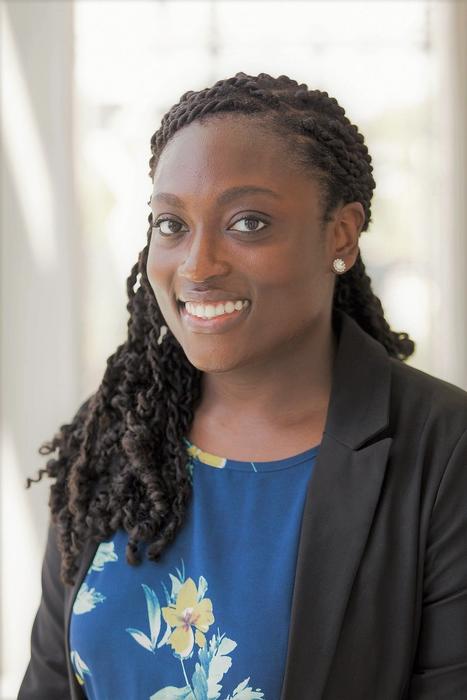
Credit: Helena Addison
PHILADELPHIA (October 11, 2023) – Police officers often respond to incidents that do not involve crime or immediate threats to public safety but instead deal with community members facing unmet mental health needs. In response to this, many cities are experimenting with co-deploying police officers alongside health professionals or deploying teams entirely composed of civilian health professionals.
Recently, researchers from the University of Pennsylvania School of Nursing (Penn Nursing) explored the perspectives and preferences about these programs among residents in structurally disadvantaged areas where mental health distress is more common, mental health services are less accessible, and involvement with police is more frequent and fraught. The findings, published in the Journal of Community Safety & Well-Being, provide valuable insights to guide efforts toward a healthier response to mental health crises.
The study revealed that while many respondents suggested that police presence is necessary during the response to mental health crises because of the risk of violence, they were simultaneously uncomfortable with police officer involvement. The discomfort with police involvement was especially pronounced among younger and Black residents. However, support for co-deployment was high across all subgroups.
First author Helena A. Addison, MSN, RN, a Presidential PhD Fellow and 2021-2023 Jonas Scholar at Penn Nursing, emphasized the importance of considering help-seeking norms and the concerns and experiences of historically underserved community members, who often possess significant apprehension regarding police involvement in crisis response. “We can all agree that we want police involved as little as possible as mental health first responders,” Addison noted, “and the perspectives of community members is essential to effectively identifying and scaling better systems for supporting people in moments of crisis.
The article detailing the research, “Resident Perspectives on Police Involvement In the Response to Mental Health Crises,” is available online. Co-authors of the article include Evan Anderson, JD, PhD, of the Thomas Jefferson College of Population Health; Ruth Shefner, MPH, MSW, PhD(c), of Columbia University; and Jennifer Wood, PhD, MA, of Temple University. This work was partially supported by the National Institute on Drug Abuse, National Institutes of Health [R.S, grant number T32-DA037801.
# # #
About the University of Pennsylvania School of Nursing
The University of Pennsylvania School of Nursing is one of the world’s leading schools of nursing. For the eighth year in a row, it is ranked the #1 nursing school in the world by QS University. For the third year in a row, our Bachelor of Science in Nursing (BSN) program is ranked # 1 in the 2024 U.S. News & World Report’s Best Colleges rankings. Penn Nursing is also consistently ranked highly in the U.S. News & World Report annual list of best graduate schools and is ranked as one of the top schools of nursing in funding from the National Institutes of Health. Penn Nursing prepares nurse scientists and nurse leaders to meet the health needs of a global society through innovation in research, education, and practice. Follow Penn Nursing on: Facebook, Twitter, LinkedIn, & Instagram.
Journal
Journal of Community Safety and Well-Being
Article Title
Resident Perspectives on Police Involvement In the Response to Mental Health Crises
Article Publication Date
29-Sep-2023