• HOME
  • NEWS
  • EXPLORE
    • CAREER
      • Companies
      • Jobs
    • EVENTS
    • iGEM
      • News
      • Team
    • PHOTOS
    • VIDEO
    • WIKI
  • BLOG
  • COMMUNITY
    • FACEBOOK
    • INSTAGRAM
    • TWITTER
Wednesday, July 8, 2026
BIOENGINEER.ORG
No Result
View All Result
  • Login
  • HOME
  • NEWS
  • EXPLORE
    • CAREER
      • Companies
      • Jobs
        • Lecturer
        • PhD Studentship
        • Postdoc
        • Research Assistant
    • EVENTS
    • iGEM
      • News
      • Team
    • PHOTOS
    • VIDEO
    • WIKI
  • BLOG
  • COMMUNITY
    • FACEBOOK
    • INSTAGRAM
    • TWITTER
  • HOME
  • NEWS
  • EXPLORE
    • CAREER
      • Companies
      • Jobs
        • Lecturer
        • PhD Studentship
        • Postdoc
        • Research Assistant
    • EVENTS
    • iGEM
      • News
      • Team
    • PHOTOS
    • VIDEO
    • WIKI
  • BLOG
  • COMMUNITY
    • FACEBOOK
    • INSTAGRAM
    • TWITTER
No Result
View All Result
Bioengineer.org
No Result
View All Result
Home NEWS Science News Biology

Study: Global farming trends threaten food security

Bioengineer by Bioengineer
July 11, 2019
in Biology
Reading Time: 3 mins read
0
IMAGE
Share on FacebookShare on TwitterShare on LinkedinShare on RedditShare on Telegram

IMAGE

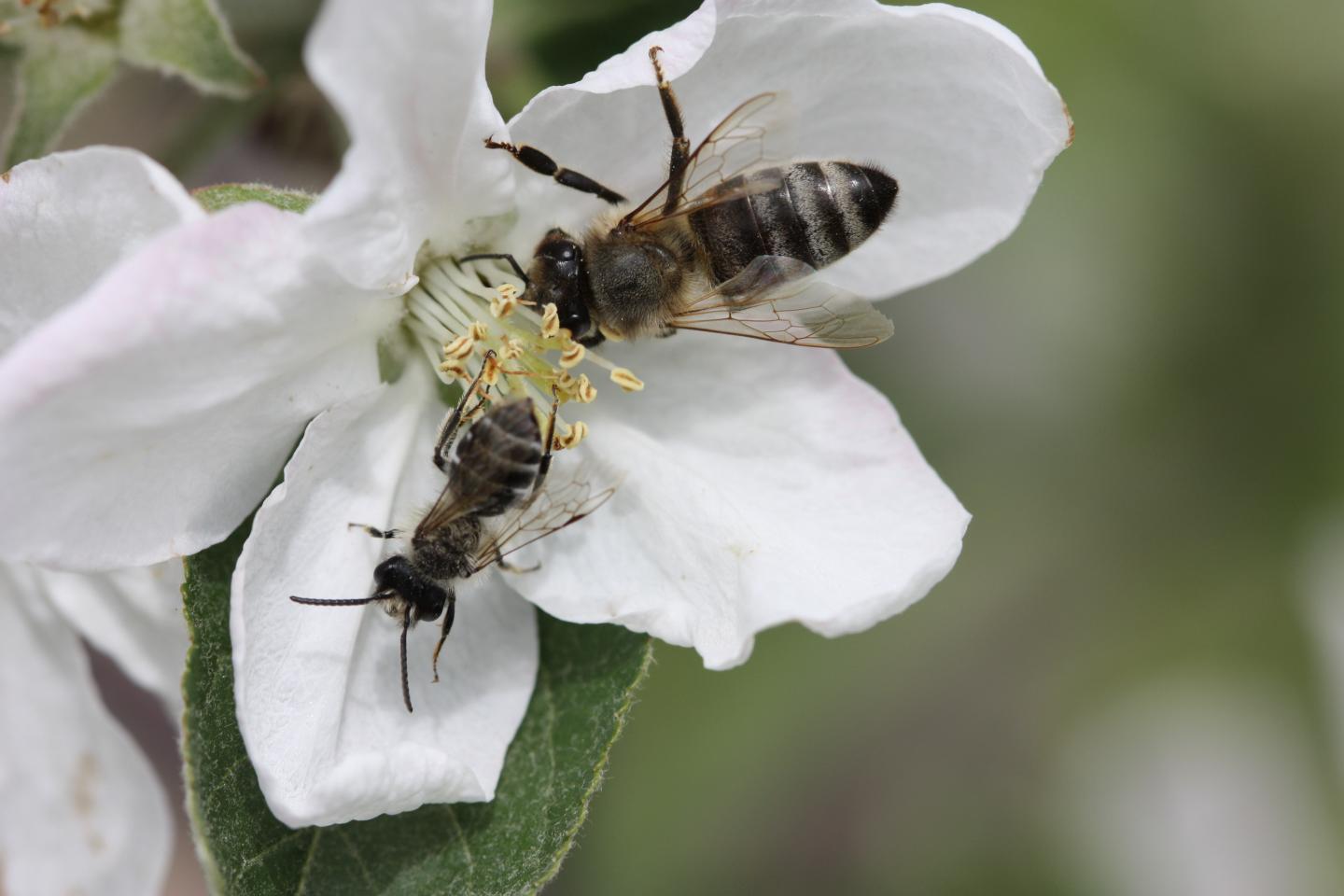
Credit: Martin Husemann

Citrus fruits, coffee and avocados: The food on our tables has become more diverse in recent decades. However, global agriculture does not reflect this trend. Monocultures are increasing worldwide, taking up more land than ever. At the same time, many of the crops being grown rely on pollination by insects and other animals. This puts food security at increased risk, as a team of researchers with help from Martin Luther University Halle-Wittenberg (MLU) writes in the journal Global Change Biology. For the study, the scientists examined global developments in agriculture over the past 50 years.

The researchers analysed data from the United Nations’ Food and Agriculture Organization (FAO) on the cultivation of field crops between 1961 and 2016. Their evaluation has shown that not only is more and more land being used for agriculture worldwide, the diversity of the crops being grown has declined. Meanwhile, 16 of the 20 fastest growing crops require pollination by insects or other animals. “Just a few months ago, the World Biodiversity Council IPBES revealed to the world that up to one million animal and plant species are being threatened with extinction, including many pollinators,” says Professor Robert Paxton, a biologist at MLU and one of the authors of the new study. This particularly affects bees: honeybees are increasingly under threat by pathogens and pesticides, and populations of wild bees have been on the decline around the world for decades.

Fewer pollinators could mean that yields are much lower or even that harvests fail completely. However, risks are not spread equally across the world. The researchers used the FAO data to create a map showing the geographical risk of crop failure. “Emerging and developing countries in South America, Africa and Asia are most affected,” says Professor Marcelo Aizen of the National Council for Scientific and Technological Research CONICET in Argentina, who led the study. This is not surprising, he says, since it is precisely in these regions where vast monocultures are grown for the global market. Soy is produced in many South American countries and then exported to Europe as cattle feed. “Soy production has risen by around 30 percent per decade globally. This is problematic because numerous natural and semi-natural habitats, including tropical and subtropical forests and meadows, have been destroyed for soy fields,” explains Aizen.

According to the authors, current developments have little to do with sustainable agriculture, which focuses on the food security of a growing world population. And, although poorer regions of the world are at the greatest risk, the consequences of crop failure would be felt worldwide: “The affected regions primarily produce crops for the rich industrial nations. If, for example, the avocado harvest in South America fails, people in Germany and other industrial nations may no longer be able to buy them,” concludes Robert Paxton, who is also a member of the German Centre for Integrative Biodiversity Research (iDiv) Halle-Jena-Leipzig.

The researchers advocate for a trend reversal: Care should be taken to diversify agriculture worldwide and make it more ecological. This means, for example, that farms in particularly susceptible countries should grow a diversity of crops. In addition, farmers all over the world would need to make the areas under cultivation more natural, for example by planting strips of flowers or hedgerows next to their fields and by providing nesting habitats on field margins. This would ensure that there are adequate habitats for insects, which are essential for sustainable and productive farming.

###

Media Contact
Tom Leonhardt
[email protected]

Related Journal Article

http://dx.doi.org/10.1111/gcb.14736

Tags: Agricultural Production/EconomicsAgricultureBiodiversityBiologyClimate ChangeEcology/EnvironmentNature
Share12Tweet8Share2ShareShareShare2

Related Posts

Here are a few rewritten headlines for a science magazine post, each with a slightly different tone: Intriguing & poetic: How do organs sculpt themselves? Sea stars hold the secret Direct & research-focused: Sea stars reveal the hidden rules of organ formation Metaphorical & inviting: Tiny architects beneath the waves: What sea stars teach us about building organs Short & punchy: Star-shaped clues to how our organs take shape Question-led: Could a sea star show us how organs form? Elegant & feature-style: The body’s blueprint, glimpsed in a sea star’s arm

July 6, 2026
Bacteria evolve faster with unconventional gene copies — Biology

Bacteria evolve faster with unconventional gene copies

July 6, 2026

Neighbours rewire soil feedback via root microbiome shifts

July 6, 2026

Evolution-Inspired Biosensors Revolutionize Lipid Tracking in Real Time

July 2, 2026
Please login to join discussion

POPULAR NEWS

  • Detection of EDCs in Breast Milk and Infant Urine Up to Six Months Highlights Early Exposure Risks

    77 shares
    Share 31 Tweet 19
  • New Drug Candidate Developed at McMaster Shows Potential for Treating Brain Cancer

    58 shares
    Share 23 Tweet 15
  • Saying Goodbye to PGY-6: Pediatric Fellowship Realities

    103 shares
    Share 41 Tweet 26
  • KTU Researchers Explore Ultrasound’s Role in Enhancing Blood Flow Beyond Diagnostics

    53 shares
    Share 21 Tweet 13

About

We bring you the latest biotechnology news from best research centers and universities around the world. Check our website.

Follow us

Recent News

Flame retardant BDE-209 targets molecularly linked to ulcerative colitis

Ultra-high frequency particle impacts mimic rockbursts to shatter hard rock

Kidney transplant outcomes in older adults studied by German researchers

Subscribe to Blog via Email

Success! An email was just sent to confirm your subscription. Please find the email now and click 'Confirm' to start subscribing.

Join 83 other subscribers
  • Contact Us

Bioengineer.org © Copyright 2023 All Rights Reserved.

Welcome Back!

Login to your account below

Forgotten Password?

Retrieve your password

Please enter your username or email address to reset your password.

Log In
No Result
View All Result
  • Homepages
    • Home Page 1
    • Home Page 2
  • News
  • National
  • Business
  • Health
  • Lifestyle
  • Science

Bioengineer.org © Copyright 2023 All Rights Reserved.