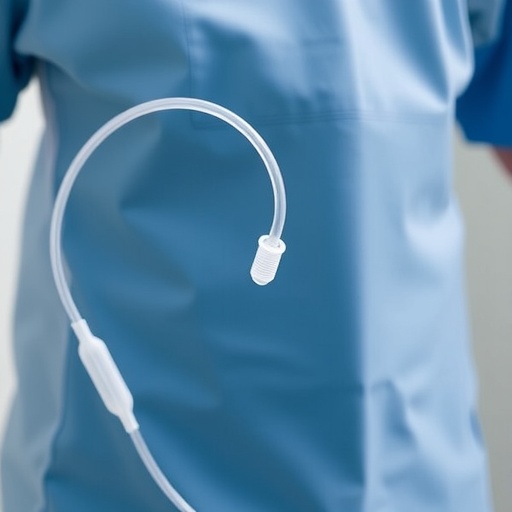
A recent groundbreaking study from researchers at the University of Southampton has challenged the long-standing convention that intermittent urinary catheters must be single-use to ensure patient safety. The investigation, published in the International Journal of Nursing Studies, provides compelling evidence suggesting that reusable catheters are just as safe as their disposable counterparts and do not elevate the risk of urinary tract infections (UTIs). This revelation potentially paves the way for significant healthcare cost reductions and a major decrease in environmental plastic waste produced annually by the National Health Service (NHS).
Urinary catheters, primarily used by thousands of individuals to manage bladder emptying, have traditionally been prescribed as disposable devices to minimize infection risks. The single-use plastic tubes are disposed of immediately after one use, contributing to considerable plastic pollution. The researchers embarked on a one-year prospective study involving 578 intermittent catheter users, carefully comparing the health outcomes between those who exclusively used single-use catheters and those adopting a mixed regimen comprising both single-use and reusable catheters.
The methodology involved dividing participants into two distinct cohorts: the first group adhered strictly to the conventional single-use catheter protocol, while the second utilized reusable catheters alongside single-use devices. The reusable catheter users received comprehensive hygiene kits designed to ensure proper cleaning—specifically washing with soap and water followed by immersion in a chlorine solution, a protocol meticulously developed to eradicate microbial contamination and prevent infections.
Results from this year-long randomized controlled trial underscored a significant finding: patients employing reusable catheters experienced a 35% reduction in antibiotic usage compared to those limited to single-use catheters. Moreover, the incidence of UTIs was marginally lower among reusable catheter users, with 29% experiencing at least one infection versus 34% in the single-use group. These statistics suggest that the previously held assumption linking reusable catheters with greater infection risk may, in fact, be unfounded.
Lead author Professor Mandy Fader emphasized the transformative potential of this research, noting the previous paucity of rigorous evidence supporting reusable catheter safety. The study’s findings provide a critical validation of reusable catheter usage, enabling healthcare providers to consider environmentally and economically sustainable alternatives without compromising patient health.
Importantly, the NHS currently consumes approximately 100 million single-use catheters annually, with the cumulative cost escalating from £22 million in 1998 to an anticipated £200 million by 2026. Given that a standard box of 30 single-use catheters costs around £50, the switch to reusable devices—which cost less than 10 pence per use and can be sterilized and reused for up to a month—could result in substantial fiscal savings. If just a quarter of catheter-dependent patients transitioned to reusable options, the NHS could realize millions in cost reductions.
The environmental implications are equally profound. Single-use catheters contribute to an enormous volume of non-biodegradable plastic waste each year. By adopting reusable catheter protocols, healthcare providers could significantly mitigate the environmental burden posed by disposable medical devices, aligning with growing global initiatives targeting waste reduction and sustainability in medical practice.
The meticulous cleaning process assigned to reusable catheter users in this study is a critical technical component ensuring safety. The use of soap and water followed by chlorine soaking effectively disrupts biofilm formation and eliminates potential pathogens, thereby preventing colonization and subsequent infection. This protocol exemplifies best practices in biomedical device sterilization, balancing efficacy with practicality for routine home use.
Co-author Margaret Macaulay highlighted the broader implications for healthcare policy, advocating for patient-centered choices in catheter management that accommodate lifestyle preferences without exacerbating infection risk. Transitioning from a rigid, single-use-focused approach to a more flexible paradigm could foster enhanced patient autonomy and reduce the clinical ecosphere’s throwaway culture.
Professor Cathy Murphy underscored the economic and practical advantages by pointing out the vast difference in per-use costs between single-use and reusable catheters. The sustained use of reusable devices, underpinned by rigorous cleaning protocols, presents a rare intersection where patient safety, cost-effectiveness, and environmental responsibility converge.
National Institute for Health and Care Research (NIHR) Programme Director Marian Knight emphasized the study’s real-world impact. The research exemplifies how evidence-based findings can inform NHS procurement and clinical guidelines, potentially revolutionizing urinary catheter management. This shift could empower thousands of patients with safer and greener choices in their long-term care regimens.
This study is poised to influence future clinical recommendations and healthcare policies, potentially leading to widespread adoption of reusable catheters across the UK and beyond. While hygiene and infection control will remain paramount, the demonstrated feasibility and safety of reusable catheters offer a pathway to sustainable, patient-centric care models.
The findings open intriguing avenues for further research into optimizing cleaning protocols, improving reusable catheter material durability, and integrating patient education programs to facilitate smooth transitions. This paradigm shift also encourages medical device manufacturers to innovate designs facilitating safe reuse while maintaining high biocompatibility and antimicrobial properties.
In conclusion, the University of Southampton’s research presents a compelling case for reconsidering existing single-use catheter policies. By adopting reusable catheters, healthcare systems can achieve a trifecta of enhanced safety, decreased antibiotic reliance, and substantial economic and environmental benefits, marking a significant milestone toward sustainable medical practice in urology and personal care.
Subject of Research: People
Article Title: A non-inferiority randomised controlled trial to compare mixed (multi/single-use) catheter management with single-use catheter management by intermittent catheter users over 12 months
News Publication Date: 21-May-2026
Web References: http://dx.doi.org/10.1016/j.ijnurstu.2026.105536
Image Credits: University of Southampton
Keywords: Medical treatments, Catheterization, Clinical medicine, Reusable catheters, Urinary tract infections, Antibiotics, NHS, Healthcare sustainability, Medical devices, Infection control, Randomized controlled trial, Health economics
Tags: bladder management devicesenvironmental impact of disposable cathetersintermittent catheter use studylong-term catheter hygiene practicesmixed catheter regimen outcomesNHS healthcare cost reductionnursing studies on catheter useplastic waste reduction NHSreusable urinary catheters safetysustainable medical device alternativesUniversity of Southampton catheter researchurinary tract infection risk comparison