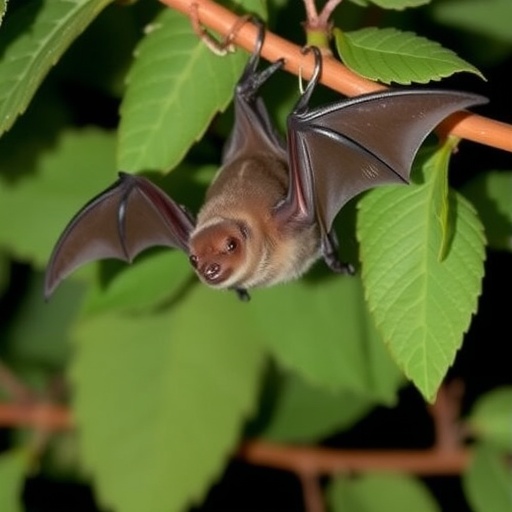
In recent years, the role of insectivorous bats in agricultural pest management has garnered significant scientific interest. A groundbreaking study conducted in the Basque Country of northern Spain has illuminated the ecological and economic importance of the lesser horseshoe bat (Rhinolophus hipposideros) in controlling harmful insect populations that damage crops. This research, published in the prestigious journal PLOS One, delves deeply into the dietary patterns of these bats across diverse landscapes, revealing their substantial contribution to natural pest suppression in agricultural settings such as vineyards, fruit orchards, and vegetable farms.
The study focuses on six different colonies of lesser horseshoe bats inhabiting attic roosts, a common shelter type for this species. Researchers collected guano samples over prolonged sampling periods, employing advanced molecular techniques such as DNA metabarcoding to precisely identify the pest species consumed by these bats. The metabolic DNA analyses afforded unprecedented insights into the bats’ diet, allowing scientists to quantify the diversity and abundance of pest insects they prey upon in real agricultural ecosystems.
One hallmark finding is the remarkable dietary breadth of the Rhinolophus hipposideros, which preys on numerous pest species known to inflict substantial damage on economically critical crops. These pest groups include Lepidoptera larvae—caterpillars notorious for defoliating grapevines—and various Coleoptera and Diptera species that damage fruits and vegetables. By consuming large quantities of these insects nightly, the bats provide an invaluable ecosystem service that reduces the necessity for chemical pest control measures, promoting sustainability in farming.
The research underscores the complexity of landscape influences on bat feeding behavior. Colonies located in heterogeneous landscapes combining natural vegetation and agricultural fields demonstrated higher insect pest consumption rates compared to those in more homogeneous environments. This finding suggests that preservation of landscape diversity is integral to maximizing the pest regulatory potential of bat populations. Consequently, the study provides ecological evidence supporting habitat conservation as a strategy for enhancing biocontrol in agroecosystems.
Moreover, the research contributes to a growing body of knowledge concerning the timing and intensity of bat predation on pest species. Seasonal variations in bat foraging activity correspond closely with the life cycles of key pests, highlighting bats’ role as temporal regulators that can suppress pest outbreaks before they reach damaging levels. These predation patterns align with integrated pest management (IPM) goals aimed at reducing pesticide reliance while maintaining crop productivity.
From a methodological perspective, the study employs cutting-edge molecular ecology techniques alongside traditional fieldwork, representing an exemplary model bridging basic ecological research and applied agricultural science. By combining guano DNA analyses with detailed landscape mapping and bat colony monitoring, the researchers establish a comprehensive framework for assessing the ecosystem services provided by bats. Such multidisciplinary approaches are essential to guide policy recommendations encouraging wildlife-friendly farming practices.
Importantly, the findings have significant policy implications by reinforcing the economic value of bats in agriculture. Pest damage often constitutes a major yield loss factor and eradication cost, and biocontrol by bats could represent an effective cost-saving mechanism for farmers. The research advocates for protective measures to safeguard bat habitats, reduce roost disturbance, and promote bat-friendly agricultural practices as part of broader biodiversity and agroecological initiatives.
The study also dispels misconceptions that commonly associate bats with negative attributes. By showcasing bats as prolific predators of harmful insects, it highlights their indispensable role in ecosystem health and food security. These insights may foster greater public appreciation and support for bat conservation efforts, which face challenges from habitat degradation, pesticide use, and emerging diseases.
Future research inspired by this work could explore the applicability of similar methodologies in different geographic regions and with other bat species, expanding our understanding of bat-mediated pest control worldwide. Additionally, long-term monitoring of bat populations and pest dynamics could unravel the resilience of these natural control services under changing climate conditions and intensifying agricultural pressures.
In conclusion, this seminal research from northern Spain offers compelling scientific evidence that lesser horseshoe bats serve as effective natural pest controllers in diverse agricultural landscapes. Their predation on pest insects not only preserves crop quality and yield but also fosters sustainable farming practices by minimizing chemical input. The interdisciplinary approach integrating molecular diet analysis, ecological landscape evaluation, and agricultural impact assessment sets a new standard for studying ecosystem services provided by wildlife.
As global agriculture seeks innovative solutions to pest management challenges, leveraging the predatory capabilities of bats emerges as a promising, eco-friendly strategy. This study uniquely positions Rhinolophus hipposideros as a keystone species whose conservation aligns with human agricultural interests and biodiversity preservation. Strengthening policies that promote coexistence between agricultural production and bat conservation will be crucial for ensuring resilient and sustainable food systems of the future.
Subject of Research: The study investigates the role of lesser horseshoe bats (Rhinolophus hipposideros) in consuming agricultural pest insects across diverse landscapes, highlighting their contribution to natural pest control in crops like grapevines, orchard fruits, and vegetables.
Article Title: Pest consumption by common bats in diverse landscapes
News Publication Date: 17-Jun-2026
Web References: DOI link to article
Image Credits: Miren Aldasoro, CC-BY 4.0
Keywords: lesser horseshoe bat, Rhinolophus hipposideros, pest control, insectivorous bats, agriculture, DNA metabarcoding, ecosystem services, biological pest management, sustainable farming, biodiversity conservation, integrated pest management, agroecosystems
Tags: bat guano molecular analysisbats in agriculture pest managementbats reducing crop damage in northern Spainbiodiversity and pest regulation by batsDNA metabarcoding in bat diet studiesecological role of bats in crop protectionimpact of bats on Lepidoptera larvaeinsectivorous bats in pest controllesser horseshoe bat diet analysisnatural pest control methods in vineyardsRhinolophus hipposideros pest suppressionsustainable agriculture pest management