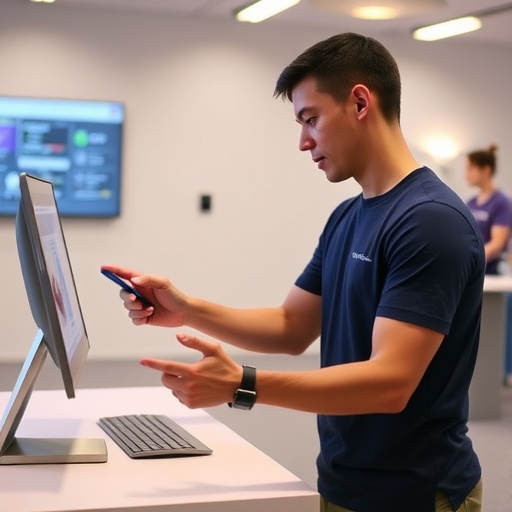
In an era where artificial intelligence (AI) continues to redefine human experiences, the fitness industry is witnessing a digital transformation fueled by AI-driven personal trainers. A recent feature published by JMIR Publications delves into the promises and limitations of AI chatbots like ChatGPT as personal fitness advisors, reflecting on their potential to democratize health and exercise guidance.
Personal trainers have long been pivotal in motivating physical activity and customizing workouts that optimize health outcomes. Traditional personal training, however, can be prohibitively expensive for many. Enter AI-powered chatbots, which harness vast databases, including scholarly resources and expert-generated content, to craft individualized fitness regimens at a fraction of the cost. Two comparative studies highlighted in the feature reveal that ChatGPT not only competes with but sometimes exceeds human trainers in delivering accurate fitness advice and personalized training plans, underscoring the tool’s growing capability.
Yet, the technological advance is not without caveats. While AI offers expansive access to fitness knowledge, it lacks the nuanced human judgment essential for addressing individual motivational challenges, injury mitigation, and real-time adaptive coaching. Physical therapist Katy Vieira and personal trainer Steven Kane emphasize that factors like ongoing communication, visual assessment, and tactical decision-making remain domains where human expertise excels.
A particularly intriguing development is the integration of AI models such as MediaPipe Pose, which employs real-time smartphone video analysis to estimate body positioning with 97.2% accuracy. This computer vision application represents a step toward more interactive AI coaching by monitoring movement and potentially correcting form. However, its creators caution against substituting comprehensive clinical judgment solely with AI, advocating instead for hybrid systems.
This hybrid model aspires to merge AI’s scalability and affordability with the situational awareness and empathetic support of certified fitness professionals. Daily AI guidance could maintain user engagement and deliver tailored adjustments, while periodic expert check-ins ensure safety, motivation, and adaptation to complex needs.
Such convergence points toward an augmented fitness landscape where technology amplifies human expertise, extending quality training access to underserved populations. The challenges remain in fine-tuning AI’s interpretative sophistication and ensuring equitable technology adoption.
As AI continues evolving, its role may transcend algorithmic coaching to become a collaborative partner enhancing personal health journeys. The vision outlined by JMIR Publications signals a future where personalized fitness is not a luxury but an accessible right, powered by intelligent machines and human insight.
Subject of Research: People
Article Title: Should AI Be Your Personal Trainer?
News Publication Date: 8-Jul-2026
Web References: https://www.jmir.org/2026/1/e106128
References: Zucker A. Should AI Be Your Personal Trainer? J Med Internet Res 2026;28:e106128; doi:10.2196/106128
Image Credits: Image provided by the author.
Keywords
Artificial intelligence, Physical exercise, Personal training, AI fitness, MediaPipe Pose, Digital health, Hybrid coaching
Tags: AI in the fitness industryAI-driven health and wellnessAI-powered personal trainingartificial intelligence fitness advisorschatbots for fitness guidancecost-effective fitness coachingdemocratization of health and exercisehuman vs AI personal trainerslimitations of AI chatbots in fitnessmotivational challenges in AI fitnesspersonalized workout plansreal-time adaptive coaching with AI