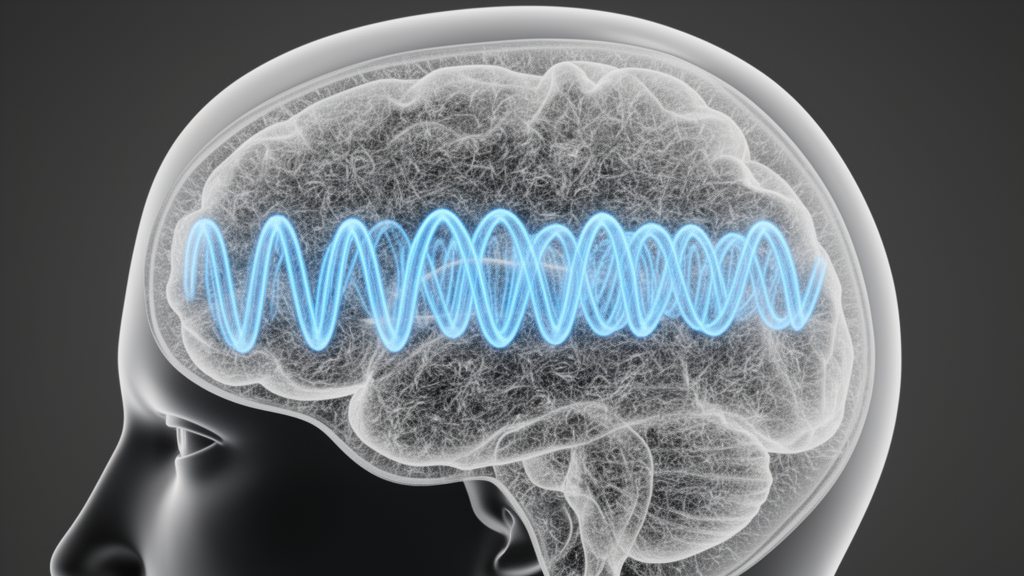
A South Korean research collaboration has developed a deep-learning analysis technology named NONOS that separates rhythmic oscillatory components from underlying non-oscillatory background signals in brain activity with high temporal resolution. The peer-reviewed study, published in the neuroimaging journal NeuroImage, was led by Professor Ji-Woong Choi from the Department of Electrical Engineering and Computer Science at the Daegu Gyeongbuk Institute of Science and Technology, alongside research teams led by Professor Han-Joon Kim of Kumoh National Institute of Technology, Professor Kyong Hwan Jin of Korea University, and Dr. Jong-Cheol Rah of the Korea Brain Research Institute. The article, titled “Neural oscillation and non-oscillation separator for highly time-resolved decomposition of beta band activity,” was published on November 1, 2026, and announced by DGIST, where Kunwoo Lee serves as president.
Electrical signals naturally produced within the brain consist of an entangled mixture of regular rhythms, or oscillatory components that repeat at consistent intervals, and underlying background signals, representing non-oscillatory components. Isolate and analyze these rhythmic patterns from composite brain recordings presents a challenge comparable to distinguishing a single person’s spoken voice amidst the pervasive humming noise of a crowded café. In clinical contexts, particularly within the brains of patients diagnosed with Parkinson’s disease, the intensity of a specific rhythmic pattern known as beta waves becomes excessively elevated. Because these beta waves oscillate dozens of times per second and are associated with characteristic symptoms such as slowed movement, tracking their strength provides a critical clinical indicator for evaluating the effectiveness of medical treatments.
Despite the medical importance of beta-wave monitoring, conventional electrophysiological analysis techniques face substantial obstacles in properly distinguishing rapid changes in rhythms from simultaneous shifts occurring in background signals. The most widely employed filtering techniques measure and calculate the strength of beta waves directly without accounting for the presence of underlying background signals. As a result of this omission, conventional filters risk mistaking alterations in background signals for genuine shifts in oscillatory rhythms. More recent analytical methods designed to remove background signals attempt to evaluate signals by grouping raw data into fixed time windows. However, window-based methods can easily miss brief, transient changes in rhythms, creating an effect similar to fast-moving objects appearing blurred in photographs captured with long camera exposure times. Consequently, biomedical researchers have historically struggled to achieve accurate separation of rhythms and background signals while simultaneously detecting rapid changes in brain activity.
To overcome this analytical conflict, the research team designed NONOS by targeting an established physical property of background brain activity: the power of non-oscillatory background signals decreases exponentially as frequency increases, conforming strictly to a specific functional form. NONOS is constructed as an artificial intelligence model trained to accept continuous brain signals recorded over time as input and isolate solely the background components that match this exponential functional pattern. After the neural network extracts these background components, the system subtracts them directly from the original recorded signals. Subtracting the background leaves only the pure oscillatory rhythmic components intact. This computational approach allows researchers to detect rapid changes across both oscillatory rhythms and non-oscillatory background signals without sacrificing temporal resolution.
The research team demonstrated the practical efficacy of NONOS by testing its performance on biological datasets collected from human patients with Parkinson’s disease and experimental animal models. When evaluating the pure rhythmic components extracted by NONOS from the brain signals of human Parkinson’s disease patients, the researchers measured its accuracy in predicting which foot a patient would step forward with, where values closer to 1 represent greater predictive accuracy. NONOS achieved a predictive performance score of 0.98, demonstrating a substantial improvement compared to conventional analytical methods, which achieved predictive performance scores ranging from 0.54 to 0.79. Furthermore, in laboratory experiments conducted with mice modeling Parkinson’s disease, NONOS proved to be the only analytical method capable of sensitively detecting the rapid decrease in beta-wave strength that occurs following deep brain stimulation, an electrical stimulation therapy. This rapid therapeutic response had previously been difficult to identify and track using standard conventional methods.
Discussing the broader clinical implications, Professor Ji-Woong Choi, who also serves as Director of the Brain Engineering Convergence Research Center at DGIST, emphasized that the primary significance of the study lies in proving that rhythms and background signals mixed together in brain signals can be separated without losing temporal resolution. Professor Choi stated that if the research team further develops NONOS by reducing its computational requirements so that it can operate in real time on implantable brain devices, the technology will contribute to improving the overall accuracy of personalized deep brain stimulation therapy, which dynamically adjusts therapeutic electrical stimulation according to each individual patient’s condition.
Co-corresponding author Professor Han-Joon Kim of Kumoh National Institute of Technology noted that NONOS offers the distinct advantage of separating the periodic and aperiodic components of various biological signals that change rapidly over time with high temporal resolution. Professor Kim explained that the system will consequently be useful for analyzing a wide range of time-varying biological signals extending well beyond the specific examples demonstrated in the published paper.
The study received governmental research support from multiple South Korean funding initiatives, including the National Research Foundation of Korea’s STEAM Research Program through its BRIDGE Convergence R&D track, the Brain Science Leading Convergence Technology Development Program, and the Ministry of Education’s Glocal Lab program. First authorship on the published NeuroImage paper was held by Jinmo Kim, an integrated master’s and doctoral student in the Department of Electrical Engineering and Computer Science at DGIST, working under the guidance of co-corresponding authors Professor Ji-Woong Choi and Professor Han-Joon Kim.
Subject of Research: Deep-learning decomposition of oscillatory and non-oscillatory neural signals
Article Title: Removing the “background” from brain signals to precisely capture the “rhythm”: DGIST develops AI analysis technology to capture changes in brain waves in patients with Parkinson’s disease as they occur
Article References: Removing the “background” from brain signals to precisely capture the “rhythm”: DGIST develops AI analysis technology to capture changes in brain waves in patients with Parkinson’s disease as they occur. Original publication (Bibliographic details unavailable.)
Image Credits: AI Generated
DOI: Not provided
Keywords: neuroscience, deep learning, Parkinson's disease, brain waves, beta waves, neural oscillations, deep brain stimulation, biomedical engineering, Removing, background, brain, signals
News Source: Cassandra Pierce. (November 9, 2026). Deep Learning System Separates Rhythmic Brain Waves from Background Neural Noise. Scienmag.