Deep Learning System Separates Rhythmic Brain Waves from Background Neural Noise
Researchers have developed a deep-learning model called NONOS that separates neural rhythms from background brain noise without losing temporal resolution.
Researchers have developed a deep-learning model called NONOS that separates neural rhythms from background brain noise without losing temporal resolution.
Researchers have identified distinct beta oscillatory dynamics in the subthalamic nucleus and globus pallidus internus during pharmacological and electrical treatment ...
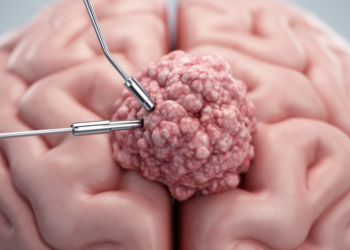
A case report and literature review describe the development of glioblastoma two years after deep brain stimulation for Parkinson's disease, ...
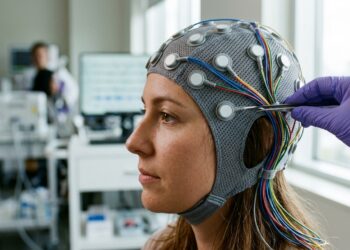
An editorial in Frontiers in Psychiatry highlights how electrophysiological measures can bridge the gap between preclinical neural mechanisms and clinical ...
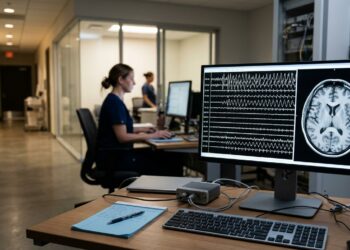
A ten-year bibliometric analysis of nearly ten thousand studies indexed in PubMed tracks the evolution of drug-resistant epilepsy research from ...
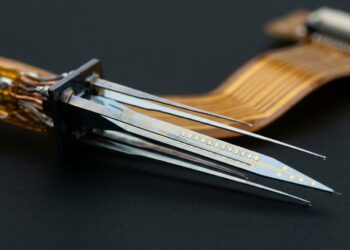
A multiregional neural sensing framework using machine learning predicted Parkinson's disease motor fluctuations with nearly ninety percent accuracy across animal ...

A special issue editorial evaluates nine studies exploring network-informed treatments for dystonia, concluding that existing therapies remain largely symptomatic while ...
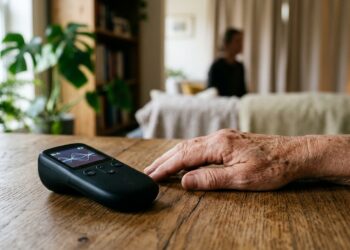
A prospective multicenter registry study revealed that nearly one-third of infusion therapies for Parkinson's disease were discontinued, while deep brain ...
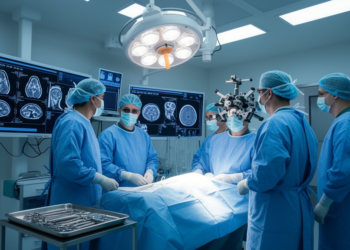
A letter to the editor argues that a fifteen-patient staged lesioning study lacked a comparator arm, blinded assessment, and medication ...

A narrative review argues that surgery and rehabilitation in cerebral palsy work best when tightly coordinated, while warning that direct ...
Nanopore long-read sequencing that simultaneously reads genetic variants and DNA methylation resolved three difficult KMT2B-related dystonia diagnoses, confirming one uncertain ...
A narrative review synthesizes intracranial thalamic local field potential findings in prolonged disorders of consciousness, mapping oscillatory, connectivity, aperiodic and ...
EPFL researchers have built a low-power implantable chip, LogSync, that extracts synchrony biomarkers across brain regions and decodes cognitive and ...
A new commentary argues that the antiseizure medication cenobamate deserves a defined role before, between, and after surgery and neuromodulation ...
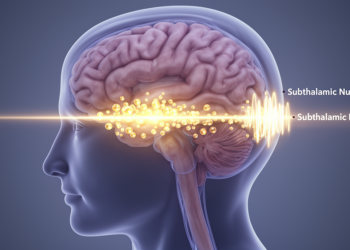
Intracranial recordings from 15 people with Parkinson’s disease show that dopamine amplifies delayed subthalamic responses to cortical stimulation while leaving ...
A two-decade cohort study finds that deep brain stimulation of the nucleus accumbens and anterior internal capsule produced sustained symptom ...
A scoping review of 22 controlled trials finds that network-targeted neurostimulation can improve functional connectivity in disorders of consciousness, but ...
A Japanese case report describes a woman with drug-resistant epilepsy whose seizures fell by about 60 percent after deep brain ...
A conductance-based computer model of the Parkinsonian brain circuit shows that deep brain stimulation and rhythmic visual input reshape network ...
A comparative analysis of more than 32,000 publications shows temporal interference stimulation growing fastest among brain stimulation technologies while early ...