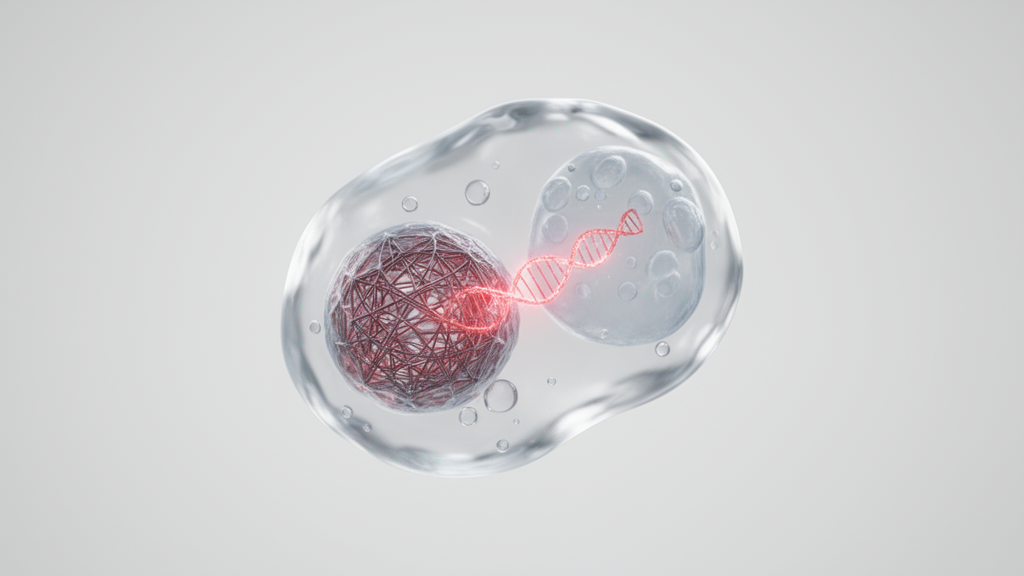
In an in vitro study evaluating Huh-7 cell cultures, researchers quantified the mechanical and structural alterations induced by hepatitis B virus subgenotype A1 and its endemic G1862T mutation. The viral backbone engineered a severe mechanical mismatch in the cells, inducing a bystander-associated upregulation of fibrogenic matrix proteins, depolymerisation of F-actin, and significant internalisation of E-cadherin. Topological analysis further demonstrated severe cellular compaction that occurred independently of whether the viral variant was wild-type or mutated, indicating that viral expression directly modifies the physical architecture of host liver cells.
To examine these biomechanical properties, the investigators implemented a custom automated bioimaging pipeline combined with high-resolution confocal microscopy. This approach enabled the measurement of macroscopic cell topology, extracellular matrix remodelling, and subcellular compartmentalisation across Huh-7 cells expressing either wild-type virus or the G1862T mutant. In addition, the researchers mapped junctional decoupling and active oncogenic translocation using ratiometric compartmental analyses across cellular regions.
While both the wild-type and mutant variants dismantled adherens junctions to an equal extent, quantitative imaging revealed distinct differences in how each variant influenced intracellular beta-catenin. Cells expressing the G1862T mutant variant exhibited intracellular accumulation alongside an approximately 71 percent global depletion of total beta-catenin compared with wild-type virus. Despite this extensive overall loss, the mutant uniquely shielded and directed the surviving fraction of beta-catenin into perinuclear aggregates to facilitate active nuclear translocation.
Based on these measured cellular responses, the study authors proposed a mechanobiological double-hit paradigm for oncogenic progression prior to the epithelial-mesenchymal transition. In this conceptual model, the wild-type viral backbone represents the first hit by impairing epithelial mechanoreciprocity and generating a low-resistance structural environment. The G1862T mutation serves as the second hit, drawing upon physical destabilisation and a host proteotoxic stress response to translocate the remaining beta-catenin pool into the nucleus.
The study provides a biophysical model addressing hepatitis B virus subgenotype A1 and the G1862T mutation, which are epidemiologically associated with aggressive, early-onset hepatocellular carcinoma in South Africa. Because the investigation was conducted entirely in cultured Huh-7 cells using confocal imaging pipelines, the findings describe in vitro cellular and mechanical phenomena rather than human clinical outcomes.
Subject of Research: Biomechanical alterations and beta-catenin regulation in Huh-7 cells expressing hepatitis B virus variants
Article Title: Engineering the host microenvironment: the “double hit” of HBV subgenotype A1 and G1862T-driven oncogenesis
Article References: Lamola, M., Reddy, D., & Deroubaix, A. (2026). Engineering the host microenvironment: the “double hit” of HBV subgenotype A1 and G1862T-driven oncogenesis. Frontiers in Cellular and Infection Microbiology, 16, Article 1947498. https://doi.org/10.3389/fcimb.2026.1947498
Image Credits: AI Generated
DOI: 10.3389/fcimb.2026.1947498
Keywords: Hepatitis B virus, Huh-7 cells, G1862T mutation, Hepatocellular carcinoma, Mechanobiology, Beta-catenin, Epithelial-mesenchymal transition, Extracellular matrix, Engineering, host, microenvironment, double
News Source: Kristina Jarvis. (November 9, 2026). Cellular Study Links Hepatitis B Mutation to Altered Liver Cell Mechanics. Scienmag.