• HOME
  • NEWS
  • EXPLORE
    • CAREER
      • Companies
      • Jobs
    • EVENTS
    • iGEM
      • News
      • Team
    • PHOTOS
    • VIDEO
    • WIKI
  • BLOG
  • COMMUNITY
    • FACEBOOK
    • INSTAGRAM
    • TWITTER
Wednesday, September 23, 2026
BIOENGINEER.ORG
No Result
View All Result
  • Login
  • HOME
  • NEWS
  • EXPLORE
    • CAREER
      • Companies
      • Jobs
        • Lecturer
        • PhD Studentship
        • Postdoc
        • Research Assistant
    • EVENTS
    • iGEM
      • News
      • Team
    • PHOTOS
    • VIDEO
    • WIKI
  • BLOG
  • COMMUNITY
    • FACEBOOK
    • INSTAGRAM
    • TWITTER
  • HOME
  • NEWS
  • EXPLORE
    • CAREER
      • Companies
      • Jobs
        • Lecturer
        • PhD Studentship
        • Postdoc
        • Research Assistant
    • EVENTS
    • iGEM
      • News
      • Team
    • PHOTOS
    • VIDEO
    • WIKI
  • BLOG
  • COMMUNITY
    • FACEBOOK
    • INSTAGRAM
    • TWITTER
No Result
View All Result
Bioengineer.org
No Result
View All Result
Home NEWS Science News Biology

Study examines black mangroves impact on the salt marsh food web

Bioengineer by Bioengineer
January 15, 2019
in Biology
Reading Time: 2 mins read
0
IMAGE
Share on FacebookShare on TwitterShare on LinkedinShare on RedditShare on Telegram

IMAGE

Credit: Aaron Macy


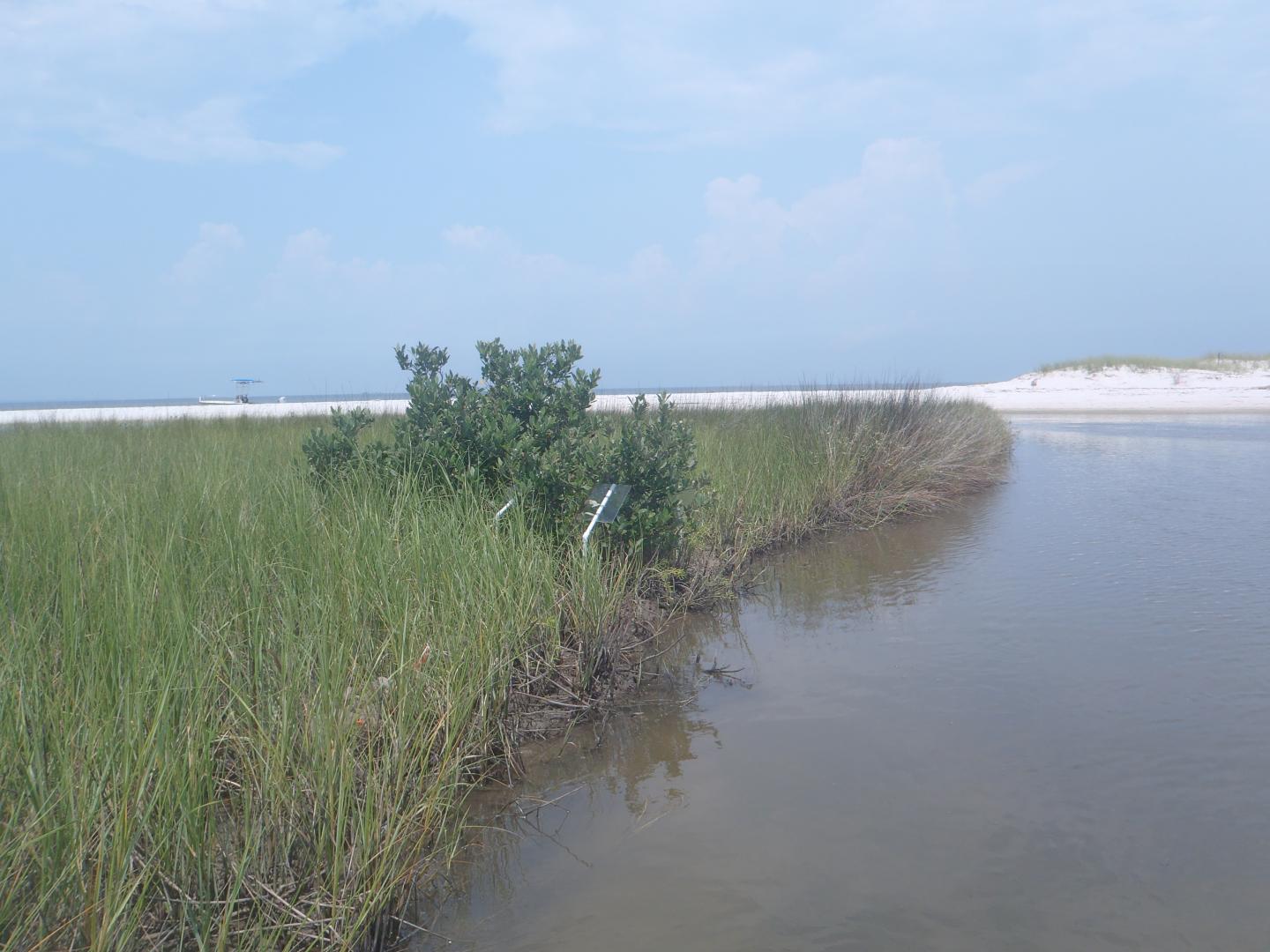
Warmer temperatures are causing more tropical species to move northward. Among these are black mangroves, whose abundance is steadily increasing in the northern Gulf of Mexico. Black mangroves grow as short trees in a dwarf forest and displace many plants common to Gulf salt marshes.

An article published this month, Tropicalization of the barrier islands of the northern Gulf of Mexico: A comparison of herbivory and decomposition rates between smooth cordgrass (Spartina alterniflora) and black mangrove (Avicennia germinans), examines how this tropical species is impacting the salt marsh food web.

In this study, researchers with the Dauphin Island Sea Lab, University of South Alabama, and the Mississippi-Alabama Sea Grant Consortium teamed up to determine the black mangroves ability to shift both grazing and decomposer trophic pathways.

To determine which leaf the grazers prefer, the team took a novel approach by studying cumulative leaf damage of black mangroves and smooth cordgrass. The research team worked off the coast of Mississippi on Horn Island from 2012 to 2013 on three sites.

The sites included sample areas with just smooth cordgrass and those with mixed vegetation. Throughout the study period, the teams took leaf samples to note grazing habits.

“Cumulative leaf damage offers a two-way perspective, for the impact to the plant and for the sustenance of the grazers,” Aaron Macy, a graduate student at the Dauphin Island Sea Lab and the University of South Alabama, explained. “Reconstructing missing leaf portions of Spartina alterniflora, commonly known as smooth cordgrass, allowed us to consider several possible grazing levels and a greater sampling effort over traditional leaf tagging methods.”

Sample site locations on Horn Island. Click here for larger map. (Courtesy Aaron Macy) Along with leaf reconstruction, the research team used more conventional litter bags to assess how quickly leaf material of each species was eaten by bacteria on the salt marsh floor.

Comparing leaf composition from samples, there was a great deal more black mangrove leaf material consumed and ingested than smooth cordgrass. However, more surface area of the smooth cordgrass was removed due to the leaf tips falling off as a byproduct of grazing. The preference for the higher ingestion of black mangrove could be motivated by it’s greater nutritional value.

After the leaves fall off and reach the ground, bacteria and microbes began to decompose them, and these organisms showed a preference for black mangrove leaves.

By understanding the food preference of the salt marsh grazers, scientists can better identify and explain the changes to shifts associated with these economically and ecologically valuable systems.

###

Media Contact
Angela Levins
[email protected]
251-591-1865

Original Source

https://www.disl.org/about/news/eating-in-the-salt-marsh-black-mangroves-vs-smooth-cordgrass

Related Journal Article

http://dx.doi.org/10.1371/journal.pone.0210144

Tags: BiologyClimate ChangeEcology/Environment
Share12Tweet8Share2ShareShareShare2

Related Posts

Hidden Mosquito Diversity Surfaces in Mexico’s Celestún Mangrove Reserve

Hidden Mosquito Diversity Surfaces in Mexico’s Celestún Mangrove Reserve

September 23, 2026
Tiny Moss Frogs Reveal How Skin and Thyroid Evolve Together for Life on Land

Tiny Moss Frogs Reveal How Skin and Thyroid Evolve Together for Life on Land

September 23, 2026

New Genetic Factor Analysis Method Reveals Hidden Shared Roots of Disease

September 23, 2026

Heavy Water Reveals How E. coli Rewires Its Metabolism Under Isotopic Stress

September 23, 2026
Please login to join discussion

POPULAR NEWS

  • Soft Robotic Sleeves Could Restore Bladder Control and End Catheter Dependence

    29 shares
    Share 12 Tweet 7
  • Mimicking Cell Membranes With Tiny Polymers to Regrow Blood Vessels

    29 shares
    Share 12 Tweet 7
  • How Daily Environmental Swings Shape the Brain: Inside the Day2Day Environment Study

    29 shares
    Share 12 Tweet 7
  • Hidden Mosquito Diversity Surfaces in Mexico’s Celestún Mangrove Reserve

    29 shares
    Share 12 Tweet 7

About

We bring you the latest biotechnology news from best research centers and universities around the world. Check our website.

Follow us

Recent News

Soft Robotic Sleeves Could Restore Bladder Control and End Catheter Dependence

Mimicking Cell Membranes With Tiny Polymers to Regrow Blood Vessels

How Daily Environmental Swings Shape the Brain: Inside the Day2Day Environment Study

Subscribe to Blog via Email

Enter your email address to subscribe to this blog and receive notifications of new posts by email.

Join 85 other subscribers
  • Contact Us

Bioengineer.org © Copyright 2023 All Rights Reserved.

Welcome Back!

Login to your account below

Forgotten Password?

Retrieve your password

Please enter your username or email address to reset your password.

Log In
No Result
View All Result
  • Homepages
    • Home Page 1
    • Home Page 2
  • News
  • National
  • Business
  • Health
  • Lifestyle
  • Science

Bioengineer.org © Copyright 2023 All Rights Reserved.