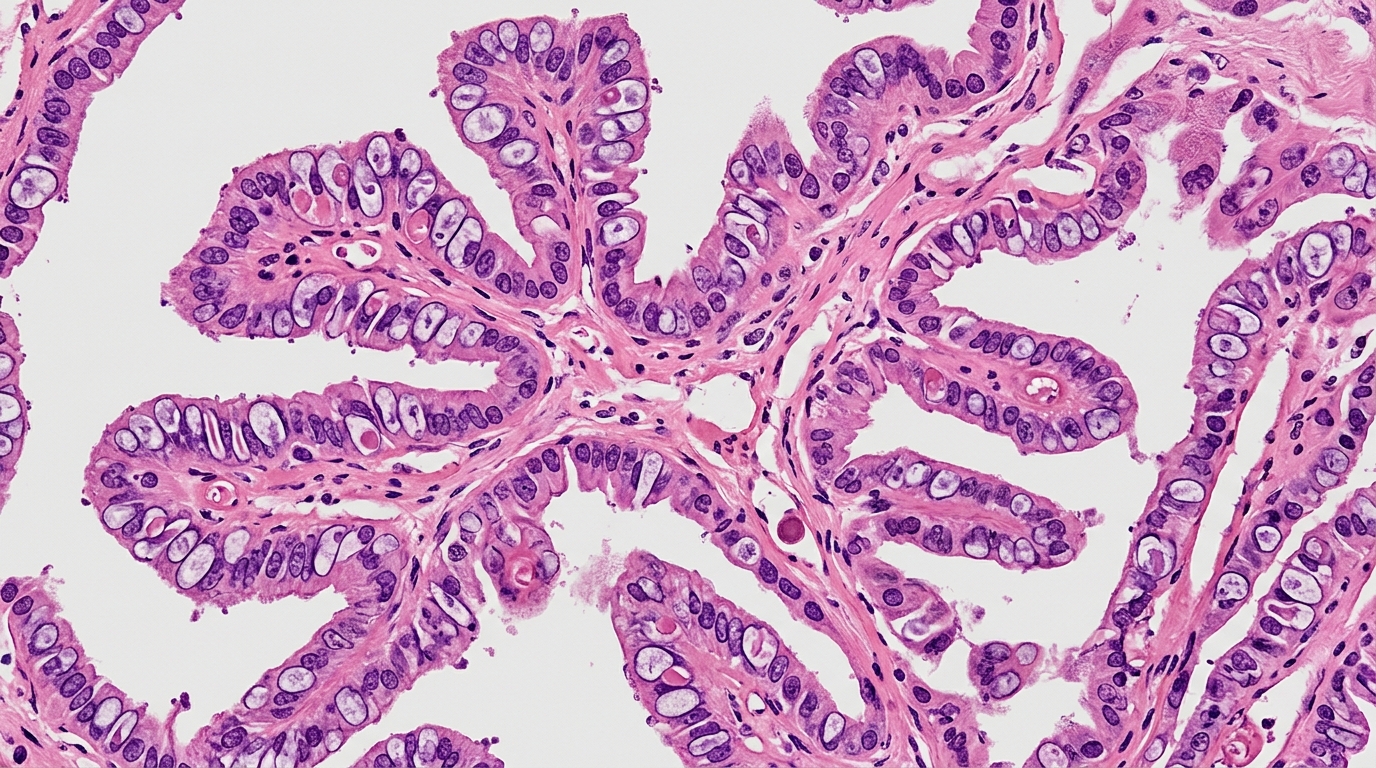
In a retrospective study of 173 consecutive papillary thyroid carcinoma cases reclassified under the World Health Organization 2022 framework, lymphatic invasion and tumor size of at least 2 centimeters were identified as the sole independent predictors of both extrathyroidal extension and lymph node metastasis. The findings, published in Diagnostic Pathology, highlight the critical role of conventional histological staging even as modern classification systems refine subtype definitions.
Papillary thyroid carcinoma is recognized as biologically heterogeneous, but researchers noted that its prognostic diversity has been inadequately captured by conventional staging systems. Although the WHO 2022 classification established differentiated high-grade thyroid carcinoma and mandated systematic subtyping across tumors, institutional data from South Asian medical centers have remained sparse. To evaluate the framework in this population, investigators analyzed cases from a South Indian tertiary center.
The study cohort comprised 173 consecutive papillary thyroid carcinoma patients reclassified according to the WHO 2022 guidelines and staged using the American Joint Committee on Cancer 8th edition criteria. Researchers evaluated preoperative assessments from the American College of Radiology Thyroid Imaging Reporting and Data System and The Bethesda System for Reporting Thyroid Cytopathology, alongside pathological markers including peri- and intratumoral tumor-infiltrating lymphocytes, neutrophil-to-lymphocyte ratio, and tumor budding. Statistical analyses included correspondence analysis, receiver operating characteristic curves, and binary logistic regression.
Histological reclassification revealed that classic papillary thyroid carcinoma predominated, representing 68.8 percent of the cohort with 119 cases. Differentiated high-grade thyroid carcinoma was identified in 3.5 percent of cases, and aggressive subtypes collectively accounted for 9.2 percent. While correspondence analysis showed directional geometric positioning of WHO subtypes across imaging and cytopathology categories, formal chi-square tests showed no statistically significant differences across WHO groups for imaging categories (chi-square 5.24, p = 0.454) or cytopathology categories (chi-square 11.6, p = 0.232).
Preoperative imaging evaluations using an ultrasound score of 4 or higher yielded a sensitivity of 81.8 percent, a specificity of 27.9 percent, a positive predictive value of 10.7 percent, and a negative predictive value of 93.5 percent for aggressive subtype detection. These figures indicated that the clinical value of the scoring threshold centered on excluding high-grade disease due to its high negative predictive value, rather than providing positive confirmation. In pathological evaluations, tumor budding was associated with extrathyroidal extension (p = 0.036) and lymphatic invasion (p = 0.004), while an elevated neutrophil-to-lymphocyte ratio correlated with nodal metastasis (p = 0.037) and lymphatic invasion (p = 0.015).
Multivariate analysis demonstrated that lymphatic invasion, with odds ratios ranging from 3.06 to 4.21, and tumor size of 2 centimeters or larger, with odds ratios from 2.72 to 3.00, were the only independent variables associated with both extrathyroidal extension and lymph node metastasis. Recurrence-free survival showed no significant differences across neutrophil-to-lymphocyte ratios, tumor budding groups, or WHO subtypes over a median follow-up of 18 months, leading the authors to emphasize the primary clinical importance of thorough histological evaluation.
Subject of Research: Papillary thyroid carcinoma classification and predictors of tumor spread
Article Title: Papillary thyroid carcinoma under the WHO 2022 framework: subtype distribution, preoperative correlates and pathological associates of extrathyroidal extension and nodal metastasis
Article References: Benny, R. T., Francis, S. S., Sharma, S., Kudva, R., & Pillai, S. (2026). Papillary thyroid carcinoma under the WHO 2022 framework: subtype distribution, preoperative correlates and pathological associates of extrathyroidal extension and nodal metastasis. Diagnostic Pathology. https://doi.org/10.1186/s13000-026-01851-2
Image Credits: AI Generated
DOI: 10.1186/s13000-026-01851-2
Keywords: papillary thyroid carcinoma, WHO 2022 classification, extrathyroidal extension, lymph node metastasis, TI-RADS, TBSRTC, tumor budding, pathology, Papillary, thyroid, carcinoma, under
News Source: Nathaniel Bowman. (November 7, 2026). Study Evaluates Papillary Thyroid Carcinoma Subtypes Under WHO 2022 Framework. Scienmag.