When people who have survived a stroke volunteer for rehabilitation research, they are not merely offering their bodies as data points. A new study from the University of Cincinnati suggests they want something far richer from the experience: genuine relationships with the researchers who study them, a clear understanding of how their participation could help others, and studies that emphasize what they can still accomplish rather than cataloging what they have lost. The research, led by corresponding author Sarah Schwab-Farrell and published in the journal Health Expectations, offers a candid look at why carefully controlled laboratory studies can leave participants feeling disconnected, and how co-designing research with stroke survivors might change that.
Schwab-Farrell, an assistant professor in UC’s College of Allied Health Sciences, brings an unusual dual expertise to the question. She specializes in physical therapy and experimental psychology, and her past work has centered on rigorously designed studies that collect precise data about how people with disability move, including the movement capabilities of stroke survivors. Over several years of running such studies, she noticed a troubling pattern. Participants seemed engaged while immersed in virtual reality environments or tracked by motion capture systems, but the enthusiasm did not last. They would leave the laboratory without feeling that they understood more about their own disability, or without seeing how the carefully controlled measurements collected in the session would practically help other people living with disability.
That observation coincided with Schwab-Farrell’s deepening engagement with disability studies literature, a field that seeks to prioritize the voices of people with disability rather than treating them as passive subjects. The combination proved transformative for how she thought about her own role. She has described gradually coming to understand that if she truly wanted to be an impactful disability researcher, she needed not only to study disability but also to make sure that disabled voices were an active part of the research being created. The scientific impact and merit of a study matter in an academic context, she has noted, but impactful research should also matter to the people whose lives are directly affected by its outcomes. Through this reflection, she identified a gap in her own work: she had brought her research expertise to her studies, but the pragmatic lived experience of people with disabilities had been missing.
To address that missing component, Schwab-Farrell and her colleagues designed a two-year project aimed at building a study from scratch with co-researchers who have had a stroke. The first-year discovery phase involved four iterative focus groups with five individuals, each of whom had participated in an average of eight prior stroke research studies at the University of Cincinnati. That depth of prior experience was deliberate. The team wanted the group to draw on a wide variety of research experiences so they could articulate desired study features, and so that a broad range of stroke-related disability would be represented in the findings. The goal was to get a handle on what people with stroke value in research, their likes and dislikes, before designing anything new.
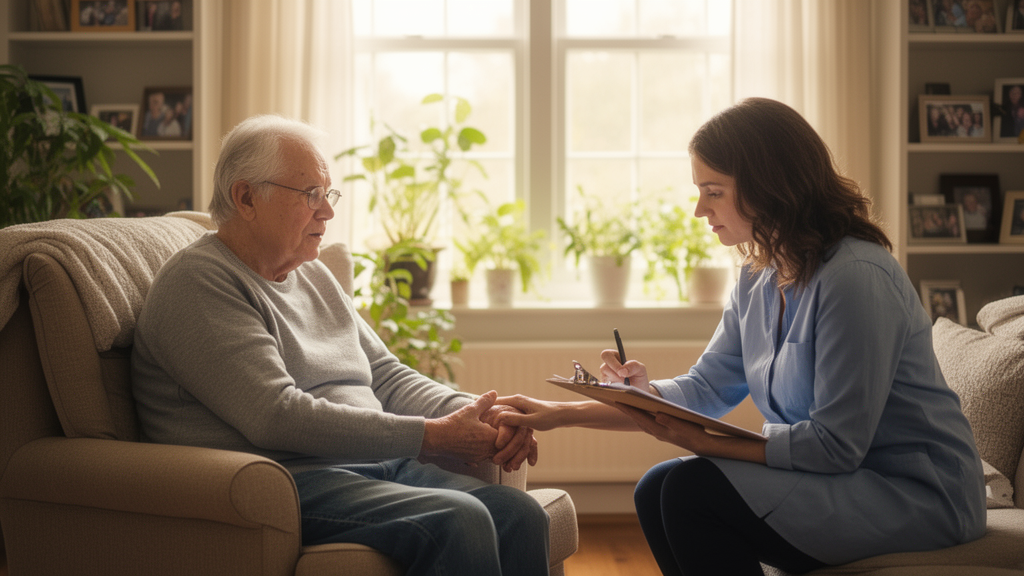
The most striking finding, according to Schwab-Farrell, was that participants value peer relationships and would like to see those relationships more deeply integrated into study designs. After a stroke, relationships change, and people with stroke build a new support network. For those involved in research experiences, researchers become part of that network. This reframes the researcher-participant dynamic in a technically important way: rather than a one-directional exchange in which data flows from patient to laboratory, the interaction becomes a sustained social relationship with emotional and practical significance for the participant. Study designs that ignore this dimension may be missing one of the very features that makes participation meaningful and keeps stroke survivors engaged over time.
The participant experts also emphasized the value of being fully informed participants. That means knowing the potential benefits of a study, understanding its relevance, and seeing how the work could help other people down the road. In practical terms, this suggests that informed consent processes in rehabilitation research should go beyond legal disclosure and actively communicate the real-world translation of the data being collected. Participants in the focus groups wanted to visualize the downstream impact of their contribution, a desire that Schwab-Farrell’s earlier motion capture and virtual reality studies had failed to satisfy despite their technical sophistication.
A third theme concerned the orientation of the studies themselves. Individuals with stroke appreciated capacity-oriented studies, meaning research that emphasizes what people with stroke can do rather than focusing exclusively on deficits. Schwab-Farrell has said she thinks it is important for researchers to address this and find ways that success can occur in studies, or ways that de-emphasize individual deficits. This finding carries technical implications for outcome selection in physical and occupational therapy research. Measures framed around residual impairment can implicitly define success as the recovery of pre-stroke function, while capacity-oriented framing allows participants to demonstrate achievement within their current abilities, potentially improving engagement, retention, and the psychological experience of taking part.
The project is now moving into its next phase. Schwab-Farrell and her team of academic and stroke community researchers are using the first-year findings to design a physical or occupational therapy study that is meaningful and relevant to participants. The group held its first co-design workshop recently, with a second workshop scheduled for later in October to determine the research question. Schwab-Farrell has said the team already has some great ideas floating around and that she is excited to see what the group comes up with. This iterative structure, in which focus group findings directly shape the design of a subsequent intervention study, is an example of participatory research methodology in action rather than consultative engagement after the fact.
On a larger scale, Schwab-Farrell argues the findings can be applied by any stroke or disability researchers looking to make their studies more collaborative. In her view, collaboration should be more than consultative and more than checking a box; it should genuinely involve people with disability in all aspects of study design and production, from the development of a research question all the way to dissemination and translation. That principle, if adopted widely, would change the standard workflow of rehabilitation science. Community co-researchers would sit at the table when hypotheses are formed, when outcome measures are chosen, when protocols are piloted, and when results are communicated back to the disability community.
The study, titled ‘Some of Them Were Created by People Who Have Never Had a Stroke’: Understanding Desired Physical and Occupational Therapy Research Study Features for People With Chronic Stroke, was published in Health Expectations on 8 October 2026, and the authors declare no conflicts of interest. For a field in which stroke survivors are often recruited repeatedly for movement analyses, therapy trials, and technology evaluations, the message from this discovery phase is clear. The people who volunteer for stroke research want to form relationships, understand the real-world impact of their participation, and take part in studies that recognize their capabilities. Building those features into research design, Schwab-Farrell’s team suggests, is not a courtesy but a prerequisite for studies that genuinely matter to the people whose lives they aim to improve.
Subject of Research: Patient priorities and co-design in stroke rehabilitation research
Article Title: University of Cincinnati study finds patients participating in stroke research value forming relationships and visualizing real-world impact
Article References: University of Cincinnati study finds patients participating in stroke research value forming relationships and visualizing real-world impact. Original publication (Bibliographic details unavailable.)
Image Credits: AI Generated
DOI: Not provided
Keywords: stroke, stroke rehabilitation, disability research, participatory research, co-design, patient engagement, physical therapy, occupational therapy, Health Expectations, University of Cincinnati, shared decision-making, peer relationships
News Source: Cassandra Pierce. (October 17, 2026). Stroke survivors want research built around relationships and real-world impact, University of Cincinnati study finds. Scienmag.