• HOME
  • NEWS
  • EXPLORE
    • CAREER
      • Companies
      • Jobs
    • EVENTS
    • iGEM
      • News
      • Team
    • PHOTOS
    • VIDEO
    • WIKI
  • BLOG
  • COMMUNITY
    • FACEBOOK
    • INSTAGRAM
    • TWITTER
Tuesday, May 5, 2026
BIOENGINEER.ORG
No Result
View All Result
  • Login
  • HOME
  • NEWS
  • EXPLORE
    • CAREER
      • Companies
      • Jobs
        • Lecturer
        • PhD Studentship
        • Postdoc
        • Research Assistant
    • EVENTS
    • iGEM
      • News
      • Team
    • PHOTOS
    • VIDEO
    • WIKI
  • BLOG
  • COMMUNITY
    • FACEBOOK
    • INSTAGRAM
    • TWITTER
  • HOME
  • NEWS
  • EXPLORE
    • CAREER
      • Companies
      • Jobs
        • Lecturer
        • PhD Studentship
        • Postdoc
        • Research Assistant
    • EVENTS
    • iGEM
      • News
      • Team
    • PHOTOS
    • VIDEO
    • WIKI
  • BLOG
  • COMMUNITY
    • FACEBOOK
    • INSTAGRAM
    • TWITTER
No Result
View All Result
Bioengineer.org
No Result
View All Result
Home NEWS Science News Biology

Stress has an odor and dogs can smell it — New research

Bioengineer by Bioengineer
September 28, 2022
in Biology
Reading Time: 2 mins read
0
Clara Wilson with Leon the dog
Share on FacebookShare on TwitterShare on LinkedinShare on RedditShare on Telegram

Dogs can smell stress from human sweat and breath, a new study by Queen’s University Belfast researchers has found.
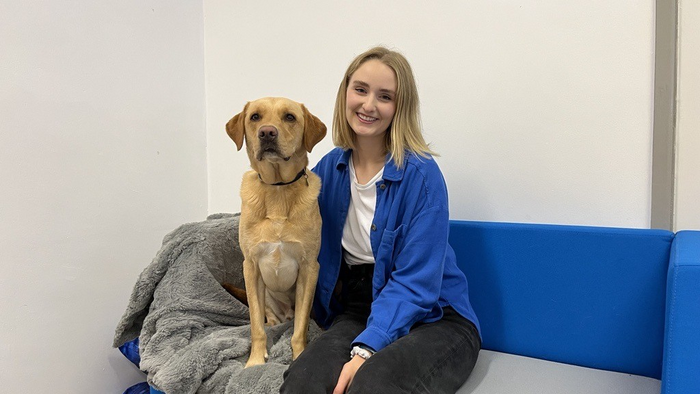
Clara Wilson with Leon the dog

Credit: Clara Wilson, Queen’s University Belfast

Dogs can smell stress from human sweat and breath, a new study by Queen’s University Belfast researchers has found.

The study involved four dogs from Belfast – Treo, Fingal, Soot and Winnie – and 36 people.

Researchers collected samples of sweat and breath from participants before and after they did a difficult maths problem. They self-reported their stress levels before and after the task and researchers only used samples where the person’s blood pressure and heart rate had increased.

The dogs were taught how to search a scent line-up and alert researchers to the correct sample. The stress and relaxed samples were then introduced but at this stage the researchers didn’t know if there was an odour difference that dogs could detect.

In every test session, each dog was given one person’s relaxed and stressed samples, taken only four minutes apart. All of the dogs were able to correctly alert the researchers to each person’s stress sample.

Clara Wilson, a PhD student in the School of Psychology at Queen’s, explains: “The findings show that we, as humans, produce different smells through our sweat and breath when we are stressed and dogs can tell this apart from our smell when relaxed – even if it is someone they do not know. 

“The research highlights that dogs do not need visual or audio cues to pick up on human stress. This is the first study of its kind and it provides evidence that dogs can smell stress from breath and sweat alone, which could be useful when training service dogs and therapy dogs. 

“It also helps to shed more light on the human-dog relationship and adds to our understanding of how dogs may interpret and interact with human psychological states.”

One of the super sniffer canines that took part in the study was Treo, a two-year old Cocker Spaniel. His owner Helen Parks says: “As the owner of a dog that thrives on sniffing, we were delighted and curious to see Treo take part in the study. We couldn’t wait to hear the results each week when we collected him. He was always so excited to see the researchers at Queen’s and could find his own way to the laboratory. 

“The study made us more aware of a dog’s ability to use their nose to “see” the world. We believe this study really developed Treo’s ability to sense a change in emotion at home. The study reinforced for us that dogs are highly sensitive and intuitive animals and there is immense value in using what they do best – sniffing!”

The research findings have been published in PLOS ONE. The study was carried out by Clara Wilson (PhD researcher) and Kerry Campbell (MSc student) in the School of Psychology. They were supervised by Catherine Reeve, with support on collecting the human physiological measures from Zachary Petzel.


Journal

PLoS ONE

Article Publication Date

28-Sep-2022

Share12Tweet8Share2ShareShareShare2

Related Posts

GWAS Uncovers SUBER GENE1 Role in Suberization — Biology

GWAS Uncovers SUBER GENE1 Role in Suberization

May 5, 2026
New Study from The Morton Arboretum Reveals Why Mexico and Central America’s Mountain Forests Are Oak Tree Hotspots — Biology

New Study from The Morton Arboretum Reveals Why Mexico and Central America’s Mountain Forests Are Oak Tree Hotspots

May 5, 2026

Gerald Joyce Elected to Prestigious American Philosophical Society

May 5, 2026

Author Correction: Lipopeptide Immunity Linked to Membrane Remodelling

May 4, 2026

POPULAR NEWS

  • Research Indicates Potential Connection Between Prenatal Medication Exposure and Elevated Autism Risk

    834 shares
    Share 334 Tweet 209
  • New Study Reveals Plants Can Detect the Sound of Rain

    719 shares
    Share 287 Tweet 180
  • Scientists Investigate Possible Connection Between COVID-19 and Increased Lung Cancer Risk

    67 shares
    Share 27 Tweet 17
  • Salmonella Haem Blocks Macrophages, Boosts Infection

    61 shares
    Share 24 Tweet 15

About

We bring you the latest biotechnology news from best research centers and universities around the world. Check our website.

Follow us

Recent News

ZNF473 Drives Colorectal Cancer, Boosts Chemoresistance

All-Metal Biodegradable Microrobots Set to Revolutionize Drug Delivery and Biopsy Techniques

Brain Health Alert: Microplastic Accumulation in the Human Brain Linked to Stroke and Dementia; Apheresis Emerges as a Promising Removal Method

Subscribe to Blog via Email

Enter your email address to subscribe to this blog and receive notifications of new posts by email.

Join 82 other subscribers
  • Contact Us

Bioengineer.org © Copyright 2023 All Rights Reserved.

Welcome Back!

Login to your account below

Forgotten Password?

Retrieve your password

Please enter your username or email address to reset your password.

Log In
No Result
View All Result
  • Homepages
    • Home Page 1
    • Home Page 2
  • News
  • National
  • Business
  • Health
  • Lifestyle
  • Science

Bioengineer.org © Copyright 2023 All Rights Reserved.