• HOME
  • NEWS
  • EXPLORE
    • CAREER
      • Companies
      • Jobs
    • EVENTS
    • iGEM
      • News
      • Team
    • PHOTOS
    • VIDEO
    • WIKI
  • BLOG
  • COMMUNITY
    • FACEBOOK
    • INSTAGRAM
    • TWITTER
Sunday, August 23, 2026
BIOENGINEER.ORG
No Result
View All Result
  • Login
  • HOME
  • NEWS
  • EXPLORE
    • CAREER
      • Companies
      • Jobs
        • Lecturer
        • PhD Studentship
        • Postdoc
        • Research Assistant
    • EVENTS
    • iGEM
      • News
      • Team
    • PHOTOS
    • VIDEO
    • WIKI
  • BLOG
  • COMMUNITY
    • FACEBOOK
    • INSTAGRAM
    • TWITTER
  • HOME
  • NEWS
  • EXPLORE
    • CAREER
      • Companies
      • Jobs
        • Lecturer
        • PhD Studentship
        • Postdoc
        • Research Assistant
    • EVENTS
    • iGEM
      • News
      • Team
    • PHOTOS
    • VIDEO
    • WIKI
  • BLOG
  • COMMUNITY
    • FACEBOOK
    • INSTAGRAM
    • TWITTER
No Result
View All Result
Bioengineer.org
No Result
View All Result
Home NEWS Science News Chemistry

Stopping inflammation in its tracks: A leap forward for new anti-inflammatory drugs

Bioengineer by Bioengineer
May 13, 2019
in Chemistry
Reading Time: 2 mins read
0
IMAGE
Share on FacebookShare on TwitterShare on LinkedinShare on RedditShare on Telegram

IMAGE

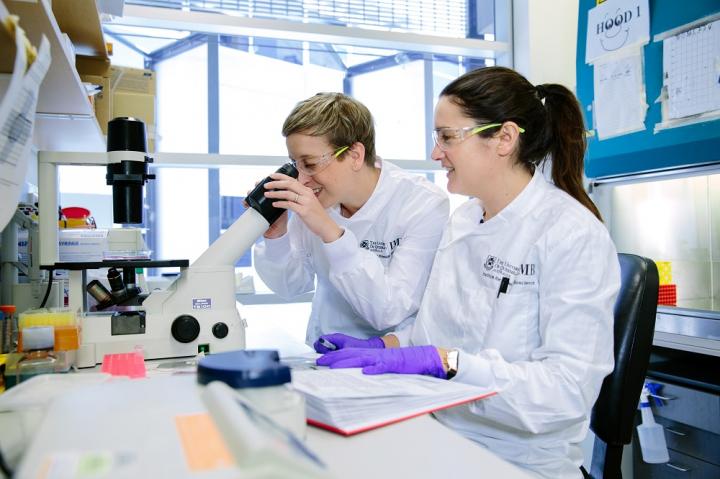
Credit: University of Queensland

Treatments for chronic inflammatory diseases are one step closer as University of Queensland researchers discover a way to stop inflammation in its tracks.

Associate Professor Kate Schroder and Dr Rebecca Coll from UQ’s Institute for Molecular Bioscience and Professor Avril Robertson from UQ’s School of Chemistry and Molecular Biosciences led the study, which will inform the design of new drugs to stop the formation of a protein complex, called the inflammasome, which drives inflammation.

Dr Coll, who is now a Lecturer at the Wellcome-Wolfson Institute for Experimental Medicine at Queen’s University Belfast, said the inflammasome was important in protecting our bodies from infection, but is also a key driver of unhealthy inflammation.

“Inflammation helps our bodies heal following infection, but when the inflammasome is not switched off, inflammation becomes damaging.

“Uncontrolled inflammation results in chronic diseases, such as Parkinson’s disease, Alzheimer’s disease and respiratory diseases such as asthma,” she said.

Associate Professor Schroder said the team’s exciting discovery gave new insight into how to stop inflammation at the molecular level.

“We previously identified a small molecule, MCC950, that inhibits the inflammasome to block inflammation in disease but, until now, we did not understand how it worked,” she said.

“We discovered that MCC950 binds directly to the inflammasome and inactivates it, turning off inflammation.

“Now that we understand how a small molecule can inhibit the inflammasome, we are very excited about the potential of inflammasome inhibitors as anti-inflammatory drugs.

Professor Robertson said “UQ start-up Inflazome Ltd, which is developing targeted therapies for inflammatory diseases, had announced its plans to commence clinical trials of their inflammasome inhibitors in 2019, and other companies are competing in this space.

“We are keen to see results of these trials and hope that our discovery can lead to the efficient design of new molecules as anti-inflammatory drugs of the future,” she said.

###

The research was published in the scientific journal Nature Chemical Biology and supported by the National Health and Medical Research Council of Australia and the Australian Research Council.

Media Contact
Jane Ilsley
[email protected]

Related Journal Article

http://dx.doi.org/10.1038/s41589-019-0277-7

Tags: Cell BiologyMedicine/HealthMolecular BiologyPharmaceutical Science
Share12Tweet8Share2ShareShareShare2

Related Posts

Scientists uncover design rules for high-performance thermoelectric materials

Scientists uncover design rules for high-performance thermoelectric materials

August 22, 2026
Bringing Optical Fibre Materials to Photonic Chips

Bringing Optical Fibre Materials to Photonic Chips

August 22, 2026

Nanoscience and Liquid Crystals Unite in Functional Hybrids With Transformative Applications

August 22, 2026

Designing Better Biomedical Hydrogels Through Molecular Building Blocks and Hierarchical Structures

August 22, 2026
Please login to join discussion

POPULAR NEWS

  • Dual-oxygen pancreatic cancer organoids mirror basal-classical diversity, spatial transcriptomics confirms

    29 shares
    Share 12 Tweet 7
  • Tirzepatide Versus GLP-1 Agonists for Stroke Risk in Atrial Fibrillation and Diabetes

    29 shares
    Share 12 Tweet 7
  • Real-world study examines psychotic complications of subcutaneous foslevodopa/foscarbidopa infusions in 198 patients

    29 shares
    Share 12 Tweet 7
  • Blood-flow signals from liver vessels direct region-specific liver function through Wnt pathways

    29 shares
    Share 12 Tweet 7

About

We bring you the latest biotechnology news from best research centers and universities around the world. Check our website.

Follow us

Recent News

Dual-oxygen pancreatic cancer organoids mirror basal-classical diversity, spatial transcriptomics confirms

Tirzepatide Versus GLP-1 Agonists for Stroke Risk in Atrial Fibrillation and Diabetes

Real-world study examines psychotic complications of subcutaneous foslevodopa/foscarbidopa infusions in 198 patients

Subscribe to Blog via Email

Enter your email address to subscribe to this blog and receive notifications of new posts by email.

Join 85 other subscribers
  • Contact Us

Bioengineer.org © Copyright 2023 All Rights Reserved.

Welcome Back!

Login to your account below

Forgotten Password?

Retrieve your password

Please enter your username or email address to reset your password.

Log In
No Result
View All Result
  • Homepages
    • Home Page 1
    • Home Page 2
  • News
  • National
  • Business
  • Health
  • Lifestyle
  • Science

Bioengineer.org © Copyright 2023 All Rights Reserved.