

• HOME
  • NEWS
  • EXPLORE
    • CAREER
      • Companies
      • Jobs
    • EVENTS
    • iGEM
      • News
      • Team
    • PHOTOS
    • VIDEO
    • WIKI
  • BLOG
  • COMMUNITY
    • FACEBOOK
    • INSTAGRAM
    • TWITTER
Monday, May 25, 2026
BIOENGINEER.ORG
No Result
View All Result
  • Login
  • HOME
  • NEWS
  • EXPLORE
    • CAREER
      • Companies
      • Jobs
        • Lecturer
        • PhD Studentship
        • Postdoc
        • Research Assistant
    • EVENTS
    • iGEM
      • News
      • Team
    • PHOTOS
    • VIDEO
    • WIKI
  • BLOG
  • COMMUNITY
    • FACEBOOK
    • INSTAGRAM
    • TWITTER
  • HOME
  • NEWS
  • EXPLORE
    • CAREER
      • Companies
      • Jobs
        • Lecturer
        • PhD Studentship
        • Postdoc
        • Research Assistant
    • EVENTS
    • iGEM
      • News
      • Team
    • PHOTOS
    • VIDEO
    • WIKI
  • BLOG
  • COMMUNITY
    • FACEBOOK
    • INSTAGRAM
    • TWITTER
No Result
View All Result
Bioengineer.org
No Result
View All Result
Home NEWS Science News Biology

Stopping a tiny — and deadly — fly in its tracks

Bioengineer by Bioengineer
July 5, 2018
in Biology
Reading Time: 2 mins read
0
Share on FacebookShare on TwitterShare on LinkedinShare on RedditShare on Telegram
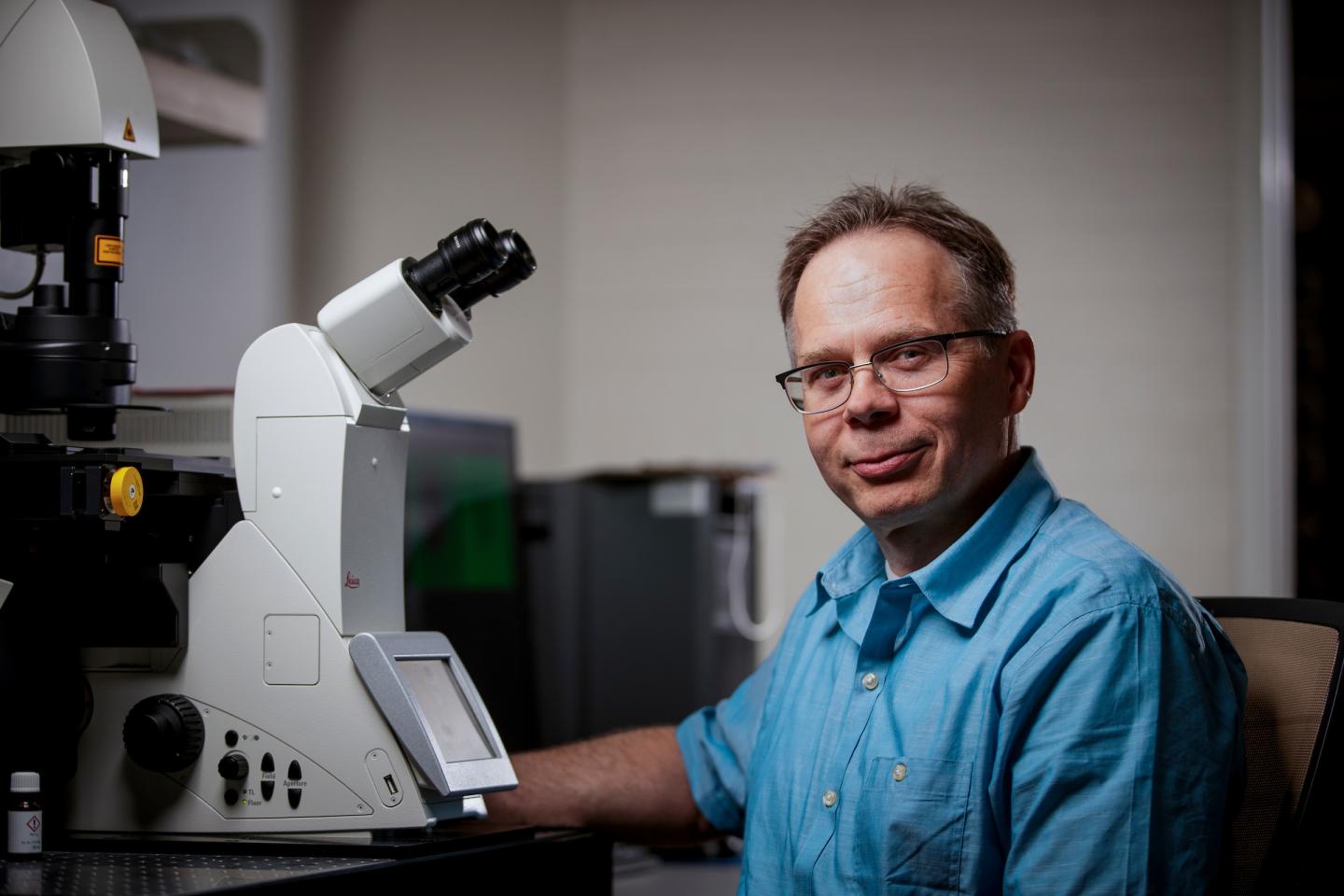
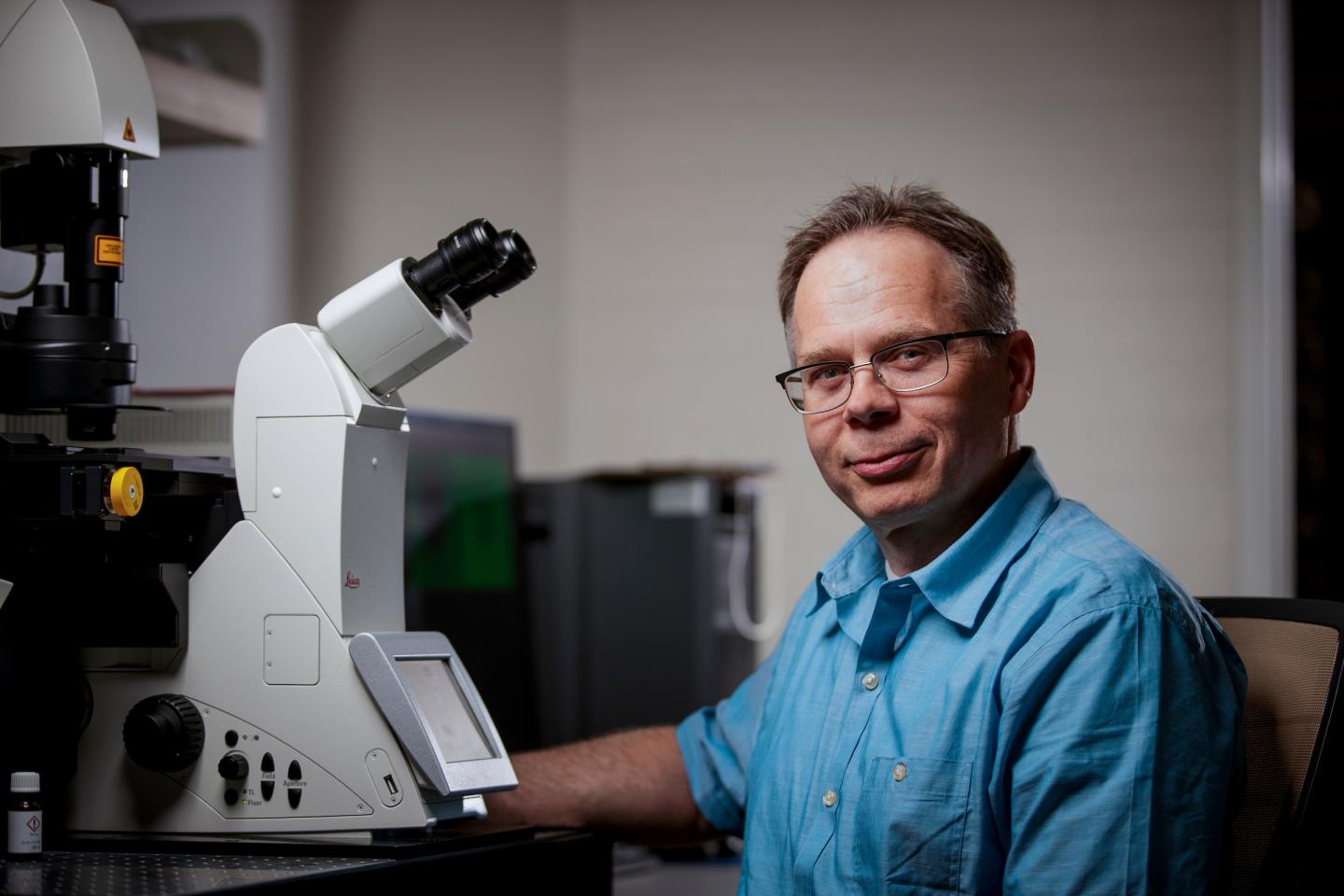
IMAGE

Credit: Tyler Richardson/BYU Photo

Sixty million people in sub-Saharan Africa live at risk of African sleeping sickness, a disease caused by parasites transmitted through the tsetse fly. In the late stage of the disease, when the parasite crosses the blood-brain barrier, the results are oftentimes fatal.

Brigham Young University chemistry professor Ken Christensen, students and collaborators at Clemson University have developed an innovative technique using biosensors to monitor the glucose level of Trypanasoma brucei parasites, which could in turn help develop treatments for the sleeping sickness.

"The unique thing about the T. brucei parasite is that it relies on host glucose for survival," said Christensen, whose study was recently published in top-ranked journal PLOS Neglected Tropical Diseases. "We know that if you could deprive the parasites in the blood stream of glucose, the parasite will die."

For the study, Christensen tested glucose levels to monitor the metabolism of the parasites using a genetically-encoded glucose biosensor. The biosensor combines three proteins: a cyan florescent protein, a glucose-binding protein, and a yellow florescent protein.

When the glucose-binding protein interacts with glucose in the parasite, the two fluorescent proteins move closer together. Christensen then uses the spectroscopic changes to monitor the fluorescence-intensity ratio between the yellow and cyan proteins. When the proteins are far apart, the blue light from the cyan fluorescent protein remains. But as the proteins move closer together, the blue light goes down and the yellow light from the yellow fluorescent protein increases.

This ratio is proportional to the glucose level in the parasite.

The results obtained from the biosensor provide new insights into the process through which parasites acquire and transport glucose for survival and provide a means to identify molecules that disrupt glucose levels in the parasite.

"In the long run, we hope that some of the glucose-disrupting molecules we are now identifying can be developed into therapeutics to treat African sleeping sickness," Christensen said.

###

Media Contact

Andrea Christensen
[email protected]
801-368-4194
@byu

http://www.byu.edu

Original Source

http://news.byu.edu/news/tackling-fatal-disease-chemistry http://dx.doi.org/10.1371/journal.pntd.0006523


Share12Tweet8Share2ShareShareShare2

Related Posts

How Wasp Societies Conquer Intense Leadership Conflicts — Biology

How Wasp Societies Conquer Intense Leadership Conflicts

May 25, 2026
Tiny Blue Octopus from the Galápagos Islands: Small Enough to Fit in the Palm of Your Hand — Biology

Tiny Blue Octopus from the Galápagos Islands: Small Enough to Fit in the Palm of Your Hand

May 25, 2026

Rising Sightings of Blue and Fin Whales in the South East Atlantic

May 23, 2026

New Maps Reveal How European Landscapes Can Simultaneously Promote Climate Action and Biodiversity Conservation

May 22, 2026
Please login to join discussion

POPULAR NEWS

  • ESMO 2025: mRNA COVID Vaccines Enhance Efficacy of Cancer Immunotherapy

    315 shares
    Share 126 Tweet 79
  • New Study Reveals Plants Can Detect the Sound of Rain

    734 shares
    Share 293 Tweet 183
  • Research Indicates Potential Connection Between Prenatal Medication Exposure and Elevated Autism Risk

    847 shares
    Share 339 Tweet 212
  • Common Food Preservatives Associated with Elevated Blood Pressure and Increased Heart Disease Risk

    56 shares
    Share 22 Tweet 14

About

We bring you the latest biotechnology news from best research centers and universities around the world. Check our website.

Follow us

Recent News

Biomarker Changes Post-Cancer Linked to Heart Risk

Neuronal M-current Unveiled by KCNQ2/3 Structure

Brainstem Population Dynamics Control REM Sleep

Subscribe to Blog via Email

Enter your email address to subscribe to this blog and receive notifications of new posts by email.

Join 82 other subscribers
  • Contact Us

Bioengineer.org © Copyright 2023 All Rights Reserved.

Welcome Back!

Login to your account below

Forgotten Password?

Retrieve your password

Please enter your username or email address to reset your password.

Log In
No Result
View All Result
  • Homepages
    • Home Page 1
    • Home Page 2
  • News
  • National
  • Business
  • Health
  • Lifestyle
  • Science

Bioengineer.org © Copyright 2023 All Rights Reserved.