


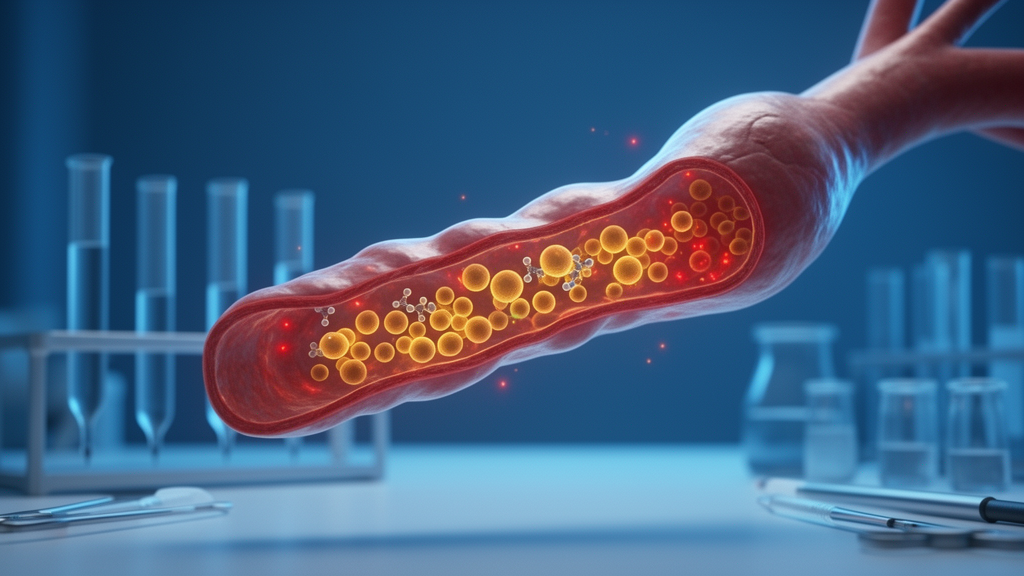
A single targeted drug has shown the ability to slow the growth of dangerous bulges in the body’s main artery — at least in mice. In a study published in BMC Immunology, researchers report that C-176, an inhibitor of the STING signaling pathway, reduced the severity of abdominal aortic aneurysm in a mouse model by suppressing inflammatory macrophage activity within the vessel wall. The work, published on 10 September 2026 as an open-access research article, points to the cGAS-STING pathway as a participant in the inflammatory processes that drive aneurysm formation.
Abdominal aortic aneurysm, or AAA, is a vascular condition characterized by chronic inflammation of the aortic wall. The stimulator of interferon genes, or STING, pathway is known to contribute to a range of inflammatory diseases, but its specific role in AAA pathogenesis had remained unclear. The new study set out to test whether STING signaling participates in the inflammatory mechanisms driving AAA formation.
To model the disease, the team induced AAA in male C57BL/6 mice fed a high-fat diet, using continuous infusion of angiotensin II delivered through osmotic pumps. The animals were divided into three groups: a control group receiving saline, a group receiving angiotensin II to induce AAA, and a group receiving angiotensin II plus daily administration of the STING inhibitor C-176. After 28 days, aortic tissues were collected and analyzed.
The results showed a clear protective effect of the inhibitor. Treatment with C-176 significantly alleviated AAA pathology, as evidenced by reduced aneurysm incidence, limited aortic dilation, and preserved elastic fiber structure.
Mortality told a more cautious story. Although death rates showed a numerical decrease in the treatment group, the authors note that this difference did not reach statistical significance.
At the molecular level, C-176 downregulated the expression of STING, phosphorylated STING, phosphorylated TBK-1, and phosphorylated IRF-3 in aortic tissues compared with the angiotensin II group. These proteins are components of the STING signaling pathway measured in the study. Their reduction indicates that C-176 treatment lowered the expression and activation of these measured pathway proteins in aortic tissues.
The inflammatory cell composition of the aneurysm lesions also shifted. C-176 markedly decreased macrophage infiltration into the aortic wall and lowered the M1/M2 macrophage ratio. Lowering this ratio indicates the treatment tilted the lesion environment away from destructive inflammation. Immunofluorescence analysis further confirmed that STING colocalized with M1 macrophages within AAA lesions, placing the pathway’s activity squarely within the pro-inflammatory cells driving the disease.
Taken together, the authors conclude that the cGAS-STING signaling pathway contributes to AAA pathogenesis, partly by promoting pro-inflammatory M1 macrophage polarization. It also identifies macrophage polarization as a plausible mediator through which STING activity translates into aneurysm progression.
Important limitations frame these results. The study was conducted entirely in a mouse model using angiotensin II infusion in male animals on a high-fat diet, and the drug’s effects in humans with AAA remain untested. The mortality finding was not statistically significant, and the article was shared early as a peer-reviewed accepted manuscript subject to further edits before the final version of record. Even so, by demonstrating that a small-molecule STING inhibitor can reduce aneurysm incidence, limit aortic dilation, preserve elastic fibers, and suppress M1 macrophage-driven inflammation in vivo, the study provides a concrete preclinical foundation for exploring STING pathway inhibition as a therapeutic strategy against abdominal aortic aneurysm.
Subject of Research: The role of the cGAS-STING signaling pathway and macrophage inflammation in abdominal aortic aneurysm progression in mice.
Article Title: The STING inhibitor C-176 attenuates abdominal aortic aneurysm progression by suppressing macrophage inflammation
Article References: Zhou, Y., Chen, X.-D., Wu, Q.-Y., Xiao, Y.-T., Wang, W.-X., Zhou, X., Lv, C., Li, J.-C., & Fu, X.-M. (2026). The STING inhibitor C-176 attenuates abdominal aortic aneurysm progression by suppressing macrophage inflammation. BMC Immunology. https://doi.org/10.1186/s12865-026-00906-9
Image Credits: AI Generated
DOI: 10.1186/s12865-026-00906-9
Keywords: STING, C-176, abdominal aortic aneurysm, macrophages, M1 polarization, cGAS-STING pathway, aortic dilation, angiotensin II, inflammation, mouse model, TBK-1, IRF-3
News Source: Ophelia Keating. (October 30, 2026). STING Inhibitor C-176 Curbs Aneurysm Growth in Mice by Calming Macrophages. Scienmag.



