A narrative review published in Frontiers in Cell and Developmental Biology synthesizes current evidence regarding Signal sequence receptor subunit 4, also known as SSR4 or TRAPδ. The study, authored by researchers from The Affiliated People’s Hospital of Ningbo University, organizes findings according to the specific cell type in which SSR4 is measured, the resulting phenotype, and the protein-processing event proposed to link them. The review concludes that SSR4 functions as a context-dependent component of endoplasmic reticulum protein biogenesis rather than a uniformly oncogenic or protective factor across all biological systems.
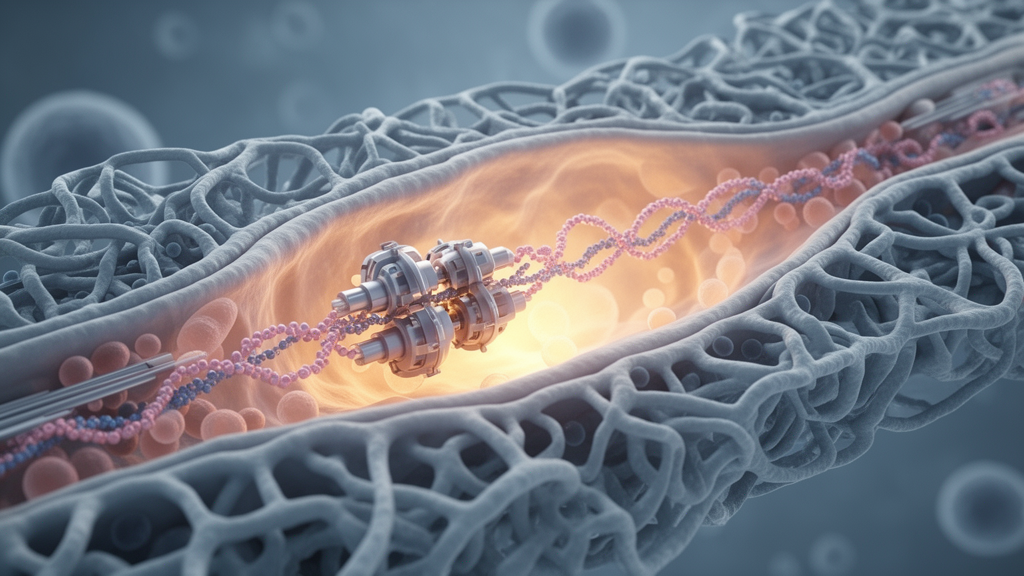
SSR4 encodes the delta subunit of the translocon-associated protein complex, a heterotetramer that assists in the selective import of secretory and membrane proteins into the endoplasmic reticulum. Structural studies place the TRAP complex within the ribosome-associated ER protein-biogenesis apparatus, defining its physical relationship with the Sec61 channel and other translocation machinery components. Substrate selectivity is central to this function, as reconstitution experiments show that TRAP facilitates the translocation of only some precursor proteins in a signal-sequence-dependent manner, with a tendency toward lower hydrophobicity and higher glycine or proline content in the signal peptides.
In cancer cell models, the review highlights that SSR4 perturbation affects cellular fitness, but the mechanistic depth varies significantly across studies. In colorectal cancer cell lines, both transient and stable knockdown of SSR4 reduced viability, anchorage-independent growth, and altered cell-cycle progression. However, attempts to re-express SSR4 in stable knockdown models failed to restore protein levels to endogenous wild-type abundance, leaving the rescue experiment inconclusive. This lack of complete restoration prevents the negative rescue result from being interpreted as definitive evidence against an on-target effect, highlighting a gap in causal attribution.
Studies on gastric cancer models reported higher SSR4 expression in Grade III tumors compared to Grade II, and knockdown in SGC-7901 and BGC-823 cells reduced proliferation and migration. The researchers proposed an oxidative-phosphorylation mechanism, noting changes in ATP content, mitochondrial membrane potential, and the abundance of NDUFB11 and ATP6AP1. However, the review points out that these metabolic assays did not directly measure oxygen-consumption rate or respiratory flux. Furthermore, ATP6AP1 is an accessory component of vacuolar H+-ATPase rather than a subunit of mitochondrial ATP synthase, and the cell lines used have been flagged as problematic HeLa derivatives, limiting the attribution of these findings specifically to gastric cancer.
In B cells, the evidence points to a distinct physiological role in immune maintenance. Conditional deletion of Ssr4 in B-lineage models impaired peripheral B-cell maintenance, resulting in fewer follicular and marginal-zone B cells and weaker immunization responses. This phenotype was accompanied by BAFFR-associated glycosylation changes, attenuated non-canonical NF-κB signaling, and altered lymphoid-cell composition. The review notes that while these findings are biologically plausible given the high secretory demand of B-cell differentiation, they do not establish BAFFR as the sole mediator of the tumor phenotype or tertiary lymphoid structures as the direct cause of altered tumor burden.
The review also examines the biochemical association between SSR4 and DDOST, a non-catalytic component of the oligosaccharyltransferase machinery. Co-immunoprecipitation experiments in mouse B cells and human cell lines support this association, and full-length SSR4 re-expression improved stress and autophagy-related readouts. However, annotation inconsistencies in the primary literature, such as conflicting descriptions of residue substitutions and reporter constructs, limit the precise interpretation of the SSR4-DDOST interface. These discrepancies do not invalidate the observed rescue effects but highlight the need for more rigorous residue-specific validation.
Human genetic evidence from SSR4-related congenital disorders of glycosylation establishes the biological significance of this protein in normal tissues. Most well-characterized cases are male, consistent with X-linked inheritance, while female penetrance remains incompletely defined due to X-chromosome inactivation. Physiological models in pancreatic beta cells show that SSR4 deficiency reduces proinsulin biosynthesis and circulating insulin, yet compensatory increases in peripheral insulin sensitivity limit the systemic metabolic phenotype. This demonstrates that cell-autonomous processing defects do not always translate directly into organism-level phenotypes, a critical consideration for therapeutic interpretation.
Clinical associations in colorectal cancer have focused on the plasma cell compartment, where higher SSR4 expression in tumor-associated plasma cells has been linked to more favorable clinical outcomes. In a 238-patient tissue cohort, the proportion of SSR4-positive plasma cells was associated with better overall survival. A more recent study added a spatially restricted analysis showing that higher SSR4 expression in CD19-positive cells within tertiary lymphoid structures was associated with longer disease-free survival. However, these are retrospective associations that do not establish SSR4 as a predictor of checkpoint-inhibitor benefit or a causal driver of tumor control.
The review distinguishes between prognostic associations and treatment-predictive biomarkers, noting that the SSR4-specific anti-PD-1 analysis included only four patients from an existing longitudinal dataset. This small sample size, consisting entirely of male patients with complete or partial responses, represents a within-responder expression analysis rather than a responder-versus-non-responder comparison. Therefore, SSR4 should be considered separately as a prognostic candidate, a potential pharmacodynamic marker, and a possible treatment-predictive marker, with each requiring distinct validation strategies.
From a translational perspective, the immediate priority is to establish on-target SSR4 dependence and identify the specific phenotype-mediating client proteins. Current pharmacological tools target neighboring ER machinery, such as Sec61 or oligosaccharyltransferase, but none are SSR4-selective. The review emphasizes that genetic SSR4 loss is not equivalent to pharmacological inhibition of these broader pathways. Defining a compartment-specific therapeutic window will require balancing the impairment of malignant-cell function against the potential damage to protective immunity and normal secretory functions.
The distinction between direct cargo proteins and indirect machinery is crucial for understanding SSR4’s role. Some putative clients are terminal cargo proteins, such as secreted factors, while others may be ER-resident processing factors whose loss secondarily alters multiple downstream proteins. Current studies generally do not distinguish between these scenarios, and resolving them will require testing ER entry and maturation of candidate proteins individually. This level of mechanistic detail is necessary before SSR4 can be considered a validated therapeutic target.
Overall, the evidence supports a model where the same protein-processing capacity supports different cellular programs in different compartments. This context-dependency means that SSR4 cannot be viewed as a simple oncogenic switch. The review calls for longitudinal measurements of candidate clients, cell-state composition, and TRAP-complex integrity to distinguish immediate SSR4 dependence from adaptation or selection. These steps are essential for moving from observational associations to causal mechanistic understanding in both cancer and immune biology.
Beyond direct malignant dependencies, upstream regulatory studies in multiple myeloma reveal context-dependent control of SSR4 transcript processing. The non-canonical poly(A) polymerase FAM46C, also known as TENT5C, lengthens the poly(A) tail of SSR4 transcripts in H929 and SKMM1 myeloma cells, whereas catalytic inactivation abolishes this effect. Furthermore, biallelic FAM46C loss reduces SSR4 messenger RNA abundance. However, because SSR4 was not selectively perturbed or restored in FAM46C-deficient backgrounds, the specific phenotypic consequences of this post-transcriptional regulation remain unresolved. Family-level comparisons in colorectal cancer further illustrate this mechanistic gap: while knockdown of the related subunit SSR2 reduced cell viability and caused G2/M arrest that was reversed by restoring the downstream effector IRE1α, no comparable downstream rescue has been demonstrated for SSR4.
Computational profiling and tissue analyses in other malignancies similarly highlight the boundary between correlative expression and demonstrated functional dependency. In esophageal squamous cell carcinoma, higher SSR4 expression correlated with advanced stage, lymph-node metastasis, and poorer survival, yet multivariable Cox analysis failed to confirm it as an independent prognostic factor. Single-cell mapping in that disease localized elevated SSR4 primarily to tumor-associated plasma cells, and while computational algorithms inferred altered MIF, CD74, and CXCR4 communication, these pathways were never tested through directed genetic perturbation. SSR4 has also appeared in multigene prognostic frameworks, including an eight-gene endoplasmic reticulum stress signature in lung adenocarcinoma and a six-gene immune model in kidney cancer, as well as in breast-cancer single-cell data. A related pathology model analyzing 299 whole-slide images achieved a cross-validated mean area under the curve of 0.685, describing the computational image algorithm rather than a validated molecular assay.
Translational interest has also extended to antibody biotechnology, where SSR4 overexpression in CHO-S production cells remodeled the N-glycosylation profile of an anti-CLDN6 immunoglobulin G1. Specifically, SSR4 overexpression reduced high-mannose glycoforms at asparagine 297 without significantly altering core fucosylation or sialylation, accompanied by enhanced complement-dependent cytotoxicity and increased signaling in a CD16A reporter cell line. Nonetheless, the authors did not verify whether the loss of high-mannose structures directly drove these functional gains, and evaluations relied on surrogate reporter assays rather than primary natural killer cell lysis. Additionally, mouse serum glycomic analyses pooled samples from three animals into a single run, indicating that translation requires testing across independent clones and manufacturing validation.
Finally, the review emphasizes that small molecules targeting neighboring endoplasmic reticulum machinery cannot serve as proxies for SSR4 inhibition. Agents such as cotransin, mycolactone, and apratoxin A inhibit Sec61 translocation, while NGI-1 suppresses oligosaccharyltransferase activity. However, none exhibits direct target engagement or subunit selectivity for SSR4. Defining therapeutic utility will require developing selective chemical tools, verifying on-target client rescue, and demonstrating that malignant cells can be impaired without compromising normal tissue functions.
Subject of Research: The context-dependent role of SSR4 in endoplasmic reticulum protein processing, tumor-cell fitness, and B-cell immunity.
Article Title: SSR4 in cancer: endoplasmic reticulum protein processing, tumor-cell fitness, and B-cell immunity
Article References: Chen, L., Cai, H., Yu, W., & Wang, H. (2026). SSR4 in cancer: endoplasmic reticulum protein processing, tumor-cell fitness, and B-cell immunity. Frontiers in Cell and Developmental Biology, 14, Article 2006411. https://doi.org/10.3389/fcell.2026.2006411
Image Credits: AI Generated
DOI: 10.3389/fcell.2026.2006411
Keywords: SSR4, TRAP complex, Endoplasmic reticulum, Protein biogenesis, N-linked glycosylation, B-cell immunity, Tertiary lymphoid structures, Colorectal cancer, Gastric cancer, Oxidative phosphorylation, BAFFR signaling, Congenital disorders of glycosylation, Pancreatic beta cells, Checkpoint inhibitors, Pharmacological target validation, ER stress, Secretory pathway, Tumor microenvironment, X-linked inheritance, Prognostic biomarkers
News Source: Kristina Jarvis. (November 14, 2026). SSR4 Context-Dependent Role in ER Protein Processing and Immunity. Scienmag.